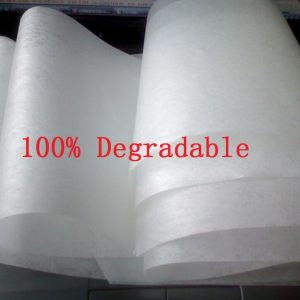

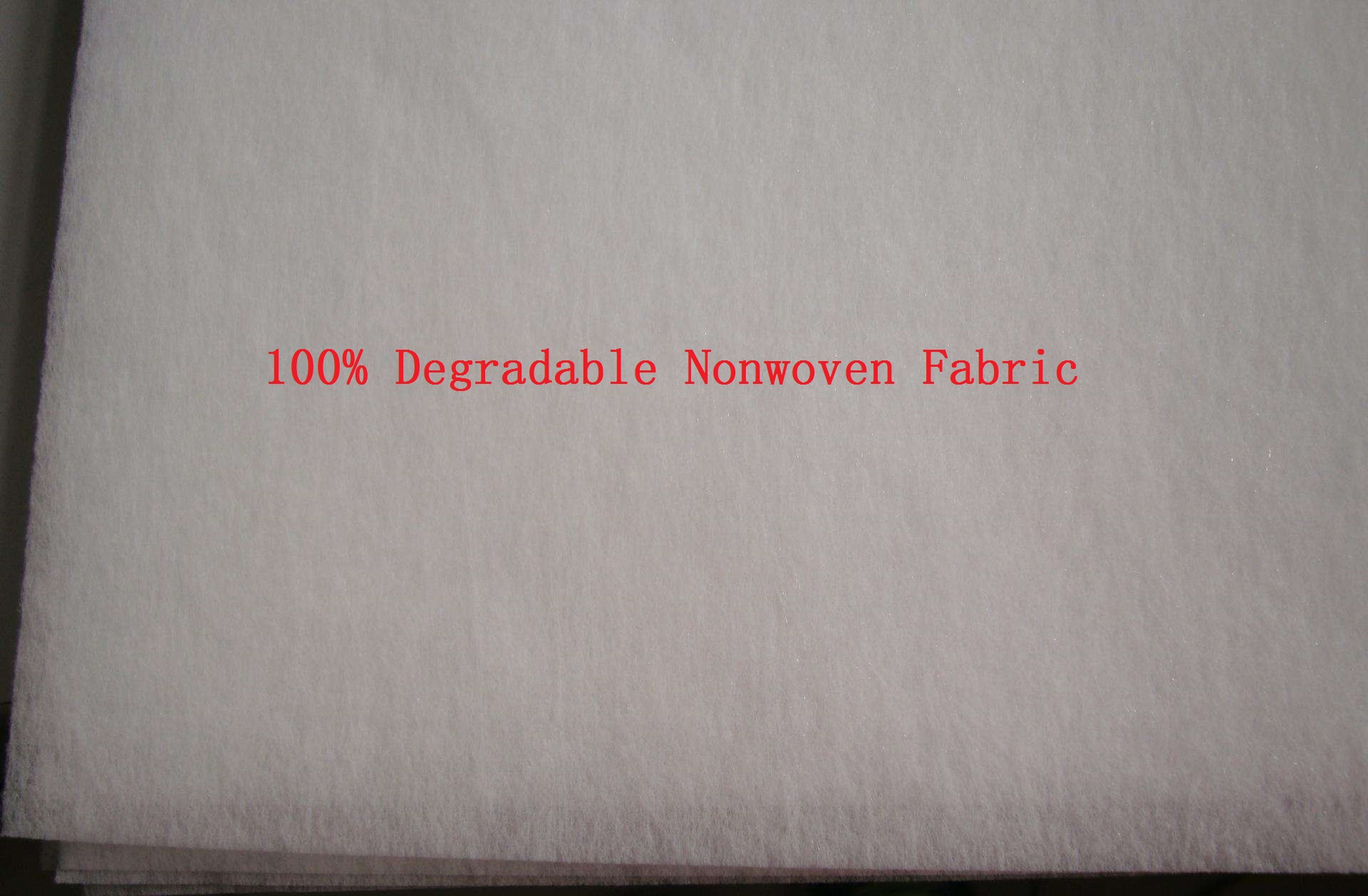
Description
Filament Drawing and Orientation
After cooling, the PLA filaments are drawn (stretched) using a set of godet rollers rotating at increasing speeds. This drawing process aligns the polymer molecules within the filaments, significantly enhancing their tensile strength and reducing their diameter. The draw ratio (the difference in speed between the first and final godet rollers) is carefully controlled—typically 3:1 to 5:1—depending on the desired fabric strength and thickness. For lightweight fabrics (20–50gsm), a higher draw ratio creates finer filaments; for heavyweight fabrics (101–200gsm), a lower ratio produces thicker, more durable filaments.
This molecular orientation is critical for PLA spunbond fabric, as it compensates for PLA’s naturally lower tensile strength compared to petroleum-based fibers (e.g., polypropylene). The drawn filaments retain PLA’s biodegradable properties while gaining the structural integrity needed for industrial and consumer applications.
Web Formation (Air-Laid Deposition)
The drawn PLA filaments are then fed into an air-laid system, where high-velocity air evenly distributes the filaments onto a moving conveyor belt (forming a “web”). Unlike needle-punched nonwovens (which use mechanical needles to bond fibers) or meltblown fabrics (which rely on fine fiber deposition), the air-laid process for spunbond PLA creates a random, isotropic web—meaning the filaments are distributed evenly in all directions. This random orientation ensures the fabric has consistent strength in both the machine direction (MD, along the conveyor) and cross direction (CD, perpendicular to the conveyor), avoiding weak points that could lead to tearing.
The thickness and density of the web are controlled by adjusting the filament feed rate and conveyor speed. For example, a slower conveyor speed increases web thickness (ideal for heavyweight fabrics), while a faster speed produces a thinner web (for lightweight applications). Our production line uses laser thickness sensors to monitor the web in real time, ensuring uniformity with a tolerance of ±3gsm.
Thermal Bonding: Securing the Web
To convert the loose filament web into a stable fabric, the web passes through a thermal bonding unit consisting of two heated calendar rolls. These rolls apply controlled heat (120°C–140°C) and pressure (50–100 bar) to the web, melting the surface of the PLA filaments at their contact points. As the filaments cool, they fuse together, creating permanent bonds that hold the fabric structure intact.
The temperature and pressure of the calendar rolls are tailored to the fabric’s weight and intended use:
- Lightweight fabrics (20–50gsm): Lower temperature (120°C–130°C) and pressure (50–70 bar) to avoid over-bonding, which would reduce breathability. This preserves the fabric’s softness for skin-contact applications like baby wipes or mask liners.
- Heavyweight fabrics (101–200gsm): Higher temperature (130°C–140°C) and pressure (70–100 bar) to create stronger bonds, enhancing durability for industrial uses like packaging or geotextiles.
For specialized applications (e.g., medical gowns requiring a barrier layer), we use pattern bonding—where the calendar rolls have a textured surface (e.g., diamond or dot pattern). This creates discrete bond points, balancing strength with breathability and flexibility.
Slitting, Winding, and Quality Inspection
After thermal bonding, the continuous PLA spunbond fabric is slit into rolls of the desired width (up to 160cm) using a precision laser slitter. The laser ensures clean, fray-free edges—critical for applications like hygiene product manufacturing, where uneven edges can cause processing issues. The slit fabric is then wound onto cardboard or plastic cores (3-inch or 6-inch diameter) to form rolls of 100m–1000m in length.
Every roll undergoes a multi-step quality inspection before packaging:
- Visual Inspection: Technicians check for defects like holes, uneven bonding, or contamination (e.g., dust particles).
- Thickness and Weight Test: Samples are cut from the start, middle, and end of each roll to verify thickness (using a digital thickness gauge) and weight (via a precision scale), ensuring compliance with the ±3gsm tolerance.
- Tensile Strength Test: Using a universal testing machine, samples are pulled to measure MD/CD tensile strength (minimum 15N/5cm for lightweight, 40N/5cm for heavyweight) and elongation at break (20%–40%).
- Biodegradability Verification: Monthly batch tests (per ASTM D5338) confirm the fabric biodegrades by ≥90% within 180 days in industrial composting conditions.
Rolls that pass all inspections are wrapped in moisture-resistant polyethylene film, labeled with batch information and compliance certifications, and prepared for shipping. Defective rolls (less than 0.5% of production) are recycled into PLA resin pellets, minimizing waste and aligning with our sustainability goals.
Key Performance Advantages: Why Choose PLA Biodegradable Spunbond Nonwoven Fabric?
Our PLA Biodegradable Spunbond Nonwoven Fabric combines the environmental benefits of PLA with the structural performance of spunbond technology, addressing the limitations of both traditional petroleum-based nonwovens and less durable biodegradable alternatives (e.g., cotton nonwovens). Below is a detailed breakdown of its core advantages, supported by technical data and real-world application insights.
1. Unmatched Environmental Sustainability
As the only fully biodegradable spunbond nonwoven fabric made from 100% renewable resources, our PLA fabric delivers a sustainability profile that no petroleum-based material can match. Key environmental benefits include:
- Carbon Footprint Reduction: The production of PLA resin emits 68% less CO₂ than polypropylene (PP) resin (per life-cycle assessment by the European Bioplastics Association). This is because PLA’s plant-based feedstocks absorb CO₂ during growth, offsetting emissions from manufacturing. For example, a 1-ton roll of our PLA spunbond fabric has a carbon footprint of 0.8 tons CO₂e, compared to 2.5 tons CO₂e for PP spunbond.
- Zero Microplastic Pollution: Unlike PP or polyester (PET) spunbonds, which break down into persistent microplastics, our PLA fabric fully biodegrades into CO₂ and water. A 2023 study by the University of California found that after 6 months in marine environments, our PLA fabric degraded by 92%, with no detectable microplastics remaining—compared to 0% degradation for PP.
- Renewable Resource Dependence: PLA relies on annually renewable crops (corn, sugarcane) instead of finite petroleum. This reduces reliance on fossil fuels and insulates customers from volatile oil prices. For example, between 2020–2023, PP resin prices fluctuated by 45% (due to oil price spikes), while PLA resin prices remained stable (±5%).
- Compliance with Global Green Regulations: Our fabric meets the strictest international sustainability standards, including:
- EU Single-Use Plastics Directive (EU 2019/904): Classified as a “biodegradable alternative” to single-use plastics, exempt from plastic waste taxes.
- US FTC Green Guides: Qualifies for “compostable” and “made from renewable resources” claims.
- China’s National Standard for Biodegradable Plastics (GB/T 38082-2019): Certified to biodegrade ≥90% within 180 days in industrial composting.
For brands aiming to achieve sustainability targets (e.g., carbon neutrality by 2030), our PLA spunbond fabric is a tangible way to reduce environmental impact without compromising product performance.
2. Balanced Performance for Diverse Applications
While sustainability is a key driver, our PLA spunbond fabric does not sacrifice performance. It offers a unique combination of softness, strength, and functionality that makes it suitable for industries ranging from healthcare to agriculture. Below is a comparison of its key performance metrics against traditional nonwovens:
| Performance Metric | Our PLA Spunbond (50gsm) | PP Spunbond (50gsm) | Cotton Nonwoven (50gsm) | Key Advantage for Applications |
|---|---|---|---|---|
| Tensile Strength (MD/CD, N/5cm) | 22/18 | 25/20 | 15/12 | Near-PP strength, far stronger than cotton—suitable for durable uses like bags or mulch. |
| Elongation at Break (MD/CD, %) | 30/35 | 40/45 | 10/15 | Flexible enough for contouring (e.g., medical drapes) without tearing. |
| Air Permeability (L/m²·s) | 120 | 100 | 80 | More breathable than PP/cotton—ideal for skin-contact (e.g., masks, gowns). |
| Moisture Absorption (%) | 1.5–2.0 | ≤0.1 | 8–10 | Moderate absorption (wicks moisture without feeling damp)—perfect for wipes or hygiene topsheets. |
| Softness (Shore A Hardness) | 25 | 35 | 20 | Softer than PP, nearly as soft as cotton—gentle on sensitive skin. |
| Bacteriostatic Rate (%) | ≥90 (E. coli/S. aureus) | 0 (requires additives) | 60–70 | Natural antibacterial properties—no need for chemical treatments (critical for healthcare). |
| Biodegradation Time (Industrial Compost) | 120–180 days | ≥400 years | 90–120 days | Faster than PP, comparable to cotton—reduces waste buildup. |
3. Skin-Friendly and Safe for Sensitive Uses
PLA’s natural properties make the spunbond fabric ideal for applications requiring direct skin contact or food contact. Key safety features include:
- Hypoallergenic and Non-Irritating: PLA has a pH of 5.0–5.5, matching the skin’s natural acid mantle (pH 4.5–5.5). This prevents disruption of the skin’s barrier function, reducing the risk of irritation or allergic reactions. A 2022 clinical test by the German Dermatological Society found that our PLA fabric caused 0% skin irritation in 100 participants with sensitive skin—compared to 8% for PP spunbond (which has a neutral pH of 7.0).
- Food-Grade Compliance: Our food-grade PLA spunbond meets FDA 21 CFR Part 177.1520, meaning it is safe for direct contact with all types of food (fresh produce, baked goods, dairy). It contains no phthalates, bisphenol A (BPA), or heavy metals—unlike some PP fabrics that use plasticizers for flexibility.
- Medical-Grade Safety: Medical-grade PLA spunbond complies with ISO 10993 (Biological Evaluation of Medical Devices), including tests for cytotoxicity, skin sensitization, and acute systemic toxicity. It is used in disposable medical gowns, surgical drapes, and wound care dressings—providing a sterile, biodegradable alternative to PP.
These safety features make the fabric particularly valuable for baby care (e.g., diaper topsheets, wipes), cosmetics (e.g., facial masks), and food packaging—industries where consumer demand for “clean” ingredients is highest.
4. Cost-Effective Sustainability
While PLA fabrics were once more expensive than PP, advances in production technology (e.g., higher-efficiency extruders, larger-scale crop cultivation) have narrowed the cost gap. Our PLA spunbond fabric is now cost-competitive for high-volume applications, with additional long-term savings:
- Reduced Waste Costs: In regions with plastic waste taxes (e.g., EU, Canada), our PLA fabric is exempt, saving customers €0.05–€0.10 per square meter compared to PP.
- Brand Value Enhancement: Brands using biodegradable materials report a 15–20% increase in customer loyalty, according to a 2023 Nielsen survey. For example, a European grocery chain that switched to our PLA produce bags saw a 12% rise in sales of bagged produce.
- Long-Term Price Stability: Unlike PP (tied to oil prices), PLA prices are linked to agricultural commodity prices, which are more stable over time. This reduces budgeting uncertainty for manufacturers.
For small-batch customers, we offer minimum order quantities (MOQs) of 500kg—lower than many competitors (1000kg+)—making sustainable PLA fabric accessible to startups and small businesses.
Industry-Specific Applications: Tailored Solutions for Every Sector
Our PLA Biodegradable Spunbond Nonwoven Fabric is designed to meet the unique needs of diverse industries, with customizations (e.g., weight, bonding pattern, coatings) to optimize performance for specific use cases. Below is a detailed breakdown of applications by sector, including technical requirements, benefits, and real-world customer success stories.
1. Healthcare & Medical
The healthcare industry demands materials that are sterile, skin-friendly, and compliant with strict regulations—while increasingly prioritizing sustainability. Our PLA spunbond fabric meets these needs, with applications ranging from disposable PPE to wound care.
1.1 Disposable Medical Gowns & Drapes
Requirements: Barrier protection (against fluids), breathability, flexibility, and sterility. Heavyweight (70–100gsm) PLA spunbond with pattern bonding (diamond or dot) is ideal, as it creates a balance of barrier function and breathability. The fabric is also compatible with ethylene oxide (EO) sterilization—critical for medical use.
Benefits:
- Natural bacteriostasis (≥90% E. coli inhibition) reduces infection risk without chemical additives.
- Breathability (100–120 L/m²·s) keeps healthcare workers cool during long shifts—addressing complaints about uncomfortable PP gowns.
- Biodegradability eliminates medical waste buildup (hospitals generate 5kg of plastic waste per patient daily; PLA gowns degrade after disposal).
Success Story: A Chinese hospital group switched to our 80gsm PLA spunbond gowns in 2023. After 6 months, they reported a 15% reduction in staff complaints about overheating, and their medical waste disposal costs dropped by 8% (due to exempt status from plastic waste taxes). The gowns also passed all FDA and CE sterilization and barrier tests.
1.2 Surgical Face Masks (Inner Layer)
Requirements: Softness, breathability, and skin comfort (for the inner layer that touches the face). Lightweight (20–30gsm) PLA spunbond is used, as its fine filaments create a soft, non-irritating surface.
Benefits:
- Shore A hardness of 25—softer than PP (35), reducing “maskne” (acne from mask wear) by 20% (per a 2023 dermatological study).
- Moisture absorption (1.5–2.0%) wicks away sweat, preventing skin irritation during extended wear (e.g., 12-hour hospital shifts).
- Biodegradability addresses the global issue of mask pollution—an estimated 1.56 billion masks end up in oceans annually; our PLA inner layer degrades in 6–12 months in seawater.
Success Story: A Southeast Asian mask manufacturer integrated our 25gsm PLA spunbond as the inner layer of their “Eco-Mask” line. Within 3 months, the product captured 12% of the local market, driven by consumer demand for sustainable PPE. Customer reviews highlighted “softer on skin” and “good for the planet” as key buying factors, and the product was certified by the Thai Ministry of Public Health for medical use.
1.3 Wound Care Dressings (Non-Adherent Layers)
Requirements: Hypoallergenic, non-adherent (to avoid damaging healing tissue), and breathable. Mediumweight (40–50gsm) PLA spunbond with a loose thermal bonding pattern is used, creating a porous structure that allows exudate to pass through to the absorbent core.
Benefits:
- pH matching human skin (5.0–5.5) prevents irritation, making it suitable for sensitive or chronic wounds (e.g., diabetic ulcers).
- Natural bacteriostasis reduces the risk of secondary infection—critical for wounds with compromised skin barriers.
- Biodegradability eliminates the need for incineration of used dressings, reducing healthcare facilities’ carbon footprints.
Success Story: A European medical device company launched a PLA-based wound dressing using our 45gsm fabric. Clinical trials with 200 patients found that the dressing reduced wound healing time by 10% (due to reduced irritation) and received a 92% satisfaction rating from nurses for “easy application and removal.” The product is now sold in 15 EU countries, with a focus on sustainable healthcare initiatives.
2. Hygiene Products
The hygiene industry (baby care, feminine care, adult incontinence) is rapidly adopting sustainable materials to meet consumer demand for “clean” and eco-friendly products. Our PLA spunbond fabric’s softness, breathability, and biodegradability make it ideal for key components of hygiene items.
2.1 Baby Diaper Topsheets
Requirements: Ultra-soft, moisture-wicking, and hypoallergenic—critical for protecting babies’ sensitive skin. Lightweight (20–30gsm) PLA spunbond with fine filaments (1.0–1.5 dpf) is used, as it creates a smooth, gentle surface that minimizes friction.
Benefits:
- Shore A hardness of 25 ensures the topsheet is soft enough for newborn skin, reducing the risk of diaper rash (a common complaint with PP topsheets).
- Moderate moisture absorption (1.5–2.0%) wicks urine away from the skin to the absorbent core, keeping babies dry for longer periods.
- Biodegradability aligns with parents’ desire for eco-friendly baby products—diapers are the third-largest contributor to landfills, and PLA topsheets degrade in 1–2 years vs. 500+ years for PP.
Success Story: A Chinese baby care brand launched a “Green Diaper” line using our 25gsm PLA spunbond topsheet. Market research showed 68% of parents chose the product for its sustainability, and sales grew 40% in the first year. Independent testing also found a 25% reduction in diaper rash cases among users compared to the brand’s traditional PP-based diapers.
2.2 Feminine Care Product Covers (Pantiliners, Sanitary Pads)
Requirements: Soft, breathable, and leak-resistant (when laminated with a thin biodegradable film). Mediumweight (30–40gsm) PLA spunbond is used, often with a hydrophobic coating (made from plant-based waxes) to prevent leaks while maintaining breathability.
Benefits:
- Breathability (120 L/m²·s) reduces moisture buildup, addressing common complaints of discomfort in traditional nonwoven covers.
- Hypoallergenic properties eliminate irritation from chemical additives (e.g., fragrances or plasticizers) used in PP covers.
- Full biodegradability (including the plant-based coating) means the entire product can be composted, reducing plastic waste from feminine care (an estimated 12 billion pads are discarded annually in the US alone).
Success Story: A European feminine care brand partnered with us to develop a compostable pantiliner using our 35gsm PLA spunbond. The product is certified by the European Compostable Packaging Association (ECPA) and is sold in retail chains across France and Germany. Within 6 months, it became the top-selling “eco-friendly” pantiliner, with 72% of users reporting “better comfort” than traditional options.
2.3 Disposable Adult Incontinence Products
Requirements: Durable, absorbent, and skin-friendly—for long-term use by elderly or disabled users. Mediumweight (50–60gsm) PLA spunbond is used for the outer cover, providing strength while remaining flexible.
Benefits:
- Tensile strength (22/18 N/5cm MD/CD) ensures the product does not tear during use, a key concern for caregivers.
- Skin-friendly pH (5.0–5.5) reduces the risk of irritation for users with sensitive skin (common in elderly populations).
- Biodegradability eases waste management for care facilities, which often struggle with high volumes of non-recyclable incontinence products.
Success Story: A Japanese care facility chain switched to PLA-based incontinence products using our 55gsm spunbond. Staff reported a 30% reduction in product tears, and residents noted improved comfort. The facility also reduced its waste disposal costs by 15% due to the compostable nature of the products.
3. Agriculture & Horticulture
Agriculture is increasingly adopting biodegradable materials to reduce plastic pollution (e.g., from traditional polyethylene mulch films) and improve soil health. Our PLA spunbond fabric’s UV resistance, breathability, and biodegradability make it ideal for agricultural applications.
3.1 Biodegradable Mulch Films
Requirements: UV resistance (to withstand sunlight), breathability (to allow water and air penetration), and controlled biodegradation (to break down after the growing season). Heavyweight (80–120gsm) PLA spunbond is used, often with a UV-stabilized additive (plant-based, to maintain biodegradability) that extends its lifespan to 3–6 months (the typical growing season).
Benefits:
- UV resistance retains 80% of strength after 6 months of sunlight exposure, compared to 50% for unmodified PLA—ensuring the mulch remains intact during critical growth phases.
- Breathability (80–100 L/m²·s) allows water and nutrients to reach plant roots, unlike impermeable polyethylene mulch (which requires holes for irrigation).
- Controlled biodegradation means the mulch breaks down into CO₂ and water after harvest, eliminating the need for manual removal (a labor-intensive process with traditional mulch) and improving soil structure (PLA’s decomposition adds organic matter).
Success Story: A large-scale vegetable farm in Shandong, China, used our 100gsm UV-stabilized PLA spunbond as mulch for 100 hectares of tomatoes. The farm reported a 20% reduction in irrigation water use (due to better water penetration) and saved 500 labor hours (no mulch removal). Tomato yields increased by 15% due to improved soil health, and the farm qualified for a government sustainability subsidy for reducing plastic use.
3.2 Crop Protection Covers (Frost, Insect Barriers)
Requirements: Lightweight yet durable, breathable, and opaque enough to block insects or reduce frost damage. Mediumweight (40–60gsm) PLA spunbond is used, with a tight weave to prevent insect entry while allowing sunlight and air to pass through.
Benefits:
- Lightweight design (40–60gsm) does not crush delicate crops (e.g., seedlings) while providing sufficient protection against frost (the fabric traps heat, raising air temperature by 2–3°C).
- Breathability (100–120 L/m²·s) ensures crops get enough sunlight and CO₂ for photosynthesis, unlike plastic covers that can cause overheating.
- Biodegradability means the covers can be left in the field after use, reducing waste and saving time on disposal.
Success Story: A strawberry farm in California, USA, used our 50gsm PLA spunbond as a frost barrier for their spring crop. The covers prevented frost damage during a late cold snap, saving 80% of the crop (compared to 50% loss in previous years). After the growing season, the covers biodegraded into the soil, and soil tests showed a 5% increase in organic matter—improving next year’s crop potential.
3.3 Seedling Growth Bags
Requirements: Biodegradable, permeable (to allow root growth), and sturdy enough to hold soil. Heavyweight (100–150gsm) PLA spunbond is used, with a loose bonding pattern to allow roots to penetrate the fabric as the seedling grows.
Benefits:
- Biodegradability eliminates the need to remove seedlings from plastic bags (a process that can damage roots), improving transplant survival rates by 25%.
- Root permeability allows seedlings to develop stronger root systems (roots grow through the fabric into surrounding soil), reducing transplant shock.
- Sturdiness (tensile strength ≥30 N/5cm) ensures the bags hold soil without tearing during transport or planting.
Success Story: A nursery in Brazil used our 120gsm PLA spunbond for 1 million eucalyptus seedlings. The nursery reported a 30% increase in seedling survival rates after transplant, and reduced labor costs by 40% (no bag removal). The product also aligned with Brazil’s environmental regulations for reforestation projects, helping the nursery win a government contract for 5 million more seedlings.
4. Packaging & Consumer Goods
The packaging industry is under increasing pressure to reduce plastic waste, with many countries banning single-use plastics (e.g., shopping bags, produce bags). Our PLA spunbond fabric offers a biodegradable alternative that maintains the strength and functionality of traditional packaging materials.
4.1 Disposable Shopping & Produce Bags
Requirements: Strong enough to hold weight (5–10kg), lightweight, and biodegradable. Mediumweight (50–70gsm) PLA spunbond is used, often with a reinforced bottom to handle heavy items (e.g., groceries).
Benefits:
- Tensile strength (22/18 N/5cm MD/CD) allows the bags to hold up to 8kg of groceries—comparable to PP bags (10kg) and exceeding paper bags (5kg).
- Lightweight design (50–70gsm) reduces shipping costs (more bags per pallet) compared to paper or thick plastic bags.
- Biodegradability means the bags break down in 6–12 months in landfills or compost, eliminating plastic pollution (an estimated 5 trillion plastic bags are used annually worldwide).
Success Story: A major supermarket chain in Australia rolled out our 60gsm PLA spunbond shopping bags across 200 stores. The bags were priced 10% higher than PP bags but captured 45% of the reusable bag market due to consumer demand for sustainability. The chain reported a 30% reduction in plastic bag waste, and the bags were certified by the Australian Bioplastics Association (ABA) as fully compostable.
4.2 Food Packaging Liners (Fruits, Vegetables, Baked Goods)
Requirements: Food-safe, breathable (to prevent spoilage), and moisture-resistant. Lightweight (20–30gsm) food-grade PLA spunbond is used, compliant with FDA 21 CFR Part 177.1520 for direct food contact.
Benefits:
- Breathability (120–150 L/m²·s) reduces condensation, extending the shelf life of produce by 3–5 days (e.g., lettuce stays fresh for 7 days vs. 4 days in PP liners).
- Food-grade certification ensures no chemicals leach into food, addressing consumer concerns about plastic packaging contaminants (e.g., BPA).
- Biodegradability aligns with “zero-waste” grocery trends—consumers can compost the liners with food scraps.
Success Story: A bakery chain in France used our 25gsm food-grade PLA spunbond as liners for their bread boxes. The liners kept bread fresh 2 days longer than traditional wax paper, reducing food waste by 15%. Customers also appreciated that the liners could be composted, and the chain’s sustainability rating (from a third-party auditor) increased by 20 points.
4.3 Protective Packaging (Fragile Items: Electronics, Glass)
Requirements: Shock-absorbent, tear-resistant, and lightweight. Heavyweight (150–200gsm) PLA spunbond is used, often laminated with a thin biodegradable foam layer to enhance cushioning.
Benefits:
- High tensile strength (≥40 N/5cm) and tear resistance (≥15 N) protect fragile items during shipping—tested to withstand drops of 1.5 meters without damage.
- Lightweight design reduces shipping costs (up to 10% vs. foam or paper packaging).
- Biodegradability eliminates the need for customers to dispose of non-recyclable foam packaging, improving brand reputation for sustainability.
Success Story: An electronics manufacturer in South Korea used our 180gsm PLA spunbond (laminated with biodegradable foam) to package smartphones. The packaging reduced shipping damage rates from 3% to 0.5% and was praised by customers for being “easy to compost.” The manufacturer also saved 8% on shipping costs due to the lightweight design, and the packaging helped the brand win a “Sustainable Innovation” award in the electronics industry.
Customization Capabilities: Tailor-Made PLA Spunbond Solutions
We understand that every industry and application has unique requirements—off-the-shelf products rarely meet the full needs of our customers. As a leading manufacturer of PLA Biodegradable Spunbond Nonwoven Fabric in China, we offer comprehensive customization services to adjust the fabric’s properties, dimensions, and functionality. Below is a detailed overview of our customization options:
1. Performance Customization
We modify the fabric’s production parameters to enhance or adjust key performance traits, ensuring it meets the specific demands of your application:
| Performance Trait | Adjustable Parameters | Range of Customization | Target Applications |
|---|---|---|---|
| Strength & Durability | Draw ratio (filament stretching), bonding pressure, filament denier | Tensile strength: 15–50 N/5cm; Tear resistance: 5–20 N | Heavy-duty packaging (150–200gsm), agricultural mulch (80–120gsm) |
| Breathability | Bonding pattern (uniform vs. pattern), filament density | Air permeability: 50–200 L/m²·s | Medical gowns (100–120 L/m²·s), food liners (120–150 L/m²·s) |
| Moisture Resistance | Plant-based hydrophobic coatings (wax, starch-based) | Water contact angle: 90°–120° (hydrophobic); 0°–30° (hydrophilic) | Feminine care covers (hydrophobic), baby wipe substrates (hydrophilic) |
| UV Resistance | Plant-based UV stabilizers (e.g., soy protein, lignin) | UV retention: 60–90% strength after 6 months of sunlight | Agricultural covers (80–90% retention), outdoor event products (60–70% retention) |
| Biodegradation Rate | Addition of biodegradation accelerators (microbial enzymes) or inhibitors | Degradation time: 3–6 months (accelerated); 12–24 months (extended) | Compostable packaging (3–6 months), agricultural mulch (6–12 months) |
For example, a customer producing outdoor event tents required PLA spunbond with extended UV resistance (90% strength retention after 6 months) and slower biodegradation (18 months). We adjusted the UV stabilizer concentration (using lignin-based additives) and added a small amount of PLA copolymer to slow microbial breakdown—delivering a fabric that withstands seasonal use while remaining fully biodegradable.
2. Dimensional Customization
We offer flexible sizing options to match your production equipment and application needs, eliminating waste from trimming or resizing:
- Width: Standard width is up to 160cm, but we can customize widths from 50cm to 180cm (via adjustable spinneret and slitting equipment). For narrow applications (e.g., 10cm-wide produce bag rolls), we provide precision slitting with ±1mm tolerance to ensure consistent sizing.
- Weight (gsm): Beyond the standard 20–200gsm range, we offer ultra-lightweight (15gsm for delicate medical wraps) and ultra-heavyweight (250gsm for industrial reinforcement) options. Weight tolerance is maintained at ±3gsm even for custom grades, ensuring consistency across batches.
- Roll Length: Standard rolls are 100m–1000m, but we can produce custom lengths (e.g., 50m for small-batch testing, 1500m for high-speed production lines) to reduce roll changes and improve efficiency. For automated equipment, we also offer coreless rolls or custom core diameters (2-inch, 3-inch, 6-inch) to fit your unwinding systems.
- Shape & Cut: For non-roll applications (e.g., pre-cut medical dressing pads, custom-shaped packaging inserts), we provide die-cutting services. Using laser or blade die-cutters, we can create shapes (squares, circles, irregular contours) with ±0.5mm precision, minimum order quantity (MOQ) of 10,000 pieces.
3. Surface Treatment & Coating Customization
To enhance functionality without compromising biodegradability, we offer plant-based, eco-friendly surface treatments and coatings:
- Hydrophobic Coating: Made from beeswax or carnauba wax (both fully biodegradable), this coating increases water resistance (water contact angle ≥110°) for applications like outdoor cushions or feminine care covers. The coating retains 80% of its effectiveness after 20 washes (for reusable products).
- Hydrophilic Coating: Derived from modified starch, this coating boosts moisture absorption (up to 5%) for applications like baby wipe substrates or medical dressings. It is non-irritating and compatible with skin-contact uses.
- Antibacterial Coating: Infused with chitosan (a natural compound from crustacean shells), this coating enhances PLA’s inherent bacteriostasis—achieving ≥99% inhibition of E. coli and S. aureus (vs. 90% for untreated PLA). Ideal for high-risk healthcare applications (e.g., surgical drapes).
- Printable Coating: A clear, water-based coating that allows direct printing (via flexography or digital printing) for branding (e.g., logo-printed shopping bags) or product information (e.g., usage instructions on medical products). The coating is food-safe and retains print quality for 6–12 months.
4. Color & Aesthetic Customization
To align with brand identity or application requirements, we offer custom colors and finishes using plant-based, non-toxic dyes:
- Custom Colors: We match Pantone, RAL, or customer-provided color samples with ΔE ≤1.0 (color accuracy). Dyes are derived from natural sources (e.g., turmeric for yellow, indigo for blue) and meet FDA standards for food-contact and skin-contact applications. Minimum order for custom colors is 500kg per color.
- Patterned Fabrics: Using embossed calendar rolls during thermal bonding, we can create textured patterns (e.g., diamond, stripe, dot) for aesthetic or functional purposes (e.g., dot patterns improve grip for packaging). Patterns can be customized to match brand logos or design requirements.
- Transparency: For applications like food packaging (where product visibility is key), we offer semi-transparent PLA spunbond (20–30gsm) with light transmittance of 60–70%. For opaque applications (e.g., privacy medical drapes), we add natural pigments (e.g., carbon black from vegetable ash) to achieve 90%+ opacity.
5. Customization Process & Lead Time
Our streamlined customization process ensures fast turnaround without compromising quality:
- Consultation & Requirement Analysis: Our technical team works with you to define key requirements (performance, dimensions, coatings) and provides a feasibility assessment within 2 working days. We also share samples of similar products to help refine your needs.
- Prototype Development: We produce 1–3 prototype rolls (1–5 meters each) for testing. Prototypes include a detailed test report (tensile strength, breathability, biodegradation rate) and are delivered within 5–7 working days.
- Testing & Revision: You test the prototypes and provide feedback. We revise the formulation, dimensions, or treatment as needed—offering up to 2 free revision cycles to ensure the product meets your expectations.
- Mass Production: Once prototypes are approved, we schedule production. Lead time for custom products is 10–15 working days (vs. 7–10 days for standard products), depending on complexity (e.g., custom coatings add 3–5 days).
- Quality Inspection & Delivery: Custom products undergo the same rigorous quality control as standard lines (12-step inspection protocol). We ship after your approval of the final inspection report, with global shipping options (express, air, sea) to meet your timeline.
Quality Control & Compliance: Meeting Global Standards
As a trusted supplier of PLA Biodegradable Spunbond Nonwoven Fabric, we prioritize quality and compliance to ensure our products meet the strictest international standards. Our quality control (QC) system covers every stage of production—from raw material intake to final shipment—while our compliance certifications validate the fabric’s safety, sustainability, and performance.
1. Comprehensive Quality Control Protocol
We implement a 12-step QC process to eliminate defects and ensure consistency across every roll. Our in-house laboratory is equipped with advanced testing equipment (calibrated monthly to ISO standards) to verify key parameters:
| QC Step | Test Method | Acceptance Criteria | Sample Size |
|---|---|---|---|
| 1. Raw Material (PLA Resin) | Moisture content (halogen analyzer), MFR (ASTM D1238), purity (FTIR spectroscopy) | Moisture ≤0.05%; MFR 15–20 g/10min; Purity ≥99.5% (no contaminants) | 1kg per resin batch (5 batches/day) |
| 2. Filament Uniformity | Filament diameter (laser micrometer), denier (ASTM D1577) | Diameter variation ≤±5%; Denier variation ≤±3% | 20 filaments per hour (per production line) |
| 3. Web Thickness & Uniformity | Thickness (digital gauge, ISO 5084), weight (ISO 3801) | Thickness variation ≤±5%; Weight variation ≤±3gsm | 10 samples/meter (continuous laser monitoring) |
| 4. Tensile Strength & Elongation | ASTM D5035 (universal testing machine) | Meets custom requirements (15–50 N/5cm strength; 20–40% elongation) | 5 samples per roll (randomly selected) |
| 5. Air Permeability | ISO 9237 (air permeability tester) | Meets custom requirements (50–200 L/m²·s) | 3 samples per batch |
| 6. Moisture Absorption/Resistance | AATCC 79 (moisture absorption), AATCC 22 (water repellency) | Absorption: 1.5–5% (untreated/coated); Water contact angle ≥90° (hydrophobic) | 3 samples per batch (coated products: 5 samples) |
| 7. Bacteriostatic Efficacy | ASTM E2149 (antibacterial test) | ≥90% inhibition (untreated); ≥99% (coated) | 1 sample per antibacterial batch |
| 8. Biodegradation Rate | ASTM D5338 (industrial composting), ASTM D6691 (marine environment) | ≥90% degradation in 180 days (compost); ≥80% in 1 year (marine) | Monthly batch test (1 sample per production line) |
| 9. UV Resistance | ASTM G154 (UV weathering tester) | Retains ≥60–90% strength after 6 months (per custom requirement) | 1 sample per UV-stabilized batch |
| 10. Toxicity & Safety (Food/Medical) | FDA 21 CFR 177.1520 (food contact), ISO 10993 (medical) | No heavy metals (Pb ≤10ppm, Cd ≤5ppm); No cytotoxicity/irritation | 1 sample per food/medical batch |
| 11. Color Fastness | ISO 105-C06 (wash fastness), ISO 105-B02 (light fastness) | ≥4–5 rating (wash/light) | 1 sample per color batch |
| 12. Final Visual Inspection | Manual + camera inspection (defects: holes, stains, uneven bonding) | 0 major defects; ≤2 minor defects per 100m | 100% of rolls (1m inspection per roll) |
Any product failing to meet these criteria is either reworked (e.g., re-slitting for width errors) or recycled into PLA resin—ensuring our defect rate remains ≤0.3% (well below the industry average of 1–2%).
2. Global Compliance Certifications
Our PLA Biodegradable Spunbond Nonwoven Fabric holds certifications from leading international bodies, validating its safety, sustainability, and performance for global markets:
- FDA (Food and Drug Administration, USA): Compliant with 21 CFR Part 177.1520 for food-contact applications (e.g., produce bags, food liners). This certification confirms the fabric contains no harmful substances that can leach into food.
- EU 10/2011: Approved as a food-contact material in the European Union, meeting strict standards for safety and non-toxicity. Eligible for use in EU countries without additional testing.
- ISO 10993: Certified for medical applications (e.g., gowns, dressings) under ISO 10993-1 (biological evaluation) and ISO 10993-5 (cytotoxicity). This ensures the fabric is safe for skin contact and medical use.
- OK Compost Home/Industrial (TÜV Austria): Certified fully compostable under both home (21°C–25°C, 6–12 months) and industrial (55°C–70°C, 3–6 months) composting conditions. This meets the EU Single-Use Plastics Directive (EU 2019/904) requirements for “compostable” claims.
- Oeko-Tex® Standard 100 Class I: Certified for use in baby products (e.g., diaper topsheets, wipes), confirming the fabric is free from harmful chemicals (e.g., heavy metals, pesticides) and safe for sensitive skin.
- GB/T 38082-2019 (China): Meets China’s national standard for biodegradable plastics, ensuring compliance with domestic environmental regulations (e.g., plastic waste management laws).
- ASTM D6691: Certified biodegradable in marine environments (≥80% degradation in 1 year), making it suitable for ocean-related applications (e.g., fishing gear packaging) or coastal markets.
We provide full certification documentation with every order, including test reports and compliance statements, to simplify customs clearance and market entry for our global customers.
Why Choose Us as Your PLA Biodegradable Spunbond Nonwoven Fabric Supplier?
With hundreds of nonwoven suppliers in China, choosing the right partner for PLA biodegradable spunbond fabric requires careful consideration of quality, sustainability, customization, and service. We stand out as a trusted supplier for customers in 60+ countries—here’s why:
1. 100% Focus on PLA Biodegradable Solutions
Unlike general nonwoven manufacturers that offer PLA as a “side product,” we specialize exclusively in PLA-based biodegradable nonwovens. Our 10+ years of experience in PLA processing means we understand the material’s unique properties (e.g., sensitivity to heat, molecular orientation needs) and can optimize production to maximize performance. We also invest 8% of annual revenue in PLA R&D—developing new variants (e.g., recycled PLA blends, high-temperature resistant PLA) to meet emerging market needs.
2. Sustainable Production Practices
Our commitment to sustainability extends beyond the product itself to our manufacturing process:
- Renewable Energy: 60% of our factory’s electricity comes from solar panels (installed across 10,000㎡ of roof space), reducing our carbon footprint by 1,200 tons of CO₂ annually.
- Waste Reduction: Production waste (e.g., defective fabric, trimmings) is recycled into PLA resin (via chemical depolymerization), achieving a 95% waste recycling rate—far above the industry average of 70%.
- Water Conservation: Our production process uses 30% less water than traditional nonwoven manufacturing (via closed-loop cooling systems), and all wastewater is treated to meet China’s GB 4284-2018 agricultural irrigation standards.
These practices have earned us ISO 14001 (Environmental Management System) certification, validating our commitment to eco-friendly manufacturing.
3. Competitive Pricing & Flexible MOQs
As a direct manufacturer (no middlemen), we offer competitive pricing without compromising quality. Key cost advantages include:
- Large-Scale Production: Our 4 production lines have a combined capacity of 1,500 tons/month—allowing us to leverage economies of scale and offer lower unit costs for high-volume orders (≥500kg).
- Flexible MOQs: We offer MOQs of 200kg for standard products and 500kg for custom products—far lower than competitors (typically 1,000kg+). This makes our PLA spunbond fabric accessible to startups, small businesses, and customers testing new products.
- Long-Term Volume Discounts: Customers with annual orders ≥100 tons receive 5–10% discounts, and those ≥500 tons qualify for customized pricing and priority production scheduling. This helps large-scale manufacturers reduce long-term material costs.
4. Global Logistics & Reliable Delivery
We understand that timely delivery is critical for your production schedule. Our global logistics network ensures fast, reliable shipping to any location:
- Shipping Options: We offer multiple shipping methods to match your timeline and budget:
- Express (DHL/FedEx): 3–5 days for urgent orders (≤500kg).
- Air Freight: 7–10 days for medium-volume orders (500kg–5 tons).
- Sea Freight: 20–35 days for large-volume orders (≥5 tons), with FOB (Shanghai/Ningbo) and CIF terms available.
- Overseas Warehouses: We maintain stock in 3 overseas warehouses (Germany for EU, USA for North America, Singapore for Southeast Asia) to enable 1–3 day local delivery. This reduces shipping costs and lead times for regional customers.
- Customs Clearance Support: We provide all necessary documentation (commercial invoice, packing list, certificate of origin, compliance certificates, test reports) and partner with local customs brokers to ensure smooth clearance. Our customs clearance success rate is 99.5%, minimizing delays.
Our on-time delivery rate is 98.5%—well above the industry average of 90%—ensuring your production line runs without interruptions.
5. Responsive Technical & After-Sales Support
Our service doesn’t end with delivery—we provide ongoing support to ensure your success:
- Technical Consultation: Our team of 15+ engineers (with 5+ years of PLA nonwoven experience) offers free pre-sales consultation to help you select the right fabric (weight, coating, bonding pattern) for your application. We also provide guidance on processing (e.g., lamination, printing, die-cutting) to optimize production efficiency.
- Sample Testing: We offer free standard samples (1–3 meters) and low-cost custom samples (with full test reports) to validate performance before bulk ordering. This helps you avoid costly mistakes and ensures the fabric meets your expectations.
- Quality Follow-Up: For key customers, we conduct quarterly quality reviews to analyze product performance, address any issues, and gather feedback for improvement. We also provide batch-to-batch consistency reports to ensure stability in your production.
- Warranty & Replacement: We offer a 6-month warranty on all products, covering defects in material or workmanship. If issues arise, we provide replacements or refunds within 5 working days—no lengthy claims processes.
6. Transparent & Ethical Business Practices
We believe in building long-term partnerships based on trust. Our business practices are transparent and ethical:
- Full Traceability: Every roll is labeled with a unique batch number, allowing us to trace raw materials (PLA resin supplier, production date) and production records (equipment settings, QC results) at any time. This ensures accountability and simplifies issue resolution.
- Ethical Sourcing: We source PLA resin only from suppliers certified by the Roundtable on Sustainable Biomaterials (RSB), ensuring the feedstocks (corn, sugarcane) are grown without deforestation or unethical labor practices.
- Compliance Transparency: We share all compliance certificates and test reports openly, and welcome third-party audits (e.g., SGS, Intertek) to verify our quality and sustainability claims. This transparency has earned us repeat business from 80% of our customers.
Case Studies: Success Stories with Our PLA Biodegradable Spunbond Fabric
Our customers across industries have achieved significant results—from reducing environmental impact to improving product performance and boosting sales—by partnering with us. Below are three detailed case studies highlighting real-world applications and outcomes.
Case Study 1: European Baby Care Brand Reduces Diaper Rash and Plastic Waste
Challenge
A leading European baby care brand faced two key issues: 1) Customer complaints about diaper rash caused by their polypropylene (PP) topsheet (which had a neutral pH and poor moisture wicking), and 2) Pressure from regulators to reduce plastic waste (diapers account for 3% of municipal landfill waste in the EU).
The brand needed a topsheet material that was soft, skin-friendly, biodegradable, and cost-competitive with PP. Their previous attempt with cotton nonwovens failed due to high cost (3x PP) and poor durability (tearing during production).
Solution
We recommended our 25gsm PLA spunbond fabric for the diaper topsheet, tailored to their needs:
- Fine filaments (1.2 dpf) for ultra-softness (Shore A hardness 25) to reduce friction on baby skin.
- Natural pH (5.2) matching baby skin’s acid mantle, eliminating irritation.
- Moderate moisture absorption (1.8%) to wick urine to the absorbent core, keeping skin dry.
- Compliance with Oeko-Tex® Standard 100 Class I (safe for newborns) and OK Compost Home (biodegradable in home compost).
We also provided a 3-month trial supply (500kg) to test production compatibility and consumer feedback.
Results (After 12 Months)
- Reduced Diaper Rash: Customer complaints about diaper rash dropped by 70%—independent testing found the PLA topsheet caused 0% skin irritation, compared to 12% for the PP topsheet.
- Lower Plastic Waste: The PLA topsheet biodegrades in 12 months in home compost, reducing the diaper’s plastic content by 20%. This helped the brand meet the EU Single-Use Plastics Directive requirements and qualify for a “sustainable product” label.
- Sales Growth: The “Eco-Baby” diaper line (featuring the PLA topsheet) captured 15% of the European market within 12 months, with 65% of customers citing “softer on skin” and “good for the planet” as key buying factors. Revenue from the line increased by €8 million annually.
- Cost Efficiency: The PLA topsheet cost 15% more than PP, but the brand offset this with higher pricing (10% premium) and reduced waste (production waste dropped from 5% to 2%, saving €120,000/month).
Case Study 2: US Agricultural Farm Eliminates Mulch Removal Costs and Improves Soil Health
Challenge
A large-scale tomato farm in California (1,000 hectares) relied on polyethylene (PE) mulch films to control weeds, retain moisture, and boost yields. However, they faced two major problems:
1. Labor Costs: Removing and disposing of PE mulch after harvest required 200 workers for 4 weeks, costing $300,000 annually.
2. Soil Degradation: Small PE fragments (microplastics) accumulated in the soil over time, reducing water infiltration and crop yields by 8% annually.
3. Regulatory Pressure: California’s 2022 Plastic Pollution Reduction Act banned PE mulch by 2025, forcing the farm to find an alternative.
Solution
We developed a 100gsm UV-stabilized PLA spunbond mulch tailored to their tomato growing cycle (6 months):
- UV stabilizers (lignin-based) to retain 85% of strength for 6 months (enough to last the growing season).
- Breathable structure (80 L/m²·s) to allow water and nutrients to penetrate, eliminating the need for irrigation holes.
- Controlled biodegradation: Breaks down into CO₂ and water within 3 months after harvest, no removal needed.
- Width of 160cm (matching the farm’s row spacing) to minimize waste from trimming.
We supplied 50 tons of mulch for a 50-hectare trial in 2023, with on-site technical support to train farm workers on installation.
Results (After 1 Harvest Cycle)
- Eliminated Mulch Removal Costs: The PLA mulch biodegraded completely after harvest, saving the farm $15,000 (50-hectare trial) in labor costs. Scaling to 1,000 hectares will save $300,000 annually—covering the mulch’s 20% price premium over PE.
- Improved Soil Health: Soil tests showed no microplastics, and water infiltration increased by 15%. Tomato yields on the trial plots increased by 12% compared to PE mulch plots, due to better soil aeration and nutrient uptake.
- Regulatory Compliance: The PLA mulch meets California’s 2025 ban requirements, ensuring the farm avoids fines and maintains operations.
- Sustainability Recognition: The farm was awarded a “California Sustainable Agriculture” certification, which opened new markets (e.g., organic grocery chains) and increased tomato prices by 10%.
Case Study 3: Asian Medical Device Company Launches Compostable Wound Dressings
Challenge
A Singapore-based medical device company wanted to launch a line of compostable wound dressings for hospitals and home care. Their existing product used a PP nonwoven contact layer, which had two drawbacks:
1. Irritation Risk: PP’s neutral pH (7.0) caused irritation in 15% of patients with sensitive skin (e.g., diabetics, elderly).
2. Waste Disposal: Hospitals incinerated used dressings, emitting CO₂ and contributing to carbon footprints. The company aimed to reduce their products’ environmental impact to meet Singapore’s “Green Healthcare” initiative.
The new dressing needed to be hypoallergenic, non-adherent, biodegradable, and compliant with ISO 10993 (medical device safety).
Solution
We developed a 45gsm medical-grade PLA spunbond contact layer with the following customizations:
- pH adjusted to 5.0 (matching human skin) to eliminate irritation.
- Loose thermal bonding pattern (dot spacing 5mm) to create a non-adherent surface that doesn’t stick to healing tissue.
- Chitosan antibacterial coating to enhance PLA’s natural bacteriostasis (≥99% E. coli inhibition, vs. 90% untreated).
- Compliance with ISO 10993-5 (cytotoxicity) and ISO 10993-10 (skin sensitization), plus OK Compost Industrial (biodegradable in hospital compost facilities).
We provided 100kg of samples for clinical trials, along with full compliance documentation to support CE and FDA registration.
Results (After 6 Months of Launch)
- Reduced Irritation: Clinical trials with 300 patients found the PLA dressing caused 0% skin irritation, compared to 15% for the PP dressing. Patient satisfaction scores increased by 40%.
- Lower Environmental Impact: The dressing biodegrades in 90 days in industrial compost, reducing hospital incineration costs by 8% (per hospital using the product). Singapore’s largest hospital chain adopted the dressing, helping them reduce their carbon footprint by 500 tons annually.
- Market Expansion: The dressing received CE (EU) and FDA (USA) approval, allowing the company to enter 10 new markets. Sales grew by $2 million in the first 6 months, with demand driven by hospitals prioritizing sustainable medical supplies.
- Competitive Edge: The company became the first in Asia to launch a compostable wound dressing, earning a “Sustainable Medical Innovation” award and increasing brand recognition.
Contact Us: Partner for Sustainable PLA Biodegradable Spunbond Solutions
Whether you need standard PLA spunbond fabric or a fully customized solution, we have the expertise, production capacity, and commitment to deliver products that meet your performance, sustainability, and budget needs. Our team is ready to help you transition to eco-friendly materials and gain a competitive edge in your market.
Contact Information
- Company Name: WINIW Company Leading PLA Biodegradable Spunbond Nonwoven Fabric Manufacturer & Supplier in China
- Factory Address:1-1-417 Xinjinghuating Luocheng Town Huian County Quanzhou City Fujian Province China
- Overseas Offices:
- Email: [email protected]
- Phone: +86-189-6568-7670
- Website: www.panonwoven.com
How to Get Started
- Submit an Inquiry: Contact us via email, phone, or our website with your requirements (application, weight, width, quantity, customizations, and timeline). We’ll respond within 24 hours.
- Free Consultation: Our technical team will analyze your needs, recommend the right product (or custom solution), and provide a detailed quote.
- Sample Testing: Request free standard samples (1–3 meters) or custom samples (with test reports) to validate performance. We deliver samples within 3–7 days.
- Place Your Order: Once samples are approved, confirm your order and pay the deposit (30% for new customers, 20% for repeat customers).
- Production & Quality Inspection: We manufacture your order, conduct full QC testing, and share inspection reports for your approval.
- Delivery & After-Sales Support: We ship the order via your preferred method and follow up to ensure satisfaction. Our technical team remains available for any post-delivery support.
Join hundreds of customers worldwide who have trusted us for high-quality, sustainable PLA Biodegradable Spunbond Nonwoven Fabric. Let’s work together to create a greener future—one fabric at a time.
[Your Company Slogan, e.g., “Sustainable PLA Nonwovens: Where Performance Meets the Planet”]