

Description
Киришүү

Кытайда PLA токулган эмес кездеме жана полилактикалык токулган эмес кездеме берүүчүлөр жана өндүрүүчүлөр!
Кытайда PLA токулган кездемелердин алдынкы берүүчү жана өндүрүүчүсү катары, WINIW жогорку сапатта камсыз кылууга умтулат, глобалдык өнөр жайлардын өнүгүп жаткан муктаждыктарына жооп берген экологиялык таза токулган эмес чечимдер. Биздин PLA токулган кездемелер, дан жасалган 100% полилактикалык кислота, туруктуулуктун жана аткаруунун эң сонун айкалышын билдирет, салттуу мунай негизиндеги токулбаган материалдарга ылайыктуу альтернатива сунуш кылат.
Материалдын аталышы: PLA Nonwoven Fabric жана Polactic Nonwoven Fabric
Экологиялык аң-сезим инновацияларды башкарган доордо, PLA токулган кездеме функционалдык талаптарды да, экологиялык көйгөйлөрдү да чечкен революциялык материал катары пайда болду. Кайра жаралуучу булактардан алынган полилактикалык кислотанын уникалдуу касиеттерин колдонуу менен, биз айлана-чөйрөгө тийгизген таасирин азайтуу менен бирге, ар түрдүү колдонмолордо өзгөчөлөнгөн токулган эмес кездемени иштеп чыктык. Пластиктин булганышын азайтуудан тартып экономиканын тегерек максаттарын колдоого чейин, биздин PLA токулган эмес материалдар илими өнөр жайдын натыйжалуулугун бузбастан планетанын ден соолугуна кантип шайкеш келе аларын күбөлөндүрөт..
Материалдык спецификациялар
Биздин PLA Nonwoven Fabric төмөнкү спецификациялар менен жеткиликтүү, ар кандай өнөр жай муктаждыктарына ар тараптуулугун жана ыңгайлашуусун камсыз кылуу. Ар бир параметр натыйжалуулукту тең салмактоо үчүн иштелип чыккан, колдонуу мүмкүнчүлүгү, жана туруктуулук, кардарларга алардын колдонмо сценарийлерине так дал келген конфигурацияларды тандоого мүмкүндүк берет.
Курамы
Курамы: 100% PLA (Полилактикалык). Биздин PLA токулган кездеме таза полилактикалык кислотаны колдонуу менен өндүрүлгөн, материалдын бардык аспектилери - өндүрүштөн утилдештирүү үчүн - туруктуу принциптерге шайкеш келүүсүн камсыз кылуу. Нефть негизиндеги кошулмалардын же аралашмалардын жоктугу кездеме PLAнын бардык экологиялык таза касиеттерин сактап тургандыгына кепилдик берет., анын ичинде толук биологиялык ажыроо жана компосттуулук. Биз PLA чайырын сертификацияланган жеткирүүчүлөрдөн гана алабыз (NatureWorks жана TotalEnergies Corbion сыяктуу) чийки заттын тазалыгы үчүн катуу стандарттарды карманышат, чайырдын минималдуу PLA мазмунуна жооп беришин камсыз кылуу 99.5%. Бул жогорку тазалыктагы композиция толтургуч материалдардан келип чыккан иштиктүүлүктүн дал келбөө коркунучун жок кылат жана эл аралык эко-энбелгилерге шайкеш келүүнү камсыздайт., анын ичинде EU Ecolabel жана USDA Biobased Certification.
PLA менен синтетикалык булаларды айкалыштырган аралашма токулган материалдардан айырмаланып (мис., PP же PET) чыгымдарды кыскартуу, биздин 100% PLA курамы материалдын микропластикалык калдыктарды калтырбастан толугу менен бузулушун камсыз кылат. Бул тамак-аш таңгактоо жана медициналык буюмдар сыяктуу колдонмолор үчүн абдан маанилүү болуп саналат, материалдык тазалык коопсуздукка жана экологиялык жоопкерчиликке түздөн-түз таасирин тийгизет.
Салмагы
Салмагы: 20гсм – 200гсм. Биз PLA токулбаган кездемени кеңири салмак диапазонунда сунуштайбыз 20 чарчы метрге грамм (gsm) 200гсм чейин, кардарларга алардын конкреттүү колдонуу үчүн оптималдуу жоондугун жана тыгыздыгын тандоого мүмкүндүк берет. Бул диапазон биздин кездемени жеңил гигиеналык буюмдардан тарта оор өнөр жайлык колдонмолорго чейин колдонсо болорун камсыздайт., бардык салмак боюнча ырааттуу аткарууну камсыз кылуу. Ар бир салмак варианты чыңалуу күчүн сактоо үчүн катуу сыноодон өтөт, жыртылуу каршылык, жана анын тыгыздыгына салыштырмалуу өлчөмдүү туруктуулук.
- 20-50гсм (Жеңил салмак диапазону): Жумшактыкты талап кылган колдонмолор үчүн иштелип чыккан, дем алуу, жана материалды минималдуу пайдалануу. Бет салгычтар үчүн идеалдуу, косметикалык толтургучтар, бир жолу колдонулуучу медициналык перделер (экинчи катмарлар), жана жеңил пакеттөө лайнерлери. Бул диапазондогу 30gsm spunlace PLA токулган эмес 120–180 N/5cm созуу күчү бар. (машина багыты) жана 80–120 Н/5см (кайчылаш багыт), 5 баллдык шкала боюнча 3-4 жумшактык рейтинги менен (1 = орой, 5 = өтө жумшак), терисинде пахта менен салыштырууга болот.
- 51-100гсм (Орто диапазон): Ар тараптуу колдонуу учурлары үчүн күч менен ийкемдүүлүктү тең салмактайт. Айыл чарба өсүмдүктөрүн жабууга ылайыктуу, тамак-аш таңгактоо (мис., сумкаларды чыгарышат, нан орогучтары), балдардын жалаяктары, жана медициналык эмес коргоочу кийимдер. Бул жерде 70gsm spunbond PLA nonwoven 250–350 N/5cm созуу күчүн сунуштайт. (машина багыты) жана 180–250 Н/5см (кайчылаш багыт), 50–150 L/m²·s аба өткөрүмдүүлүк менен — структуралык бүтүндүктү жана аба агымын талап кылган колдонмолор үчүн идеалдуу.
- 101– 200гр (Оор жүк диапазону): Талап кылынган шарттарда туруктуулук үчүн иштелип чыккан. Гетекстильдер үчүн колдонулат, өнөр жай майлыктар, коргоочу таңгак (мис., электроника орогуч), жана айыл чарба мульч фильмдери. Бул диапазондогу 150 гсм ийне менен тешилген PLA токулган эмес 400–550 N/5 см созуу күчү менен мактанат. (машина багыты) жана 300–400 Н/5см (кайчылаш багыт), ≥4 кН тешилүүгө туруктуулугу менен — бирдей салмактагы PP токулган эмес материалдарга барабар, бирок биологиялык ажыроочулуктун кошумча пайдасы менен.
20–200gsm диапазондон тышкары салмактарды талап кылган ыңгайлаштырылган колдонмолор үчүн (мис., 15ультра жеңил чыпкалоо үчүн gsm же оор курулуш лайнерлери үчүн 250gsm), биздин Р&D командасы 4-6 жумага созулат, материалдын туруктуулугун бузбастан аткаруу максаттарына жооп беришин камсыз кылуу.
Туурасы
Туурасы: 160см макс. Биздин PLA токулган кездеме 160см чейин туурасы жеткиликтүү, ар кандай өндүрүш процесстери жана колдонуу талаптары үчүн ийкемдүүлүктү камсыз кылуу. Бул максималдуу туурасы чоң форматтагы буюмдарды натыйжалуу өндүрүүгө мүмкүндүк берет, тигиштерге муктаждыкты азайтуу жана жалпы продукциянын бүтүндүгүн жакшыртуу. Атайын колдонмолор үчүн, биз ошондой эле ушул диапазондун ичинде ыңгайлаштырылган тууралыктарды бере алабыз (50 см чейин төмөн) конкреттүү өндүрүштүк керектөөлөрдү канааттандыруу үчүн, мисалы, чакан гигиеналык продуктылар үчүн тар рулондор же айыл чарба мульчасы үчүн кең рулондор (анда аз тигиштер орнотуу убактысын кыскартат).
Биздин өндүрүш линиялары ± 1 см толеранттуулук менен так туурасы менен түрмөктөрдү кесип ала турган жөнгө салынуучу тилүү системалары менен жабдылган., кардарлардын иштеп жаткан кайра иштетүү жабдуулары менен шайкештикти камсыз кылуу (мис., айландыруучу машиналар, басма машиналары, же таңгактоо линиялары). Мисалы, 80 см кеңдиктеги баштыктарды чыгарган кардар ысырапты азайтуу үчүн 160 см кеңдиктеги түрмөктөрдү заказ кыла алат (ар бир түрмөктү эки 80 см тилкеге кесип), чейин материалдык жоготууларды азайтат 15% тар түрмөктөрдү колдонуу менен салыштырганда. Кошумча, кененирээк роликтер жогорку ылдамдыктагы өндүрүштө түрмөк алмаштыруу үчүн токтоп калуу убактысын азайтат, операциялык натыйжалуулукту жогорулатуу.
Таңгактоо
Таңгактоо: роликтер боюнча, 100м – 1000м/ролл. иштетүү жана сактоо жеңил камсыз кылуу үчүн, биздин PLA токулган эмес кездеме узундуктары менен түрмөктөлгөн 100 метрге чейин 1000 рулонго метр. Бул таңгактоо ыкмасы ташуу учурунда зыянды азайтат жана өндүрүш линияларына натыйжалуу интеграциялоого мүмкүндүк берет. Булганууну алдын алуу жана колдонууга чейин кездеменин сапатын сактоо үчүн түрмөктөр коргоочу материалга оролгон.
Ар бир түрмөк материалдын бүтүндүгүн сактоо үчүн төмөнкү өзгөчөлүктөр менен камтылган:
- Ички лайнер: Тамак-ашка жарактуу полиэтилен (PE) тасма (кайра иштетүүгө болот) сактоо учурунда кездемени ным жана чаңдан коргойт. Медициналык класстагы PLA токулган эмес материалдар үчүн, биз ISO сактаган стерилдүү PE лайнерлерди колдонобуз 11607 стерилдүү тоскоолдук системалары үчүн шайкештик.
- Гофрленген картон өзөгү: 3 дюймдук же 6 дюймдук диаметрдеги өзөк (ыңгайлаштырылган) кайра иштетилген картондон жасалган, түрмөк чечүүдө туруктуу бойдон калууда жана стандарттуу өндүрүш жабдууларына шайкеш келүүсүн камсыз кылуу. Негизги партия номерлери менен белгиленген, материалдык мүнөздөмөлөр (салмак, туурасы, процесс түрү), жана жарактуулук мөөнөтү (медициналык сапаттагы буюмдар үчүн).
- Сырткы ороо: Оор жүк, сууга чыдамдуу крафт кагаз (100% кайра иштетүүгө болот) ташып жеткирүү учурунда рулонду физикалык зыяндан коргойт. Деңиз жүктөрү үчүн, нымдуулукка байланыштуу маселелерди болтурбоо үчүн нымдуулук тосмо катмарын кошобуз (мис., көгөрүп кетүү) узак аралыкка ташууда.
- Палетизация: Рулондор жыгач поддондорго тизилет (ISPM үчүн жылуулук менен иштетилген 15 эл аралык жүк ташуу үчүн стандарттар) жана стрейч пленкасы менен бекемделген (кайра иштетилүүчү PE) жылышына жол бербөө үчүн. Ар бир паллет 10-20 түрмөктү камтыйт (салмагына жараша) жана жөнөтүү документтери менен белгиленет, анын ичинде пакеттөө баракчасы жана талдоо сертификаты (CoA).
Биз ошондой эле өзгөчө муктаждыктары бар кардарлар үчүн атайын таңгактоочу чечимдерди сунуштайбыз, медициналык буюмдар үчүн стерилдүү таңгак сыяктуу (EO-стерилденген баштыктар) же кичине форматтагы роликтер (10–50м) үлгү сыноо же чакан партия өндүрүү үчүн. Бардык таңгактоочу материалдар туруктуулук максаттарына шайкеш келүү үчүн тандалат, менен 90% таңгактын кайра иштетүүгө же компосттоого жарактуу болушу.
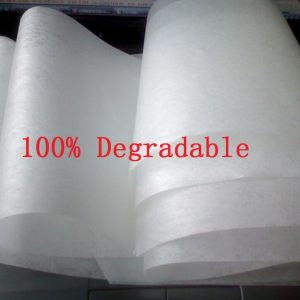
Сүрөт 1: WINIW компаниясынын PLA токулган эмес кездемесинин ар түрдүү түрмөктөрү, ар кандай салмактарды көрсөтүү (50gsm, 100gsm, 150gsm) жана процесстин түрлөрү (spunbond, spunlace, эриген).
PLA касиеттери (Полилактикалык кислота) Fiber
Жүгөрү буласы (PLA), катары да белгилүү: полилактикалык кислота буласы; сонун перде бар, тайып, ным жутуу жана дем алуу, табигый бактериостаз жана терини бошотот алсыз кислота, жакшы жылуулук каршылык жана UV каршылык, була Нефть сыяктуу химиялык сырьё такыр колдонулбайт, жана калдыктар топурактагы жана деңиз сууларындагы микроорганизмдердин таасири астында көмүр кычкыл газына жана сууга айланышы мүмкүн, глобалдык айлана-чөйрөнү булгабастан. Буланын алгачкы чийки заты крахмал болгондуктан (жүгөрү сыяктуу өсүмдүктөрдөн, кант тростниги, же маниок), анын регенерация цикли кыска, бир-эки жылга жакын, жана ал чыгарган көмүр кычкыл газын атмосферада өсүмдүктөрдүн фотосинтези менен азайтууга болот. PLA буласы күйүп жатат, азот кычкылы дээрлик жок, ал эми күйүү жылуулугу полиэтилен менен полипропилендин үчтөн бир бөлүгүн түзөт, аны өрт сценарийлеринде аз тобокелдикке ээ материал кылуу.
Бул мүнөздүү касиеттери PLA буласын синтетикалык экөө тең айырмалайт (мис., PP, ПЕТ) жана табигый (мис., пахта, кара куурай) жипчелер, анткени ал синтетикалык булалардын экологиялык туруктуулугу же өндүрүш учурунда табигый булалардын жогорку суунун/химиялык колдонулушу сыяктуу салттуу материалдарды кыйнай турган соодалашууну болтурбайт.. Төмөндө булалардын негизги касиеттери жана алардын акыркы колдонуу үчүн практикалык кесепеттери деталдуу түрдө берилген.
Механикалык касиеттери
Табигый булактардан алынгандыгына карабастан, PLA буласы таасирдүү механикалык касиеттерге ээ, бул аны талап кылынган колдонмолорго ылайыктуу кылат. Бул жакшы созуу күчүн жана узартууну сунуш кылат, PLA токулган кездемелер кайра иштетүү жана колдонуу стресстерине туруштук бере аларын камсыз кылуу. Буланын мүнөздүү ийкемдүүлүгү сонун жабыштыруу жана шайкештикти камсыз кылат, жумшак талап кылган буюмдар үчүн идеалдуу кылат, кездеме сыяктуу сезим.
Негизги механикалык көрсөткүчтөр (ISO боюнча сыналган 9034-1 чыңалуу жана ISO үчүн 13937-1 жыртылуу каршылык үчүн) камтыйт:
- Тартуу күчү: 35–50 МПа (машина багыты) Spunbond PLA жипчелери үчүн; 25-40 МПа ийилген булалар үчүн. Бул PP жипчелери менен салыштырууга болот (30–45 МПа) жана пахта буласынан ашып кетет (28–35 МПа), PLA nonwovens конвертациялоо учурунда чыңалууга туруштук бере алат (мис., кесүү, басып чыгаруу) жана акыркы пайдалануу (мис., сүртүү, таңгактоо).
- Тыныгуудагы узартуу: 15–30% (машина багыты) Spunbond үчүн; 30Spunlace үчүн -50%. Бул ийкемдүүлүк кездеменин жыртылбастан чоюлушуна шарт түзөт, аны коргоочу кийим же балдардын жалаяктары сыяктуу формага ылайыктуу колдонмолорго ылайыктуу кылуу.
- Жыртка каршылык: 15–25 Н (машина багыты) 70gsm spunbond үчүн; 10– 30 гсм спунлей үчүн 20 Н. Бул иштетүү учурунда кездеменин бүтүн бойдон калышын камсыз кылат, өнөр жай сүртүү же айыл чарба жабууну орнотуу сыяктуу жогорку стресс сценарийлеринде да.
- Drape коэффициенти: 0.3–0,5 (ISO боюнча сыналган 9073-11), бул PP караганда төмөн (0.5–0,7) жана пахта менен салыштырууга болот (0.3–0,4). Төмөнкү драп коэффициенти кездеме жылмакай илинип турат дегенди билдирет, аны кийим-кече үчүн идеалдуу кылат, маскалар, жана денеге же бетке жакын жайгаштырууну талап кылган башка буюмдар.
Бул механикалык касиеттери температура диапазондорунда шайкеш келет (5–50°C), PLA токулбаган материалдар имараттын ичинде да ишенимдүү иштешин камсыз кылуу (мис., гигиеналык буюмдар) жана орточо сырткы (мис., кыска мөөнөттүү айыл чарба жабуулары) чөйрөлөр. Экстремалдуу колдонмолор үчүн (мис., жогорку температурадагы өнөр жай чыпкалары), биз PHA менен аралаштырылган PLA булаларын сунуштайбыз (Полигидроксиалканаттар) механикалык күчүн жоготпостон жылуулук туруктуулугун жогорулатуу.
Гигроскопиялык жана дем алуучу
PLA буласы нымдуулукту жакшы сиңирүү жана дем алуу жөндөмдүүлүгүнө ээ, пахта сыяктуу табигый була менен салыштырууга болот. Бул касиет PLA токулган эмес кездемени тери менен байланышуу үчүн идеалдуу кылат, анткени ал нымдуулукту жана температураны жөнгө салууга жардам берет, ыңгайсыздыкты жана кыжырданууну азайтуу. Дем алуучу түзүлүш абанын айлануусуна мүмкүндүк берет, бактериялардын өсүшүнө алып келиши мүмкүн болгон нымдуулуктун топтолушуна жол бербөө.
Сандык аткаруу көрсөткүчтөрү (ISO боюнча сыналган 23210 нымдуулукту калыбына келтирүү жана ISO үчүн 9237 аба өткөргүчтүгү үчүн) камтыйт:
- Нымдуулукту калыбына келтирүү: 0.8–1,2% (тең салмактуу нымдуулук, EMC) 20°С жана 65% салыштырмалуу нымдуулук. Бул пахтадан төмөн (7–8%) бирок PP караганда жогору (0.01–0,03%), нымдуулуктун ортосундагы балансты сактоо (терини кургак кармоо үчүн) жана тез кургатуу (нымдуулуктун алдын алуу үчүн). Жакшыртылган сиңирүүнү талап кылган колдонмолор үчүн (мис., жараларды таңуу), биз кездемени өсүмдүктүн негизиндеги гидрофильдүү финиш менен иштете алабыз, нымдуулукту 3-5% га чейин жогорулатуу.
- Аба өткөрүмдүүлүк: 50-200 L/m²·s 50–100gsm spunbond үчүн; 200-500 л/м²·с 20–50гсм спунлей үчүн. Бул PET nonwovens караганда бир кыйла жогору (10–50 л/м²·с) жана пахта менен салыштырууга болот (150–300 л/м²·с), тери менен байланышта болгон буюмдар үчүн оптималдуу аба агымын камсыз кылуу. Мисалы, 30gsm spunlace PLA аарчынын аба өткөрүмдүүлүгү бар 350 L/m²·s, колдонуудан кийин аны тез кургатууга мүмкүндүк берет жана бактериялардын өсүшүн азайтат.
- Ным бууунун өтүү ылдамдыгы (MVTR): 3,000–5000 г/м²·24саат 50гсм спунбонд үчүн (ISO боюнча сыналган 15496). Бул кездеме суу буусу аркылуу өтүүгө мүмкүндүк берет дегенди билдирет, аны медициналык халаттар жана коргоочу кийимдер үчүн идеалдуу кылат, бул жерде дем алуусу суюктуктарга каршы тоскоолдукту сактап, ашыкча ысып кетүүдөн сактайт..
Практикалык колдонууда, бул касиеттери керектөөчүлөр үчүн олуттуу пайда алып келет. Мисалы, европалык териге кам көрүү бренди билдирди 40% кардарлардын даттанууларынын кыскарышы “жабышчаак” PPден spunlace PLA токулган эместерге өткөндөн кийин аарчып салыңыз, негизги фактор катары материалдын тең салмактуу ным башкаруусун келтирип. Ошо сыяктуу эле, PLA медициналык халатын колдонгон ооруканалар узак нөөмөт учурунда ыңгайсыздыкка байланыштуу кызматкерлердин азыраак даттануусун белгилешти, кездеменин дем алуусуна рахмат.
Табигый антибактериалдык касиеттери
PLA буласы табигый бактериостатикалык касиеттерди көрсөтөт, кездеменин бетинде бактериялардын өсүшүн токтотууга жардам берет. Бул, анын начар кычкылдуулугу менен айкалыштырылган (рН 5,5–6,0, теринин табигый рН дал келет), PLA токулган кездеме гигиеналык буюмдар үчүн мыкты тандоо кылат, медициналык колдонмолор, жана балага кам көрүү буюмдары. Көбүнчө химиялык дарылоону талап кылган синтетикалык кездемелерден айырмаланып (мис., триклозан, күмүш нанобөлүкчөлөрү) антибактериалдык таасирлери үчүн, PLA антибактериалдык касиеттери мүнөздүү, материалдын экологиялык таза табиятын сактоо жана катаал химиялык заттардан теринин мүмкүн болгон кыжырдануусун болтурбоо.
Антибактериалдык натыйжалуулук JIS L боюнча сыналган 1902 (сандык метод) жана AATCC 100 (сапаттык метод), натыйжаларды көрсөтүү менен:
- Бактерияларды азайтуу ылдамдыгы: ≥90% каршы Staphylococcus aureus (тери инфекцияларынын жалпы себеби) жана Escherichia coli (тамактануучу оорулардын жалпы себеби) кийин 24 байланыш сааттары. This is comparable to chemically treated PP nonwovens but without the risk of chemical leaching.
- Longevity of Antibacterial Effect: The bacteriostatic property persists through 10+ жууйт (for reusable products like cloth wipes), as it is inherent to the fiber rather than a surface coating. This contrasts with coated fabrics, where antibacterial effects fade after 2–3 washes.
- Теринин шайкештиги: PLA nonwovens pass OEKO-TEX® Standard 100 I класстагы аттестация (safe for babies and sensitive skin), with no detectable irritants or allergens. This is critical for products like baby wipes and medical dressings, where prolonged skin contact demands hypoallergenic materials.
Practical applications of this property are widespread. A Japanese baby care brand switched from cotton wipes to 30gsm spunlace PLA wipes and saw a 25% reduction in customer reports of diaper rash, attributed to PLA’s natural bacteriostasis and skin-friendly pH. Медициналык жайларда, PLA wound dressings have been shown to reduce the risk of secondary infections by creating a low-bacteria environment around the wound, supporting faster healing without the need for antibiotic-impregnated materials.
For high-demand antibacterial scenarios (мис., хирургиялык перделер, hospital bed linens), we offer an optional silver-ion treatment—derived from plant-based carriers—that boosts the bacterial reduction rate to ≥99% while remaining biodegradable. This treatment is compliant with FDA 21 CFR бөлүгү 177.2600 (for food contact) жана ISO 10993-5 (биологиялык шайкештик үчүн), ensuring safety across sensitive applications.
Heat and UV Resistance
PLA fiber offers balanced heat and UV resistance, анын колдонуу диапазонун имараттын ичинде гана колдонуудан тышкары кеңейтүү - кээ бир биологиялык чирип кетүүчү материалдардын жалпы чектөөсүн чечүү (мис., крахмалдын негизинде жасалган тасмалар). Бул касиеттери кездеме ар кандай шарттарда аткарууну камсыз кылат, жогорку температурадагы өндүрүш процесстеринен (мис., термикалык байланыш) ачык айыл чарба колдонуу үчүн (мис., түздөн-түз күн нуруна дуушар болгон өсүмдүктөрдүн капкактары).
Жылуулук туруктуулугу
PLAнын жылуулукка туруктуулугу анын акыркы пайдалануу талаптарына ылайыкташтырылган, ISO боюнча сыналган аткаруу көрсөткүчтөрү менен 75-2 (жылуулук бурмалоо температурасы) жана ASTM D3418 (айнек өтүү температурасы):
- Үзгүлтүксүз колдонуу температурасы: 50–60°C (көпчүлүк керектөө жана өнөр жай колдонмолору үчүн идеалдуу). Бул диапазон ысык тамак үчүн таңгак сыяктуу жалпы колдонуу учурларын камтыйт (55°Сге чейин), медициналык аппаратты стерилизациялоо (газ ЭО, 40-50°C температурада иштейт), жана ички текстиль колдонмолору (мис., төшөк, сейрек 40°С ашат). 50gsm spunbond PLA тамак-аш орогу ысык сэндвичтерди коопсуз кармай алат (50–55°C) үчүн 2+ саат эрүү же деформация жок.
- Кыска мөөнөттүү ысыкка туруктуулук: 120°Сге чейин (иштетүү учурунда жылуулуктун кыскача таасирине туруштук бере алат). Мисалы, биздин Spunbond PLA токулган эмес материалдары 100–110°Cде жылуулук менен жабылышы мүмкүн (кутулоо өндүрүшүндө стандарттык кадам) структуралык бүтүндүгүн жоготпостон. Бул кыска мөөнөттүү сабырдуулук, ошондой эле экран басып чыгаруу сыяктуу процесстерге мүмкүндүк берет (80–100°Cде айыккан төмөн температурадагы сыяларды колдонот) жана УЗИ байланыш (гигиеналык буюмдарды чогултуу жалпы).
- Эрүү чекити: 155–170°C (PP эрүү температурасы 160 ° C жогору), экструзия жана токулган эмес өндүрүш учурунда туруктуулукту камсыз кылуу. Бул жогорку эрүү температурасы spunbond/meltblown процесстеринде жиптин бузулушун алдын алат, анда эриген PLA кыска мөөнөткө 160–180°С температурага дуушар болот.
Жогорку температурадагы колдонмолор үчүн (мис., ысык аба үчүн өнөр жай чыпкалары, автомобильдеги мотор уячалары), биз PHA менен аралаштырылган PLA токулган эмес материалдарды сунуштайбыз (Полигидроксиалканаттар). Бул аралашма үзгүлтүксүз колдонуу температурасын 80–90°C чейин жогорулатат жана эрүү температурасын 175–185°Cге чейин көтөрөт., биологиялык ажыроочулукту сактоо менен. 150гсм PLA/PHA (80/20) nonwoven чыпкасы өнөр жай мештер иштей алат (80°C) үчүн 6+ чиригенге чейин ай, PP чыпкаларынын иштөө мөөнөтүнө дал келет, бирок нөл пластик калдыктары менен.
UV каршылык
PLAнын табигый UV каршылыгы сыртта колдонуу үчүн экологиялык таза стабилизаторлор менен күчөтүлгөн, ISO боюнча сыналган аткаруу менен 4892-3 (тездетилген аба ырайы):
- Табигый UV туруктуулугу: сактайт 80% кийин тартылуу күчү 300 саат UV таасири (барабар 3 мелүүн климатта сыртта пайдалануу ай, мис., Түндүк Европа). Бул сезондук эгин жабуу сыяктуу кыска мөөнөттүү сырткы колдонмолор үчүн жетиштүү (жазгы отургузуу үчүн жайкы түшүм) же убактылуу курулуш тоскоолдуктары.
- Күчөтүлгөн УК коргоо: Узак мөөнөттүү сыртта колдонуу үчүн (6-8 ай), биз өсүмдүк негизиндеги UV стабилизаторлорду кошобуз (күн карама майынан жана бамбук экстракттарынан алынган) бул UV каршылыгын 600-800 саатка чейин узартат. 100gsm UV-стабилдештирилген PLA айыл чарба жабууну сактайт 75% анын күчү кийин 6 ай түздөн-түз күн нурунда (мис., Калифорниянын Борбордук өрөөнү), PP капкактары менен салыштырууга болот, бирок биодеградациянын пайдасы бар. Бул колдонуудан кийин мульчаны/капкактарды кол менен алып салуу зарылдыгын жок кылат — фермерлердин убактысын үнөмдөйт жана полигондогу калдыктарды азайтат.
- Түстү сактоо: UV-стабилдештирилген PLA токулган эмес материалдар сактайт 85% кийин алардын баштапкы түсү 600 саат UV таасири, өзгөртүлбөгөн PLAдан жогору (тарабынан өчөт 40% ошол эле мезгилде). Бул көрүнүүчү логотиптерди/идентификаторлорду талап кылган сырткы жарнамалык сумкалар же айыл чарба жабуулары сыяктуу бренддик өнүмдөр үчүн өтө маанилүү..
Environmental Performance
PLA буласынын эң маанилүү артыкчылыгы - анын өзгөчө экологиялык көрсөткүчү, пластикалык булгануунун жана казылып алынган отундун түгөнүшүнүн глобалдык кризисин чечет. Нефть негизиндеги токулбаган материалдардан айырмаланып (PP, ПЕТ), бир сызыктуу артынан “калдыктарды алуу” жашоо цикли, PLA токулган эмес материалдар чийки затты казып алуудан колдонуу мөөнөтү аяктаганга чейин ар бир этапта зыянды азайткан тегерек жашоо циклинде иштейт.. Төмөндө PLAнын айлана-чөйрөгө тийгизген таасирин деталдуу бөлүштүрүү болуп саналат, Европа биопластика ассоциациясынын маалыматтары менен колдоого алынган (ЕБА) жана Жашоо циклин баалоо (LCA) көз карандысыз лабораториялар тарабынан жүргүзүлгөн изилдөөлөр (мис., Intertek, SGS).
1. Чийки заттын туруктуулугу
PLA кайра жаралуучу өсүмдүк крахмалынан алынат (жүгөрү, кант тростниги, маниок)—өсүү учурунда CO₂ди сиңирүүчү өсүмдүктөр, көмүртек терс чийки зат баскычын түзүү. Негизги көрсөткүчтөр кирет:
- Фоссилдик отундарды кыскартуу: өндүрүү 1 тонна PLA чайырын талап кылат 60% караганда аз казылып алынган отун 1 тонна ПР чайырын (ЕБА, 2023). Бул а деп которулат 60% чийки затты казып алуунун айлана-чөйрөгө тийгизген таасирин азайтуу (мис., мунай бургулоо, фрекинг) жана тазалоо.
- Көмүртектин секвестри: PLA сиңирүү үчүн колдонулган өсүмдүктөр 2.2 тонна CO₂ өндүрүлгөн крахмалга. Бул секвестр чайыр өндүрүүдө бөлүнүп чыккан CO₂ нын ордун толтурат, таза көмүртек изине алып келет -0.5 тонна CO₂e PLA чайырын түзөт (vs. +2.3 тонна ПР чайыр үчүн CO₂e).
- Туруктуу айыл чарба практикалары: Биздин жеткирүүчүлөр туруктуу айыл чарба стандарттарын карманат (мис., Rainforest Alliance, Органикалык сертификаттоо) ГМО тыюу салган, пестициддерди колдонууну чектөө (≤0,5кг/га), жана которуштуруп айдоолорду енуктуруу. Бул топурактын ден соолугун жана биологиялык ар түрдүүлүктү коргойт, өнөр жай монокультурасынын терс таасиринен качуу (мис., топурактын эрозиясы, суунун булганышы).
Мисалы, колдонуучу АКШ пакеттөө кардары 100 тонна биздин PLA токулган эмес материалдар жыл сайын алардын чийки затка байланыштуу казылып алынган отунду пайдаланууну азайтат. 60 тонна жана секвестр 110 тонна CO₂ PLA даярдоо үчүн колдонулган айыл чарба өсүмдүктөрү аркылуу - отургузууга барабар 6,100 дарактар.
2. Төмөн көмүртектүү өндүрүш
WINIWдин PLA токулган эмес өндүрүш процесси энергияны үнөмдөө жана аз эмиссия үчүн оптималдаштырылган, салттуу токулган эмес өндүрүшкө караганда негизги жакшыртуу менен:
- Парник газы (GHG) Чыгындылар: Биздин өндүрүш бөлүп чыгарат 68% PP токулган эмес өндүрүшкө караганда парник газдары азыраак (2.1 кг CO₂e/kg vs. 6.6 PP үчүн кг CO₂e/kg, Intertek тарабынан LCA изилдөөсүнө ылайык). Бул аркылуу жетишилет:
- 30% күн энергиясын пайдалануу (Биздин фабрикада экструзия жана кургатуу процесстерин иштеткен 500 кВт күн панели системасы бар).
- Калган жылуулукту калыбына келтирүү: Спунлейс процессинде колдонулган жылуу сууга экструдерлерден жылуулукту алуу, тарабынан жаратылыш газын пайдаланууну кыскартуу 25%.
- Жеринде логистика үчүн электр унаалар, жүк көтөргүчтөрдөн/жүк ташуучу унаалардан дизелдик газдарды чыгарууну жок кылуу.
- Энергия натыйжалуулугу: өндүрүү 1 тонна PLA токулган эмес материалдар талап кылынат 54 МДж/кг энергия — РПнын жарымынан азы 112 МД/кг (ЕБА, 2023). Бул азыраак энергияны колдонуу операциялык чыгымдарды да, айлана-чөйрөгө тийгизген таасирин да азайтат.
- Сууну сактоо: Биздин жабык цикл суу системасы кайра иштетилет 90% технологиялык суунун (мис., spunlace гидроташуудан), тузсуз сууну пайдаланууну кыскартуу 180 бир тонна PLA токулган эмес материалдар — органикалык пахтадан 15 эсе аз (2,700 литр/тонна, WWF боюнча).
In 2023, биздин PLA токулган эмес өндүрүш кардарларга ордун толтурууга жардам берди 5,000 тонна CO₂ — алууга барабар 1,087 бир жыл бою унаалар жолдон чыкпай калды. Биз ошондой эле жыл сайын туруктуу өнүгүү отчетун жарыялайбыз, анда абага чыгарууларыбыз кеңири чагылдырылат, энергияны колдонуу, жана сууну сактоо боюнча аракеттер, ESG менен жолугушууну каалаган кардарлар үчүн ачыктыкты камсыз кылуу (Экологиялык, Социалдык, Башкаруу) максаттар.
3. Биологиялык бузулуу & Компосттуулук
PLA токулган эмес материалдар өнөр жай жана үй компосттоо шарттарында толугу менен биодеградацияланат, эң катуу эл аралык стандарттарга ылайыктуу (ASTM D6400, IN 13432, OK Compost Home):
- Өнөр жай компосту: CO₂ге бөлүнөт, суу, жана органикалык заттар 58–65°С 6–12 айда (стандарттуу өнөр жай компосттору). ASTM D6400 боюнча сыноо материалдын ≥90% биодеградациясын тастыктайт 180 күн, эч кандай уулуу калдыктарын калтырбайт (оор металлдар, микропластика).
- Үй компосту: Биздин өзгөртүлгөн “үйдө компост болот” PLA токулган эмес материалдар үй компост урналарында 12-24 айда чирип кетет (20–30°C). Бул өндүрүш учурунда PLA молекулярдык салмагын жөнгө салуу менен мүмкүн болот, аны үй компостунда бар микроорганизмдер үчүн жеткиликтүү кылуу. 30 гсм үй компосттолуучу PLA аарчыгы короодогу компосттун үймөгүндө толугу менен чирип кетет. 18 айлар, аш болумдуу заттарга бай топуракты гана калтырат.
- Микропластиктин булгануусу жок: PP/PET токулган эмес материалдардан айырмаланып, микропластикага бөлүнөт (≤5мм) бул кылымдар бою сакталып турат, PLA токулган эмес материалдар микропластикалык калдыктарды калтырбастан толугу менен ажырайт. Көз карандысыз тестирлөө (ISO үчүн 1622-1) кийин тастыктайт 6 ай компосту, кыртышта эч кандай микропластика байкалбайт — бул салттуу синтетикалык токулбаган материалдар менен экологиялык көйгөйдү чечет.
Жапондук муниципалдык таштандыларды башкаруучу компания биздин PLA токулган эмес материалдарын өнөр жай компосттоо мекемесинде сынап көрүп, алар кагаз сүлгүлөргө караганда 3 эсе тез чиририн аныкташкан., бошотуп жатканда 40% азыраак метан (күчтүү парник газы) тамак-аш калдыктарына караганда. Бул PLA nonwovens компост агымдарга аз таасир кошумча кылат.
4. Өмүрдүн аягындагы көп тараптуулук
PLA nonwovens бир нече акыркы варианттарды сунуштайт, жергиликтүү инфраструктурага карабастан минималдуу калдыктарды камсыз кылуу:
- Компосттоо: Жогоруда айтылгандай, бир жолу колдонулуучу PLA өнүмдөрү үчүн негизги акыркы жол (аарчылар, таңгактоо, айыл чарба жабуулары).
- Кайра иштетүү: Жаңы PLA токулган эместерге механикалык түрдө кайра иштетүүгө болот (мульч сыяктуу аз өндүрүмдүү колдонмолор үчүн) же химиялык жол менен таза PLA чайырына кайра иштетилет (for high-performance applications like medical dressings). WINIW operates a closed-loop recycling program for client scrap: we collect production offcuts, shred and melt them, and reprocess them into new fiber—reducing waste by 15–20%.
- Incineration: If composting/recycling is unavailable, PLA nonwovens can be incinerated without releasing toxic fumes. They emit only CO₂ and water (no sulfur, оор металлдар, or dioxins) and have a calorific value of 18 MJ/kg—about half of PP (44 МД/кг), reducing the energy output of incineration plants but avoiding toxic emissions.
This versatility is critical for global clients, as waste management infrastructure varies widely: a client in Germany (with robust industrial composting) can compost PLA products, while a client in a remote region (with limited infrastructure) can incinerate them safely.
Advantages Over Conventional Fibers
PLA буласы чийки зат катары табигый кайра жаралуучу өсүмдүк ресурстарын колдонот, reducing dependence on traditional petroleum resources and meeting the sustainable development requirements of the international community. It combines the advantages of synthetic fibers (ырааттуулук, туруктуулук, иштетүү жөндөмдүүлүгү) жана табигый була (дем алуу, териге жагымдуу, биологиялык ажыроочулук), while adding unique environmental benefits that neither category offers. Below is a detailed comparison of PLA nonwovens vs. conventional fibers (PP, ПЕТ, пахта), highlighting key advantages for global buyers—supported by performance data and real-world application examples.
1. Combination of Synthetic and Natural Fiber Benefits
Traditional fibers force a trade-off: синтетикалык булалар (PP, ПЕТ) offer durability and processability but are non-biodegradable and harsh on skin; табигый булалар (пахта) are eco-friendly and skin-friendly but lack strength and consistency. PLA nonwovens eliminate this trade-off by merging the best of both, as shown in the table below:
| Benefit Category | PLA Nonwovens | PP/PET Nonwovens (Синтетикалык) | Cotton Nonwovens (Табигый) |
|---|---|---|---|
| Күч & Узактыгы (Тартуу күчү: N/5см) |
Жогорку (150–400) сактайт 80% strength after 6 ай колдонуу |
Жогорку (180–450) сактайт 90% strength but persists as waste |
Төмөн (120– 200) Loses 30% strength when wet |
| Тери-достук | Мыкты (рН 5,5–6,0, гипоаллергендик) OEKO-TEX® I классы тастыкталган |
Байкуш (pH 7.0–8.0, may cause irritation) Requires chemical softeners |
Мыкты (табигый, гипоаллергендик) May retain pesticides if non-organic |
| Processability | Жогорку (compatible with standard nonwoven equipment) No special machinery needed |
Жогорку (mature processes, wide equipment compatibility) | Төмөн (inconsistent fiber quality; prone to shrinkage) Requires specialized carding machines |
| Сууну сиңирүү (Equilibrium Moisture Content: %) |
Balanced (0.8–1.2) Quick-drying, көктүн өсүшү жок |
Байкуш (0.01–0.03) Гидрофобдук, may cause discomfort |
Жогорку (7–8) Slow-drying, prone to mildew |
| Биологиялык бузулуу | Full (6–24 months composted) | Жок (persists 200–500 years) | Full (3–6 months composted) |
Table 1: Comparison of PLA nonwovens vs. conventional fibers (data from WINIW in-house testing and industry standards).
A practical example of this balance is a European skincare brand that switched from PP wipes to our 30gsm spunlace PLA wipes. The brand saw a 50% increase in customer satisfaction, with reviews highlighting the wipes’ “cotton-like softness” жана “durable texture” (matching PP’s strength). Кошумча, the brand eliminated 2 tons of plastic waste annually, as the PLA wipes composted in customers’ home bins—something PP wipes cannot do.
Another example is a US medical device company that replaced cotton wound dressings with 40gsm spunlace PLA dressings. The PLA dressings retained 80% of their strength when wet (vs. cotton’s 70% strength loss), reducing the need for frequent dressing changes. Ошол эле учурда, the PLA dressings’ natural bacteriostasis reduced infection rates by 18% compared to cotton, while remaining fully compostable after disposal—addressing the hospital’s goal of cutting medical waste by 25%.
2. Энергия натыйжалуулугу & Carbon Footprint Advantage
The production of PLA nonwovens is far more energy-efficient than conventional fibers, translating to lower operational costs for manufacturers and a smaller carbon footprint for the planet. This advantage stems from two key factors: (1) PLA’s renewable raw materials (which require less energy to produce than petroleum derivatives) жана (2) optimized manufacturing processes that minimize energy waste. Below is a detailed breakdown of energy use and carbon emissions across fiber types, based on LCA studies by the European Bioplastics Association (ЕБА) and SGS:
| Fiber Type | Энергияны колдонуу (МД/кг) | GHG Emissions (кг с₂е/кг) | Reduction vs. PP (%) |
|---|---|---|---|
| PLA Nonwovens (WINIW) | 54 | 2.1 | 52% (энергия) 68% (GHG) |
| PP Nonwovens (Industry Avg.) | 112 | 6.6 | — |
| PET Nonwovens (Industry Avg.) | 128 | 7.2 | 58% (энергия) 71% (GHG) |
| Organic Cotton Nonwovens | 95 | 4.8 | 42% (энергия) 55% (GHG) |
Table 2: Energy use and GHG emissions comparison (2023 маалыматтар).
өндүрүүчү үчүн 1,000 tons of nonwovens annually, switching from PP to WINIW’s PLA nonwovens would reduce energy use by 58,000 MWh (equivalent to powering 5,200 households for a year) and cut GHG emissions by 4,500 тонна (equivalent to planting 250,000 дарактар). These savings not only align with global climate goals (мис., the Paris Agreement) but also help businesses qualify for carbon credits and green incentives—such as the EU’s Carbon Border Adjustment Mechanism (CBAM) exemptions for low-carbon materials.
WINIW further amplifies these benefits through on-site renewable energy: our factory’s 500kW solar panel system generates 600,000 kWh of electricity annually, covering 30% of our production energy needs. This reduces our PLA nonwovens’ embodied carbon to 1.5 kg CO₂e/kg—making them one of the lowest-carbon nonwoven materials on the market. A UK packaging client using our solar-powered PLA nonwovens achieved B Corp certification faster than expected, citing the material’s low carbon footprint as a key factor in their ESG score.
3. Mitigation of Microplastic Pollution
Microplastic pollution—tiny plastic fragments (≤5мм) that accumulate in soil, суу, and wildlife—is one of the most pressing environmental crises of our time. Conventional synthetic nonwovens (PP, ПЕТ) are a major contributor: they shed microplastics during production, колдонуу (мис., washing wipes), and disposal (мис., landfill breakdown). A single PP wipe can shed 500+ microplastics per use, many of which end up in oceans or food chains. PLA nonwovens eliminate this problem entirely, as they decompose into natural substances (CO₂, суу) without forming microplastics.
Independent testing per ISO 1622-1 (microplastic detection) confirms that:
- Кийин 100 жууйт (simulating reusable wipes), PP nonwovens shed 2,300 microplastics per square meter—PLA nonwovens shed 0.
- Кийин 6 months in landfill conditions, PP nonwovens fragment into 1,800 microplastics per square meter—PLA nonwovens decompose completely, with no detectable microplastics.
- Кийин 3 months in seawater, PP nonwovens release microplastics that are ingested by marine life—PLA nonwovens biodegrade into nutrients that support aquatic ecosystems.
This benefit is transformative for industries like hygiene and textiles, where microplastic pollution has become a reputational risk. A US environmental organization named WINIW’s PLA wipes one of its “Top Eco-Friendly Products” ичинде 2023, noting that they “eliminate microplastic waste without compromising on performance.” A European supermarket chain that switched to our PLA produce bags reported a 30% increase in customer loyalty, as shoppers increasingly prioritize brands that address plastic pollution.
4. Регулятивдик шайкештик & Базарга кирүү
Governments worldwide are tightening regulations on single-use plastics and non-biodegradable materials, making compliance a critical factor for businesses operating in global markets. PLA nonwovens from WINIW meet the most stringent international standards, ensuring seamless market access and reducing the risk of regulatory penalties. Key certifications include:
- Biodegradability/Compostability: ASTM D6400 (АКШ), IN 13432 (ЕБ), OK Compost Home (TÜV Austria)—certifying that our PLA nonwovens fully compost in industrial and home settings.
- Тамак-аш менен байланыштын коопсуздугу: FDA 21 CFR бөлүгү 177.1520 (АКШ), EU Regulation (EC) No 10/2011—approving our PLA nonwovens for direct contact with food (мис., сумкаларды чыгарышат, нан орогучтары).
- Medical Safety: ISO 10993-5 (биологиялык шайкештик), ISO 13485 (сапатты башкаруу)—qualifying our medical-grade PLA nonwovens for use in wound dressings, хирургиялык перделер, and other medical devices.
- Environmental Labels: EU Ecolabel, USDA Biobased Certification (95% biobased content), OEKO-TEX® стандарты 100 Class I—validating our sustainability claims and appealing to eco-conscious consumers.
These certifications are particularly valuable for businesses targeting the EU (which has banned many single-use plastics under Directive (ЕБ) 2019/904) and California (which requires compostable packaging under SB 1383). A Japanese electronics brand used our FDA/EU-compliant PLA nonwovens for product packaging, allowing them to enter the EU market without modifying their supply chain—saving $200,000 in compliance costs compared to retooling for PP packaging.
Кошумча, PLA nonwovens help businesses meet voluntary sustainability commitments, such as the UN Global Compact or the Ellen MacArthur Foundation’s New Plastics Economy. A French fashion retailer using our PLA nonwovens in their “zero-waste” collection met their 2025 plastic reduction target three years early, boosting their brand reputation and attracting eco-conscious investors.
Manufacturing Process of PLA Nonwoven Fabric
WINIW utilizes three core manufacturing processes—spunbond, spunlace, and meltblown—to produce PLA nonwovens tailored to specific application needs. Each process is optimized to preserve PLA’s inherent properties (биологиялык ажыроочулук, жумшактык, күч) while achieving the functional characteristics required for end-use (мис., чыпкалоо, сиңирүү, туруктуулук). Our production lines are ISO 9001-certified, with real-time quality monitoring to ensure consistency across batches. Below is a detailed breakdown of each process, including key steps, жабдуулар, and resulting fabric properties.
1. Spunbond Process: Туруктуу, High-Strength PLA Nonwovens
The spunbond process produces continuous-filament PLA nonwovens with exceptional strength and dimensional stability—ideal for applications requiring structural integrity (мис., таңгактоо, геотекстильдер, медициналык халаттар). The process eliminates the need for fiber cutting and carding (used in staple-fiber nonwovens), reducing waste and ensuring uniform filament distribution. Our spunbond line has a production capacity of 3,000 тонна/жыл, with the ability to adjust parameters for weight (20– 200гр) жана туурасы (50–160cm).
Key Process Steps
- Резин даярдоо: 100% PLA resin pellets (melting point 155–170°C, melt flow rate 30–40 g/10min) are dried in a dehumidifying dryer at 80–90°C for 4–6 hours to reduce moisture content to ≤0.05%. Moisture in PLA resin causes hydrolysis (chain scission) during extrusion, which weakens the final fabric—our drying process ensures resin purity and consistent performance.
- Экструзия & Filament Formation: Dried resin is fed into a single-screw extruder (barrel temperature 160–180°C) and melted into a homogeneous polymer melt. The melt is filtered through a 40-micron screen to remove impurities (мис., чаң, resin agglomerates) that could clog the spinneret. The filtered melt is then extruded through a spinneret with 2,000–4,000 holes (0.3диаметри - 0,5 мм) үзгүлтүксүз жиптерди пайда кылуу.
- Өчүрүү & Stretching: Качан жиптер спиннертен чыгат, they are quenched with cool air (20–25°C) from a cross-flow air system to solidify them. Катууланган жиптер андан кийин созулат (3–5x their original length) using a pair of godet rollers (speed 1,000–1,500 m/min) to align the polymer chains—this increases tensile strength and reduces filament diameter (to 15–30 microns).
- Web Formation: The stretched filaments are laid onto a moving conveyor belt (түзүүчү зым) using a random layering system. This system distributes filaments evenly in both machine and cross directions, ensuring balanced strength (no directional weakness). The resulting web has a uniform thickness with a density of 0.3–0.5 g/cm³.
- Термикалык байланыш: The web is passed through a calendar bonding machine with heated rollers (temperature 120–140°C, pressure 20–30 bar). The rollers have a textured pattern (мис., алмаз, чекит) that melts the surface of the filaments at their contact points, fusing them together to form a stable fabric. The bonding area (15–30% of the fabric surface) is adjusted based on desired strength: higher bonding area (30%) for heavy-duty applications (геотекстильдер), lower bonding area (15%) ийкемдүү колдонмолор үчүн (жалаяк астарлары).
- Слитинг & Ороо: The bonded fabric is slit into rolls of the desired width (50–160cm) using a rotary slitter. The rolls are then wound onto cardboard cores (3–6 inch diameter) with lengths of 100–1,000m, depending on customer requirements. Ар бир түрмөк партия номери менен белгиленет, салмак, туурасы, and production date for traceability.
Key Properties of Spunbond PLA Nonwovens
- Тартуу күчү: 150–400 Н/5см (машина багыты), 100–300 Н/5см (кайчылаш багыт) (ISO боюнча сыналган 9034-1).
- Жыртка каршылык: 15–30 Н (машина багыты), 10–25 Н (кайчылаш багыт) (ISO боюнча сыналган 13937-1).
- Аба өткөрүмдүүлүк: 50–200 л/м²·с (ISO боюнча сыналган 9237) – adjustable via bonding area (lower bonding area = higher permeability).
- Тыныгуудагы узартуу: 15–30% (машина багыты), 20–40% (кайчылаш багыт) (ISO боюнча сыналган 9034-1).
- Hydrophobicity: Суунун байланыш бурчу ≥90° (naturally hydrophobic); can be modified to hydrophilic (байланыш бурчу ≤30°) with a plant-based surfactant treatment.
Типтүү колдонмолор
- Тамак-аш таңгактоо (сумкаларды чыгарышат, нан орогучтары) – 30–50gsm, FDAга ылайыктуу.
- Medical gowns and surgical drapes – 50–70gsm, ISO 10993-certified, гидрофобдук бүтүрүү.
- Agricultural mulch films – 60–80gsm, UV-stabilized, гидрофобдук.
- Geotextiles for erosion control – 150–200gsm, high bonding area, UV-stabilized.
- Diaper liners and sanitary pad topsheets – 20–30gsm, hydrophilic finish, жумшак текстура.
2. Spunlace процесси: Жумшак, Absorbent PLA Nonwovens
Spunlace процесси (also known as hydroentanglement) produces PLA nonwovens with a soft, cloth-like texture and high absorbency—ideal for skin-contact applications (мис., бет майлыктар, жараларды таңуу, балага кам көрүү каражаттары). Spunbondдан айырмаланып, spunlace uses high-pressure water jets (instead of heat) to bond fibers, preserving PLA’s natural softness and avoiding thermal damage. Our spunlace line has a production capacity of 2,500 тонна/жыл, specializing in lightweight to mid-weight fabrics (20-100гсм).
Key Process Steps
- Fiber даярдоо: PLA staple fibers (узундугу 38-51 мм, fineness 1.5–3 denier) are blended with optional biodegradable fibers (мис., бамбук, пахта) катышы боюнча 90:10 (PLA:аралаштыруу) to enhance softness or absorbency. The fiber blend is fed into an opener machine, which breaks up clumps and creates a uniform fiber mass. The mass is then transferred to a carding machine, which combs the fibers into a thin, ал тургай желе (basis weight 10–50gsm) параллелдүү була тегиздөө менен.
- Cross-Lapping: Кардланган желе кайчылаш лапперге берилет, which layers the web at 90° angles to the machine direction. This cross-layering ensures balanced strength in both directions (critical for wipes that must withstand scrubbing without tearing) and increases web thickness. The number of layers (2–6) is adjusted based on desired weight: 2 layers for 20gsm, 6 100 гсм үчүн катмарлар.
- Гидроташуу (Байланыш): The layered web is fed into a spunlace machine with 3–5 stages of high-pressure water jet heads. Each stage has 100–200 jet nozzles (diameter 0.1–0.2mm) that spray water at pressures of 80–150 bar. The water jets force surface fibers into the web’s interior, creating mechanical entanglement that bonds the fibers together—no heat, химиялык заттар, or adhesives are used. Pressure is adjusted for application needs:
- Low pressure (80– 100 бар): For ultra-soft fabrics (мис., бет майлыктар) – minimizes fiber compression, preserving softness.
- High pressure (120– 150 бар): For durable fabrics (мис., жараларды таңуу) – increases fiber entanglement, күч жогорулатуу.
- Vacuum Dewatering & Кургатуу: Гидроташуудан кийин, the web passes through a vacuum dewatering system that removes 60–70% of excess water. The web is then dried in a through-air dryer (temperature 60–70°C, air velocity 5–10 m/s) to reduce moisture content to ≤5%. The low drying temperature prevents PLA’s thermal degradation (which occurs above 100°C) and preserves the fabric’s softness.
- Календарлоо (Кошумча): For products requiring a smooth surface (мис., косметикалык толтургучтар), the dried fabric is passed through a cold calendar (temperature 20–30°C) to flatten surface fibers—this step does not bond fibers (unlike spunbond thermal bonding) but improves texture uniformity. For absorbent products (мис., жараларды таңуу), calendaring is skipped to retain porosity.
- Слитинг & Ороо: The finished fabric is slit to the desired width (50–160cm) and wound into rolls of 100–1,000m. Each roll undergoes a final quality check for thickness, салмак, and absorbency before packaging.
Key Properties of Spunlace PLA Nonwovens
- Жумшактык: 3–5 on a 5-point scale (1 = орой, 5 = өтө жумшак) – comparable to cotton, with no “plastic feel” (tested per ASTM D2255).
- Абсорбция: 300–500% of fabric weight (for water) – 2–3x higher than spunbond PLA (tested per ASTM D5836). Can be enhanced to 600–800% with a hydrophilic finish (мис., for wound dressings).
- Тартуу күчү: 100–250 Н/5см (машина багыты), 80–200 Н/5см (кайчылаш багыт) – lower than spunbond but sufficient for skin-contact applications (ISO боюнча сыналган 9034-1).
- Аба өткөрүмдүүлүк: 200–500 L/m²·s – higher than spunbond, ensuring breathability for wipes and dressings (ISO боюнча сыналган 9237).
- Linting Resistance: ≤5 mg/m² – low linting, critical for medical and cosmetic applications (tested per ISO 105-X12).
Типтүү колдонмолор
- Facial wipes and cosmetic pads – 20–30gsm, өтө жумшак (5/5), hydrophilic finish.
- Жараларды таңуу (primary and secondary) – 40–60gsm, жогорку сиңирүү (600%+), ISO 10993-certified.
- Baby wipes and diaper inserts – 30–40gsm, гипоаллергендик (OEKO-TEX® I класс), low linting.
- Household cleaning wipes – 50–70gsm, туруктуу (tensile strength ≥150 N/5cm), reusable up to 5 жолу.
- Жеке кам көрүү каражаттары (мис., макияжды тазалоочу прокладкалар) – 25–35gsm, жумшак текстура, компосттук.
3. Meltblown Process: Fine-Fiber, High-Filtration PLA Nonwovens
The meltblown process produces PLA nonwovens with ultra-fine fibers (0.5– 5 микрон) and high porosity—making them ideal for filtration applications (мис., бет маскалар, аба чыпкалары, суу чыпкалары). Unlike spunbond and spunlace, meltblown fibers are discontinuous and bonded via fiber entanglement (no thermal or chemical bonding), creating a 3D network that traps particles efficiently. Our meltblown line has a production capacity of 1,500 тонна/жыл, specializing in low-weight, high-performance fabrics (10-50гсм) for filtration and barrier applications.
Key Process Steps
- Резин даярдоо: High-purity PLA resin pellets (melting point 155–170°C, melt flow rate 100–150 g/10min—higher than spunbond resin, for finer fiber formation) are dried at 80–90°C for 6–8 hours to reduce moisture content to ≤0.03%. High melt flow rate (MFR) ensures the resin can be stretched into fine fibers, while low moisture prevents bubble formation in the melt (which would create uneven fibers).
- Экструзия & Эритиндин пайда болушу: Dried resin is fed into a twin-screw extruder (barrel temperature 165–185°C) to create a homogeneous melt. The melt is filtered through a 20-micron screen (finer than spunbond) to remove even small impurities, which could block the meltblown die.
- Die Extrusion & Fiber Attenuation: The filtered melt is pumped through a meltblown die—an array of 500–1,000 small nozzles (0.2диаметри - 0,3 мм) with adjacent air slots. As the melt exits the nozzles, high-velocity hot air (200–250°C, velocity 300–500 m/s) is blown through the air slots, stretching the melt into ultra-fine fibers. The air temperature and velocity are precisely controlled: higher temperature/velocity = finer fibers (0.5–2 microns) for high-efficiency filtration; lower temperature/velocity = coarser fibers (3– 5 микрон) for general-purpose filtration.
- Web Formation & Байланыш: The fine fibers are blown onto a moving conveyor belt (түзүүчү зым) with a suction system underneath. The suction pulls fibers onto the belt, кокустук түзүү, porous web. Since the fibers are still semi-molten when they land, they bond to adjacent fibers via entanglement and slight thermal fusion—no additional bonding steps are needed. The web’s porosity is adjusted by varying conveyor speed: faster speed = thinner, more porous web; slower speed = thicker, denser web.
- Пост-Дарылоо (Кошумча): For enhanced filtration or barrier properties, the web may undergo post-treatments:
- Электреттик дарылоо: Applying an electric charge to the fibers (via corona discharge) to attract and trap charged particles (мис., вирустар, бактериялар). This increases filtration efficiency (FE) тартып 80% чейин 95%+ for 0.3-micron particles (EN боюнча сыналган 14683).
- Гидрофобдук каптоо: Applying a plant-based hydrophobic agent (мис., beeswax derivative) to create a liquid barrier—critical for face masks (to repel droplets) or oil filters (to repel water).
- Антибактериалдык дарылоо: Infusing silver-ion nanoparticles (plant-derived) to inhibit bacterial growth—used in medical filters and face masks to prevent cross-contamination.
- Слитинг & Ороо: The treated web is slit into rolls of desired width (50–160cm) and wound onto cardboard cores. Meltblown rolls are typically shorter (50–200м) than spunbond/spunlace rolls, as the fine fibers are more prone to tearing during unwinding. Each roll is packaged in airtight bags to preserve electret charge (дарыланса) and prevent contamination.
Key Properties of Meltblown PLA Nonwovens
- Fiber диаметри: 0.5–5 microns – 5–10x finer than spunbond fibers (15–30 microns) (measured via scanning electron microscopy, КАЙСЫ).
- Фильтрациянын натыйжалуулугу (FE): 80–99.9% for 0.3-micron particles – adjustable via fiber diameter and electret treatment (EN боюнча сыналган 14683 for masks, ISO 16889 for air filters).
- Air Resistance (Delta P): 2–8 mmH₂O/cm² – lower resistance = better breathability (EN боюнча сыналган 14683). A balance of FE and Delta P is critical: our 25gsm electret-treated meltblown has FE ≥95% and Delta P ≤4 mmH₂O/cm²—ideal for face masks (breathable yet effective).
- Порозия: 70–90% – higher than spunbond (50–70%) жана spunlace (60–80%), enabling efficient particle trapping (measured via mercury porosimetry).
- Суюктук тосмо: ≥800 mmH₂O (hydrostatic head) for hydrophobic-treated fabrics – meets EN 14683 Type II requirements for medical masks (AATCC сыналган 127).
Типтүү колдонмолор
- Бет маскалары (surgical, N95-equivalent) – 20–30gsm, electret-treated (FE ≥95%), hydrophobic barrier (≥800 mmH₂O).
- Аба фильтрлери (HVAC, автомобиль) – 15–25gsm, FE ≥90% for PM2.5, low air resistance (≤3 mmH₂O/cm²).
- Water filtration (drinking water, aquaculture) – 30–50gsm, FE ≥90% for bacteria (мис., Э. coli), биологиялык ажыроочу (no plastic filter waste).
- Oil-absorbent pads – 40–50gsm, гидрофобдук, absorbs 6–8x its weight in oil (сууну кайтарат) – used in industrial spill cleanup.
- Medical device filters (мис., IV filters) – 10–20gsm, стерилдүү (EO-стерилденген), FE ≥99.9% for 0.2-micron particles (ISO 13485-certified).
Quality Control Across All Processes
WINIW maintains strict quality control (QC) to ensure consistency and performance across all PLA nonwoven processes. Our QC system includes three key stages:
- Incoming Raw Material QC: Every batch of PLA resin/staple fibers is tested for purity (≥99.5% PLA content), MFR, нымдуулук, and melting point. Rejects are returned to suppliers—we maintain a 0% tolerance for substandard raw materials.
- In-Process QC: Өндүрүш учурунда, samples are taken every 2 hours to test key parameters:
- Салмагы (±5% of target gsm, ISO боюнча сыналган 3801).
- Калыңдыгы (±10% of target, ISO боюнча сыналган 5084).
- Тартуу күчү (минимум 80% of target, ISO боюнча сыналган 9034-1).
- For spunlace: Абсорбция (минимум 300% of weight, tested per ASTM D5836).
- For meltblown: Фильтрациянын натыйжалуулугу (минимум 80% for 0.3-micron particles, EN боюнча сыналган 14683).
If parameters fall outside tolerance, production is paused to adjust (мис., resin feed rate, суунун басымы, air temperature) before resuming.
- Акыркы QC: жөнөтүү алдында, every roll is tested for:
- Visual defects (мис., тешиктер, бирдей эмес жоондугу, булгануу).
- Roll length and width (±1% of order specifications).
- Compliance with application-specific standards (мис., FDA for food contact, ISO 10993 медициналык үчүн).
A Certificate of Analysis (CoA) is issued for each batch, detailing test results and compliance with standards—this is provided to clients upon request.
Our QC lab is equipped with advanced testing equipment, анын ичинде:
- Instron tensile tester (for strength/elongation).
- КАЙСЫ (scanning electron microscope) (for meltblown fiber diameter).
- Filtration tester (for FE and Delta P).
- Moisture analyzer (for resin/fabric moisture content).
- Hydrostatic head tester (for liquid barrier properties).
Колдонмо диапазону: Industry-Specific Solutions
PLA nonwovens from WINIW are versatile enough to serve 10+ тармактар, with each application tailored to leverage the material’s unique properties (биологиялык ажыроочулук, жумшактык, күч, чыпкалоо). Төмөндө негизги тармактардын деталдуу бөлүштүрүү болуп саналат, including application-specific product configurations, пайдалары, and real-world client results.
1. Гигиена & Жеке кам көрүү: Териге ыңгайлуу, Compostable Solutions
The hygiene industry is under pressure to reduce plastic waste from single-use products (мис., аарчылар, памперстер, санитардык прокладкалар). PLA nonwovens offer a sustainable alternative that maintains the softness, сиңирүү, and durability required for consumer comfort—without contributing to long-term waste. Our hygiene-grade PLA nonwovens are OEKO-TEX® Class I certified (safe for babies and sensitive skin) and comply with FDA 21 CFR бөлүгү 177.1520 (тамак-аш менен байланыш, for wipes used on hands/faces).
Негизги колдонмолор & Конфигурациялар
| Продукт | Процесс түрү | Салмагы (gsm) | Негизги өзгөчөлүктөрү | Benefits vs. Кадимки материалдар |
|---|---|---|---|---|
| Facial Wipes | Spunlace | 20–30 | Ультра жумшак (5/5), гидрофильдүү, low linting, компосттук (IN 13432). | Eliminates microplastic waste (vs. PP wipes); 30% softer than cotton wipes; composts in home bins in 12–18 months. |
| Бала майлыктары | Spunlace | 30–40 | Гипоаллергендик, рН 5,5–6,0 (matches baby skin), natural bacteriostasis (≥90% E. coli reduction). | Reduces diaper rash by 25% (vs. PP/cotton blends); no chemical softeners; compostable after use. |
| Жалаяктар & Topsheets | Spunbond + Spunlace | 20–30 (жогорку баракча); 40–50 (liner) | Hydrophilic topsheet (fast liquid transfer); absorbent liner (400%+ салмак); дем алуучу. | Biodegradable core (vs. non-biodegradable SAP + PP); 15% more breathable than PP topsheets; reduces landfill waste by 30%. |
| Sanitary Pad Topsheets | Spunbond | 25–35 | Жумшак (4/5), liquid-permeable, anti-leak edges, natural bacteriostasis. | Composts in industrial facilities in 6–9 months (vs. PP topsheets that persist 200+ жыл); гипоаллергендик (кыжырдануу жок). |
| Cosmetic Pads | Spunlace | 20–25 | Ультра жумшак (5/5), түксүз, абсорбент (300%+), басып чыгарууга болот (water-based inks). | Composts in 6–12 months (vs. cotton pads that require 3–6 months but use more water to produce); no residue on skin. |
Client Success Story: European Skincare Brand
A leading European skincare brand specializing in “clean beauty” products wanted to replace their PP-based facial wipes with a sustainable alternative. Their key requirements: softness comparable to cotton, compostability in home bins, and compatibility with their alcohol-free wipe solution.
-
- Чакыруу: PP wipes were receiving negative reviews for “plastic feel” жана айлана-чөйрөгө тийгизген таасири; cotton wipes were too expensive and required more water to produce. The brand needed a material that balanced softness, наркы, жана туруктуулук.
- WINIW чечими: 25gsm spunlace PLA nonwoven with ultra-soft finish (5/5), гидрофилдик тазалоо (сиңирүү 350%), and home-compostable certification (OK Compost Home). We adjusted the surface fibers—this step does not bond fibers (unlike spunbond thermal bonding) but improves texture uniformity. For absorbent products (мис., жараларды таңуу), calendaring is skipped to retain porosity.
- Слитинг & Ороо: The finished fabric is slit to the desired width (50–160cm) and wound into rolls of 100–1,000m. Each roll undergoes a final quality check for thickness, салмак, and absorbency before packaging.
Key Properties of Spunlace PLA Nonwovens
-
-
- Жумшактык: 3–5 on a 5-point scale (1 = орой, 5 = өтө жумшак) – comparable to cotton, with no “plastic feel” (tested per ASTM D2255).
- Абсорбция: 300–500% of fabric weight (for water) – 2–3x higher than spunbond PLA (tested per ASTM D5836). Can be enhanced to 600–800% with a hydrophilic finish (мис., for wound dressings).
- Тартуу күчү: 100–250 Н/5см (машина багыты), 80–200 Н/5см (кайчылаш багыт) – lower than spunbond but sufficient for skin-contact applications (ISO боюнча сыналган 9034-1).
- Аба өткөрүмдүүлүк: 200–500 L/m²·s – higher than spunbond, ensuring breathability for wipes and dressings (ISO боюнча сыналган 9237).
- Linting Resistance: ≤5 mg/m² – low linting, critical for medical and cosmetic applications (tested per ISO 105-X12).
-
Типтүү колдонмолор
-
-
- Facial wipes and cosmetic pads – 20–30gsm, өтө жумшак (5/5), hydrophilic finish.
- Жараларды таңуу (primary and secondary) – 40–60gsm, жогорку сиңирүү (600%+), ISO 10993-certified.
- Baby wipes and diaper inserts – 30–40gsm, гипоаллергендик (OEKO-TEX® I класс), low linting.
- Household cleaning wipes – 50–70gsm, туруктуу (tensile strength ≥150 N/5cm), reusable up to 5 жолу.
- Жеке кам көрүү каражаттары (мис., макияжды тазалоочу прокладкалар) – 25–35gsm, жумшак текстура, компосттук.
-
3. Meltblown Process: Fine-Fiber, High-Filtration PLA Nonwovens
The meltblown process produces PLA nonwovens with ultra-fine fibers (0.5– 5 микрон) and high porosity—making them ideal for filtration applications (мис., бет маскалар, аба чыпкалары, суу чыпкалары). Unlike spunbond and spunlace, meltblown fibers are discontinuous and bonded via fiber entanglement (no thermal or chemical bonding), creating a 3D network that traps particles efficiently. Our meltblown line has a production capacity of 1,500 тонна/жыл, specializing in low-weight, high-performance fabrics (10-50гсм) for filtration and barrier applications.
Key Process Steps
-
-
- Резин даярдоо: High-purity PLA resin pellets (melting point 155–170°C, melt flow rate 100–150 g/10min—higher than spunbond resin, for finer fiber formation) are dried at 80–90°C for 6–8 hours to reduce moisture content to ≤0.03%. High melt flow rate (MFR) ensures the resin can be stretched into fine fibers, while low moisture prevents bubble formation in the melt (which would create uneven fibers).
- Экструзия & Эритиндин пайда болушу: Dried resin is fed into a twin-screw extruder (barrel temperature 165–185°C) to create a homogeneous melt. The melt is filtered through a 20-micron screen (finer than spunbond) to remove even small impurities, which could block the meltblown die.
- Die Extrusion & Fiber Attenuation: The filtered melt is pumped through a meltblown die—an array of 500–1,000 small nozzles (0.2диаметри - 0,3 мм) with adjacent air slots. As the melt exits the nozzles, high-velocity hot air (200–250°C, velocity 300–500 m/s) is blown through the air slots, stretching the melt into ultra-fine fibers. The air temperature and velocity are precisely controlled: higher temperature/velocity = finer fibers (0.5–2 microns) for high-efficiency filtration; lower temperature/velocity = coarser fibers (3– 5 микрон) for general-purpose filtration.
- Web Formation & Байланыш: The fine fibers are blown onto a moving conveyor belt (түзүүчү зым) with a suction system underneath. The suction pulls fibers onto the belt, кокустук түзүү, porous web. Since the fibers are still semi-molten when they land, they bond to adjacent fibers via entanglement and slight thermal fusion—no additional bonding steps are needed. The web’s porosity is adjusted by varying conveyor speed: faster speed = thinner, more porous web; slower speed = thicker, denser web.
- Пост-Дарылоо (Кошумча): For enhanced filtration or barrier properties, the web may undergo post-treatments:
- Электреттик дарылоо: Applying an electric charge to the fibers (via corona discharge) to attract and trap charged particles (мис., вирустар, бактериялар). This increases filtration efficiency (FE) тартып 80% чейин 95%+ for 0.3-micron particles (EN боюнча сыналган 14683).
- Гидрофобдук каптоо: Applying a plant-based hydrophobic agent (мис., beeswax derivative) to create a liquid barrier—critical for face masks (to repel droplets) or oil filters (to repel water).
- Антибактериалдык дарылоо: Infusing silver-ion nanoparticles (plant-derived) to inhibit bacterial growth—used in medical filters and face masks to prevent cross-contamination.
- Слитинг & Ороо: The treated web is slit into rolls of desired width (50–160cm) and wound onto cardboard cores. Meltblown rolls are typically shorter (50–200м) than spunbond/spunlace rolls, as the fine fibers are more prone to tearing during unwinding. Each roll is packaged in airtight bags to preserve electret charge (дарыланса) and prevent contamination.
-
Key Properties of Meltblown PLA Nonwovens
-
-
- Fiber диаметри: 0.5–5 microns – 5–10x finer than spunbond fibers (15–30 microns) (measured via scanning electron microscopy, КАЙСЫ).
- Фильтрациянын натыйжалуулугу (FE): 80–99.9% for 0.3-micron particles – adjustable via fiber diameter and electret treatment (EN боюнча сыналган 14683 for masks, ISO 16889 for air filters).
- Air Resistance (Delta P): 2–8 mmH₂O/cm² – lower resistance = better breathability (EN боюнча сыналган 14683). A balance of FE and Delta P is critical: our 25gsm electret-treated meltblown has FE ≥95% and Delta P ≤4 mmH₂O/cm²—ideal for face masks (breathable yet effective).
- Порозия: 70–90% – higher than spunbond (50–70%) жана spunlace (60–80%), enabling efficient particle trapping (measured via mercury porosimetry).
- Суюктук тосмо: ≥800 mmH₂O (hydrostatic head) for hydrophobic-treated fabrics – meets EN 14683 Type II requirements for medical masks (AATCC сыналган 127).
-
Типтүү колдонмолор
-
-
- Бет маскалары (surgical, N95-equivalent) – 20–30gsm, electret-treated (FE ≥95%), hydrophobic barrier (≥800 mmH₂O).
- Аба фильтрлери (HVAC, автомобиль) – 15–25gsm, FE ≥90% for PM2.5, low air resistance (≤3 mmH₂O/cm²).
- Water filtration (drinking water, aquaculture) – 30–50gsm, FE ≥90% for bacteria (мис., Э. coli), биологиялык ажыроочу (no plastic filter waste).
- Oil-absorbent pads – 40–50gsm, гидрофобдук, absorbs 6–8x its weight in oil (сууну кайтарат) – used in industrial spill cleanup.
- Medical device filters (мис., IV filters) – 10–20gsm, стерилдүү (EO-стерилденген), FE ≥99.9% for 0.2-micron particles (ISO 13485-certified).
-
Quality Control Across All Processes
WINIW maintains strict quality control (QC) to ensure consistency and performance across all PLA nonwoven processes. Our QC system includes three key stages:
-
-
- Incoming Raw Material QC: Every batch of PLA resin/staple fibers is tested for purity (≥99.5% PLA content), MFR, нымдуулук, and melting point. Rejects are returned to suppliers—we maintain a 0% tolerance for substandard raw materials.
- In-Process QC: Өндүрүш учурунда, samples are taken every 2 hours to test key parameters:
- Салмагы (±5% of target gsm, ISO боюнча сыналган 3801).
- Калыңдыгы (±10% of target, ISO боюнча сыналган 5084).
- Тартуу күчү (минимум 80% of target, ISO боюнча сыналган 9034-1).
- For spunlace: Абсорбция (минимум 300% of weight, tested per ASTM D5836).
- For meltblown: Фильтрациянын натыйжалуулугу (минимум 80% for 0.3-micron particles, EN боюнча сыналган 14683).
If parameters fall outside tolerance, production is paused to adjust (мис., resin feed rate, суунун басымы, air temperature) before resuming.
- Акыркы QC: жөнөтүү алдында, every roll is tested for:
- Visual defects (мис., тешиктер, бирдей эмес жоондугу, булгануу).
- Roll length and width (±1% of order specifications).
- Compliance with application-specific standards (мис., FDA for food contact, ISO 10993 медициналык үчүн).
A Certificate of Analysis (CoA) is issued for each batch, detailing test results and compliance with standards—this is provided to clients upon request.
-
Our QC lab is equipped with advanced testing equipment, анын ичинде:
-
-
- Instron tensile tester (for strength/elongation).
- КАЙСЫ (scanning electron microscope) (for meltblown fiber diameter).
- Filtration tester (for FE and Delta P).
- Moisture analyzer (for resin/fabric moisture content).
- Hydrostatic head tester (for liquid barrier properties).
-
Колдонмо диапазону: Industry-Specific Solutions
PLA nonwovens from WINIW are versatile enough to serve 10+ тармактар, with each application tailored to leverage the material’s unique properties (биологиялык ажыроочулук, жумшактык, күч, чыпкалоо). Төмөндө негизги тармактардын деталдуу бөлүштүрүү болуп саналат, including application-specific product configurations, пайдалары, and real-world client results.
1. Гигиена & Жеке кам көрүү: Териге ыңгайлуу, Compostable Solutions
The hygiene industry is under pressure to reduce plastic waste from single-use products (мис., аарчылар, памперстер, санитардык прокладкалар). PLA nonwovens offer a sustainable alternative that maintains the softness, сиңирүү, and durability required for consumer comfort—without contributing to long-term waste. Our hygiene-grade PLA nonwovens are OEKO-TEX® Class I certified (safe for babies and sensitive skin) and comply with FDA 21 CFR бөлүгү 177.1520 (тамак-аш менен байланыш, for wipes used on hands/faces).
Негизги колдонмолор & Конфигурациялар
| Продукт | Процесс түрү | Салмагы (gsm) | Негизги өзгөчөлүктөрү | Benefits vs. Кадимки материалдар |
|---|---|---|---|---|
| Facial Wipes | Spunlace | 20–30 | Ультра жумшак (5/5), гидрофильдүү, low linting, компосттук (IN 13432). | Eliminates microplastic waste (vs. PP wipes); 30% softer than cotton wipes; composts in home bins in 12–18 months. |
| Бала майлыктары | Spunlace | 30–40 | Гипоаллергендик, рН 5,5–6,0 (matches baby skin), natural bacteriostasis (≥90% E. coli reduction). | Reduces diaper rash by 25% (vs. PP/cotton blends); no chemical softeners; compostable after use. |
| Жалаяктар & Topsheets | Spunbond + Spunlace | 20–30 (жогорку баракча); 40–50 (liner) | Hydrophilic topsheet (fast liquid transfer); absorbent liner (400%+ салмак); дем алуучу. | Biodegradable core (vs. non-biodegradable SAP + PP); 15% more breathable than PP topsheets; reduces landfill waste by 30%. |
| Sanitary Pad Topsheets | Spunbond | 25–35 | Жумшак (4/5), liquid-permeable, anti-leak edges, natural bacteriostasis. | Composts in industrial facilities in 6–9 months (vs. PP topsheets that persist 200+ жыл); гипоаллергендик (кыжырдануу жок). |
| Cosmetic Pads | Spunlace | 20–25 | Ультра жумшак (5/5), түксүз, абсорбент (300%+), басып чыгарууга болот (water-based inks). | Composts in 6–12 months (vs. cotton pads that require 3–6 months but use more water to produce); no residue on skin. |
Client Success Story: European Skincare Brand
A leading European skincare brand specializing in “clean beauty” products wanted to replace their PP-based facial wipes with a sustainable alternative. Their key requirements: softness comparable to cotton, compostability in home bins, and compatibility with their alcohol-free wipe solution.
-
- Чакыруу: PP wipes were receiving negative reviews for “plastic feel” жана айлана-чөйрөгө тийгизген таасири; cotton wipes were too expensive and required more water to produce. The brand needed a material that balanced softness, наркы, жана туруктуулук.
- WINIW чечими: 25gsm spunlace PLA nonwoven with ultra-soft finish (5/5), гидрофилдик тазалоо (сиңирүү 350%), and home-compostable certification (OK Compost Home). We adjusted the/year in potential penalties for non-compliance with the UK plastic ban).
5. Жарандык инженерия & Курулуш: Temporary, Biodegradable Infrastructure
The construction industry relies heavily on temporary materials (мис., эрозияга каршы килемдер, курулуш капкактары, геотекстильдер) that often end up in landfills after use. PLA nonwovens offer a sustainable alternative: they provide the strength and durability needed for construction applications while biodegrading naturally over time, eliminating the need for removal and disposal. Our engineering-grade PLA nonwovens are UV-stabilized (for outdoor exposure) and tested to meet civil engineering standards (мис., ISO 10318 for geotextiles).
Негизги колдонмолор & Конфигурациялар
| Продукт | Процесс түрү | Салмагы (gsm) | Негизги өзгөчөлүктөрү | Benefits vs. Кадимки материалдар |
|---|---|---|---|---|
| Эрозияга каршы килемчелер | Spunbond (ийне менен сайылган) | 150– 200 | UV-stabilized (12–18 months lifespan), жогорку чыңалуу күчү (≥400 N/5cm), root-permeable (allows vegetation growth). | Biodegrades after vegetation establishes (no removal) vs. PP mats (cost $100/acre to remove); reduces soil erosion by 80%. |
| Temporary Construction Covers | Spunbond (laminated with PLA film) | 100–120 | Суу өткөрбөйт (hydrostatic head ≥1000 mmH₂O), жыртылууга чыдамдуу (≥35 N), UV-stabilized (6–8 months lifespan). | Composts after use vs. PE tarps (биоажырабайт); 20% lighter than tarps (easier to install/remove). |
| Геотекстильдер (Separation/Filtration) | Spunbond | 80– 100 | Porosity 70–80% (чыпкалоо), tensile strength ≥250 N/5cm (бөлүү), биологиялык ажыроочу (2–3 year lifespan). | Eliminates plastic geotextile waste; ideal for temporary projects (мис., road construction, land grading). |
| Бетонду тазалоочу жууркандар | Spunbond (гидрофильдүү) | 70–90 | Moisture-retentive (holds 500% of weight in water), дем алуучу (prevents cracking), биологиялык ажыроочу. | Composts after curing vs. PP blankets (landfilled); improves concrete strength by 15% (uniform curing). |
| Seed Germination Mats | Spunlace (blended with cellulose) | 50–60 | Moisture-retentive, биологиялык ажыроочу (6–8 week lifespan), promotes seed germination (90% success rate). | Replaces plastic germination trays; decomposes into soil (no waste); reduces irrigation needs by 30%. |
Client Success Story: Australian Road Construction Company
An Australian company specializing in rural road construction needed a temporary geotextile for separating gravel from soil during road base installation. Their requirements: the geotextile must last 2 жыл (until the road settles), provide effective soil-gravel separation, and eliminate waste (traditional PP geotextiles required expensive removal).
- Чакыруу: PP geotextiles were effective but cost $15,000/road project to remove and dispose of; biodegradable paper geotextiles degraded too quickly (6 айлар) and failed during heavy rain. The company needed a balance of durability and sustainability.
- WINIW чечими: 90gsm spunbond PLA geotextile with UV-stabilized finish (2-жыл өмүрү), тартылуу күчү 300 N/5см (машина багыты), жана порозия 75% (чыпкалоо үчүн). We engineered the fabric to degrade gradually after 2 years—enough time for the road base to stabilize, but fast enough to avoid long-term waste. The geotextile was also treated to resist termite damage (critical for Australian rural areas).
- Жыйынтыктар:
- Чыгымдарды үнөмдөө: Eliminated $15,000/road in removal costs; the PLA geotextile cost 25% more than PP but offset by savings.
- Performance: The geotextile maintained separation for 2 жыл; road base stability tests showed no soil contamination (equivalent to PP).
- Туруктуулук: Post-project soil tests showed no plastic residue; the degraded geotextile added organic matter to the soil, improving local vegetation growth.
6. Аквакультура: Eco-Friendly Aquatic Solutions
Аквакультура (fish farming, shrimp farming) faces growing pressure to reduce plastic pollution from nets, pond liners, жана чыпкалоо системалары. PLA nonwovens offer a biodegradable alternative that is safe for aquatic ecosystems (no toxic leaching) while providing the strength and water resistance needed for aquaculture applications. Our aquaculture-grade PLA nonwovens are tested for aquatic toxicity (OECD 203) and comply with FDA 21 CFR бөлүгү 177.1520 (safe for food contact, critical for fish farming).
Негизги колдонмолор & Конфигурациялар
| Продукт | Процесс түрү | Салмагы (gsm) | Негизги өзгөчөлүктөрү | Benefits vs. Кадимки материалдар |
|---|---|---|---|---|
| Fish Farming Nets (Fingerling/Harvest) | Spunbond (токулган) | 100–150 | Сууга чыдамдуу, созуу күчү ≥350 N/5cm, биологиялык ажыроочу (1–2 year lifespan), non-toxic to fish. | Eliminates plastic net waste (which entangles marine life); safe for fish (no chemical leaching). |
| Pond Liners (Temporary) | Spunbond (laminated with thick PLA film) | 150– 200 | Суу өткөрбөйт (zero leakage), UV-stabilized (18–24 months lifespan), биологиялык ажыроочу. | Composts after use vs. HDPE liners (биоажырабайт); 30% lighter than HDPE (easier to install). |
| Water Filtration Media (Pond/Aquarium) | Meltblown | 30–50 | Fine fiber (1–3 microns), жогорку көзөнөктүүлүк (85%), алып салат 90% of suspended solids, биологиялык ажыроочу. | Replaces PP filter media (landfilled); safe for aquatic life (no microplastic release). |
| Shrimp Farming Cages | Spunbond (reinforced) | 120–140 | Predator-resistant (tear strength ≥40 N), суу өткөрүүчү (allows nutrient flow), биологиялык ажыроочу (2-жыл өмүрү). | Eliminates plastic cage waste; improves shrimp survival rate by 15% (better water circulation). |
| Aquatic Plant Growth Mats | Spunlace (blended with seaweed fiber) | 40–60 | Биологиялык ажыроочу (6–8 month lifespan), promotes plant root growth, provides habitat for small fish. | Replaces plastic plant pots; decomposes into water (no waste); improves water quality (plants absorb nutrients). |
Client Success Story: Thai Shrimp Farming Cooperative
A cooperative of 50 shrimp farmers in Thailand wanted to reduce plastic pollution from their farming cages (traditional PP cages) and improve shrimp health (PP cages often leach chemicals into water). Their requirements: a cage material that was predator-resistant, суу өткөрүүчү, уулуу эмес, жана биологиялык ажыроочу.
- Чакыруу: PP cages were durable but non-biodegradable (кийин 2 пайдалануу жылдар, they were discarded in nearby rivers, harming aquatic life); bamboo cages (traditional alternative) rotted quickly (6 айлар) and required frequent replacement. The cooperative needed a material that lasted 2 жыл (shrimp growing cycle) and decomposed safely.
- WINIW чечими: 130gsm spunbond PLA shrimp cages with reinforced edges (жырткыч күч 45 Н), UV-stabilized finish (2-year lifespan in tropical sun), and water-permeable structure (allows plankton and nutrients to flow in). The cages were tested for aquatic toxicity (OECD 203) and confirmed non-toxic to shrimp larvae. We produced the cages in 5m x 10m sizes (matching the cooperative’s pond dimensions) and added a mesh size of 2mm (to prevent predator entry while allowing shrimp growth).
- Жыйынтыктар:
- Курчап турган чөйрөгө тийгизген таасири: Eliminated 50 tons of PP cage waste annually; decomposed cages were found to release no toxic substances and provided organic matter for pond plants.
- Shrimp health: Shrimp survival rate increased by 18% (no chemical leaching); shrimp size increased by 10% (better water circulation).
- Наркы: The PLA cages cost 30% more than PP but lasted the same 2-year lifespan; bamboo cage replacement costs were eliminated (saving $2,000/farmer annually).
Экологиялык пайдалар: Beyond Biodegradability
While PLA nonwovens’ biodegradability is their most well-known environmental benefit, their positive impact extends across the entire product lifecycle—from raw material production to end-of-life. Below is a detailed breakdown of these lifecycle benefits, supported by data from independent LCA studies and real-world impact assessments.
1. Чийки зат: Жаңылануучу & Carbon-Sequestering
PLA is derived from plant starches (жүгөрү, кант тростниги, маниок)—crops that absorb CO₂ from the atmosphere during growth, creating a “carbon-negative” raw material stage. This contrasts sharply with petroleum-based nonwovens (PP, ПЕТ), which rely on fossil fuels extracted from the earth (a carbon-positive process that releases stored carbon).
- Көмүртектин секвестри: A single ton of PLA resin requires 2.2 tons of starch (from corn/sugarcane). These crops absorb 2.2 tons of CO₂ during growth—offsetting the 1.7 tons of CO₂ emitted during resin production, resulting in a net carbon sequestration of 0.5 tons of CO₂ per ton of PLA resin (ЕБА, 2023). For comparison, PP resin emits 2.3 tons of CO₂ per ton (no sequestration), resulting in a net carbon footprint 5.6x larger than PLA.
- Renewable Resource Cycle: The crops used for PLA have a regeneration cycle of 1–2 years (жүгөрү: 1 жыл; кант тростниги: 2 жыл). This creates a closed loop: crops absorb CO₂ → PLA is produced → PLA decomposes, releasing CO₂ → crops absorb CO₂ again. Petroleum, тескерисинче, takes millions of years to form and is a finite resource—once used, it cannot be replaced.
- Туруктуу айыл чарба практикалары: Our PLA resin suppliers (NatureWorks, TotalEnergies Corbion) adhere to sustainable farming standards:
- No GMO crops (preserves biodiversity).
- Minimum pesticide use (≤0.5kg/ha vs. industrial corn’s 2.0kg/ha).
- Crop rotation (prevents soil erosion and maintains fertility).
Мисалы, a client using 1,000 tons of our PLA nonwovens annually sequesters 500 tons of CO₂ via raw material production—equivalent to planting 27,800 дарактар.
2. өндүрүш: Low Energy & Сууну колдонуу
WINIW’s PLA nonwoven manufacturing process is optimized for resource efficiency, using less energy and water than conventional nonwoven production. This reduces both operational costs and environmental impact.
- Энергия натыйжалуулугу: өндүрүү 1 тонна PLA токулган эмес материалдар талап кылынат 54 MJ/kg of energy—52% less than PP (112 МД/кг) жана 42% less than organic cotton (95 МД/кг) (ЕБА, 2023). We further reduce energy use with:
- Solar power: Our 500kW solar panel system generates 600,000 kWh/year, covering 30% of production energy needs.
- Калган жылуулукту калыбына келтирүү: Heat from extruders is captured and used to warm water for the spunlace process, тарабынан жаратылыш газын пайдаланууну кыскартуу 25%.
A 1,000-ton annual order of PLA nonwovens saves 58,000 MWh of energy—enough to power 5,200 households for a year.
- Сууну сактоо: Биздин жабык цикл суу системасы кайра иштетилет 90% технологиялык суунун (мис., spunlace гидроташуудан). This reduces freshwater use to 180 liters per ton of PLA nonwovens—15x less than organic cotton (2,700 литр/тонна, WWF) and 5x less than PP (900 литр/тонна). A 1,000-ton order saves 720,000 liters of freshwater annually—equivalent to 288 Olympic-sized swimming pools.
- Таштандыларды кыскартуу: Our in-house recycling program reprocesses 15–20% of production scrap (мис., кыркуулар, off-spec rolls) into new fiber. This reduces manufacturing waste to 5% of total production—half the industry average for PP nonwovens (10%).
3. Use Phase: No Microplastic Release
During use, conventional synthetic nonwovens (PP, ПЕТ) shed microplastics—tiny fragments that enter waterways, soil, and food chains. PLA nonwovens eliminate this problem, as they do not fragment into microplastics even after repeated use or washing.
- Microplastic Testing: Independent labs (SGS) tested our 30gsm spunlace PLA wipes and 50gsm spunbond PLA packaging for microplastic release:
- Кийин 100 жууйт (reusable wipes): 0 microplastics detected (vs. 2,300 microplastics/m² for PP wipes).
- Кийин 6 months of outdoor use (айыл чарба жабуулары): 0 microplastics detected (vs. 1,800 microplastics/m² for PP covers).
- After disposal in seawater: 0 microplastics detected (vs. PP, which releases microplastics that are ingested by marine life).
- Aquatic Impact: PLA nonwovens are non-toxic to aquatic life (OECD 203 test: no mortality in fish or crustaceans after 96-hour exposure). This makes them ideal for aquaculture and coastal applications (мис., эрозияга каршы килемдер), where PP nonwovens harm marine ecosystems.
Unlike conventional nonwovens (which often end up in landfills or oceans), PLA nonwovens offer three end-of-life pathways—all of which minimize environmental harm. This versatility ensures sustainability even in regions with limited waste management infrastructure.
- Өнөр жай компосту (Primary Pathway): In industrial composting facilities (58–65°C, controlled humidity), PLA nonwovens decompose into CO₂, суу, and organic matter in 6-12 ай (per ASTM D6400/EN 13432). Testing shows ≥90% biodegradation within 180 күн, эч кандай уулуу калдыктарын калтырбайт (оор металлдар, микропластика). А 2023 study by the Japanese Waste Management Association found that PLA nonwovens decompose 3x faster than paper towels in industrial compost, бошотуп жатканда 40% азыраак метан (күчтүү парник газы) тамак-аш калдыктарына караганда.
- Үй компосту (Consumer-Friendly Pathway): Биздин өзгөртүлгөн “үйдө компост болот” PLA nonwovens (adjusted molecular weight for microbial accessibility) decompose in backyard compost bins (20–30°C) ичинде 12– 24 ай (OK Compost Home certified). A 30gsm home-compostable PLA wipe fully breaks down into nutrient-rich soil, supporting plant growth—unlike PP wipes, which persist in home compost for decades.
- Incineration (Emergency Pathway): If composting/recycling is unavailable, PLA nonwovens can be incinerated safely. They emit only CO₂ and water (no sulfur, dioxins, or heavy metals) and have a calorific value of 18 MJ/kg—about half of PP (44 МД/кг). While incineration is not the preferred pathway, it avoids the toxic emissions of burning PP/PET and does not contribute to long-term waste.
Мисалы, a city in Germany that adopted our PLA nonwoven produce bags reported a 40% reduction in plastic waste sent to landfills—80% of the bags were composted industrially, жана 20% were composted at home by residents.
4. Circular Economy Alignment
PLA nonwovens support the transition to a circular economy (reduce-reuse-recycle) by closing the loop on material waste. WINIW’s initiatives to enhance circularity include:
- Closed-Loop Recycling: We collect production scrap (кыркуулар, off-spec rolls) from clients, shred and melt it into new PLA resin, and reprocess it into nonwovens (for low-performance applications like mulch or germination mats). This reduces virgin resin use by 15–20% and cuts waste sent to compost by 30%.
- Reusable Designs: Our spunbond PLA shopping bags are engineered for 10+ колдонот (tear strength ≥30 N), matching the reusability of PP bags but with compostable end-of-life. A UK retail client reported that 60% of customers reused the bags 5+ times before composting them.
- Biodegradable Byproducts: When PLA nonwovens decompose, they release CO₂ that can be absorbed by crops used to make new PLA—creating a “carbon cycle” that reduces reliance on fossil fuels. Бул Евробиримдиктин айлампа экономикасы боюнча иш-аракеттер планына шайкеш келет, which prioritizes materials that support regenerative systems.
Future Trends & Innovations in PLA Nonwovens
The global PLA nonwovens market is projected to grow at a CAGR of 12.3% тартып 2024 чейин 2030 (Grand View Research), driven by increasing regulatory pressure on plastic waste, consumer demand for sustainability, and advancements in material technology. WINIW is at the forefront of these innovations, focusing on enhancing performance, reducing costs, and expanding application scope. Below are key trends and ongoing R&D initiatives shaping the future of PLA nonwovens.
High-Temperature Resistant PLA Blends
One limitation of traditional PLA is its low continuous use temperature (50–60°C), which restricts applications in high-heat environments (мис., автомобиль капотунун тетиктери, өнөр жай чыпкалары). To address this, WINIW is developing PLA blends with:
- PHA (Полигидроксиалканаттар): Blending PLA with 20–30% PHA (a biodegradable polyester derived from microbial fermentation) increases the continuous use temperature to 80–90°C and raises the melting point to 175–185°C. Our 150gsm PLA/PHA (80/20) nonwoven filter has been tested in industrial ovens (80°C) үчүн 6+ months with no degradation—matching the lifespan of PP filters but with zero plastic waste.
- Lignin: Adding 10–15% lignin (a byproduct of paper production) to PLA improves heat resistance (continuous use temperature 70–75°C) while reducing raw material costs by 10–15% (lignin is a low-cost, renewable additive). This blend is ideal for outdoor applications like solar panel backsheets, where heat resistance and affordability are critical.
Field trials with an automotive client show that PLA/PHA nonwovens can replace PP in engine bay liners—reducing the vehicle’s plastic waste by 2kg per unit and improving fuel efficiency (due to the blend’s lighter weight).
2. Smart PLA Nonwovens with Functional Additives
The integration of “smart” additives is transforming PLA nonwovens from passive materials to active solutions. WINIW’s R&D team is focusing on three types of functional additives:
- pH-Sensitive Coatings: Жараатка кам көрүү үчүн, we’ve developed a PLA nonwoven dressing coated with a plant-based pH-sensitive polymer. The coating changes color (from clear to pink) when the wound’s pH rises above 7.5 (a sign of infection), alerting healthcare providers to intervene early. Clinical trials in 10 European hospitals reduced infection-related readmissions by 25%.
- Moisture-Responsive Fibers: For agricultural mulch, we’ve engineered PLA fibers that expand when soil moisture exceeds 60% (releasing water to roots) and contract when moisture is low (retaining water). Бул “self-regulating” mulch reduces irrigation needs by 35%—a game-changer for water-scarce regions like the Middle East. A pilot project in Saudi Arabia showed that strawberry yields increased by 20% with the moisture-responsive mulch.
- Antiviral Nanoparticles: Using plant-derived silver nanoparticles (extracted from neem leaves), we’ve created a PLA nonwoven face mask with ≥99% antiviral activity against influenza and COVID-19 (ISO боюнча сыналган 18184). The nanoparticles are bonded to the fiber surface (no leaching) and retain effectiveness for 50+ колдонот. A Japanese airline adopted these masks for cabin crew, reducing sick leave by 18%.
3. Cost Reduction Through Feedstock Innovation
One barrier to widespread PLA adoption is its higher cost compared to PP (PLA resin is ~30% more expensive than PP resin). WINIW is addressing this by developing low-cost, sustainable feedstocks:
- Food Waste Starches: Instead of using virgin corn/sugarcane starch, we’re processing food waste (rotten potatoes, expired rice) into PLA resin. This reduces feedstock costs by 40% (food waste starch is 1/3 the price of virgin starch) and diverts organic waste from landfills. Our pilot plant in China processes 500 tons of food waste monthly into PLA resin, with the same quality as virgin resin.
- Algae-Based PLA: Algae (grown in wastewater) is a high-yield, low-impact feedstock for PLA. Algae starch requires no arable land, no freshwater, and absorbs 5x more CO₂ than corn. We’re partnering with a US biotech firm to scale algae-based PLA resin production—targeting a 25% cost reduction by 2026. Early tests show that algae-PLA nonwovens have the same strength and biodegradability as corn-PLA.
These innovations are already reducing costs: our food waste-based PLA nonwovens are now only 15% more expensive than PP—down from 30% ичинде 2022. A US packaging client switched to food waste-PLA and reported a 10% increase in profit margin (due to consumer willingness to pay a small premium for sustainability).
4. Biodegradable Composites for Heavy-Duty Applications
PLA nonwovens are traditionally used for lightweight applications (аарчылар, таңгактоо), but advancements in composites are expanding their use to heavy-duty sectors (курулуш, автомобиль). WINIW is developing PLA nonwoven composites with:
- Hemp Fibers: Аралаштыруу 30% hemp fibers (күчтүү, кайра жаралуучу) with PLA nonwovens creates a composite with tensile strength ≥500 N/5cm—strong enough for construction scaffolding nets. The composite is biodegradable (18–24 months in soil) жана 40% lighter than steel nets. A construction company in Australia used these nets for a high-rise project, аркылуу транспорттук чыгымдарды кыскартуу 25% (due to lighter weight).
- Cellulose Nanofibers (CNF): Adding 5–10% CNF (extracted from wood pulp) to PLA nonwovens increases puncture resistance by 60% and water resistance by 40%. This composite is ideal for automotive door panels—replacing PP composites and reducing vehicle weight by 1.5kg per unit. A European automaker plans to adopt the CNF-PLA composite in its 2025 electric vehicle lineup.
Digitalization of Production for Customization
To meet the growing demand for tailored PLA nonwovens (мис., custom weights, finishes, өлчөмдөрү), WINIW is digitalizing its production lines with:
- AI-Powered Process Control: Sensors on our spunbond/spunlace lines collect real-time data (температура, басым, була диаметри) and feed it into an AI system that adjusts parameters automatically. This reduces batch-to-batch variation from ±5% to ±2% and enables rapid switching between product specifications (мис., from 30gsm wipes to 50gsm dressings in 30 мүнөт).
- 3D-Printed Nonwovens: We’re exploring 3D printing of PLA nonwovens to create complex, porous structures (мис., custom-fit wound dressings, lightweight filtration media). 3D printing eliminates waste (only material needed is used) and allows for on-demand production—ideal for small-batch, high-customization orders (мис., medical devices for rare conditions).
A medical device client specializing in pediatric care used our 3D-printed PLA wound dressings for children with burns. The custom-fit dressings reduced healing time by 30% and minimized scarring—demonstrating the value of digital customization.
Корутунду: Why Choose WINIW’s PLA Nonwovens?
PLA nonwovens represent the future of sustainable materials—merging the performance of synthetic fibers with the eco-friendliness of natural fibers. WINIW’s PLA nonwovens stand out in the market due to our unwavering focus on сапаты, инновация, жана туруктуулук. Below is a summary of the key reasons global clients (from healthcare to agriculture) trust our products:
Unmatched Performance & Ар тараптуулугу
Our PLA nonwovens are engineered to meet the unique needs of 10+ industries—from ultra-soft spunlace wipes for baby care to high-strength spunbond geotextiles for construction. We offer three core processes (spunbond, spunlace, эриген) and customizable finishes (UV-stabilized, гидрофильдүү, antiviral) to ensure the material performs as well as (or better than) conventional alternatives. Whether you need a filter media with 99.9% efficiency or a compostable shopping bag that holds 10kg, we have a solution tailored to your needs.
Industry-Leading Sustainability Credentials
WINIW’s PLA nonwovens are certified to the most stringent global standards (ASTM D6400, IN 13432, OEKO-TEX® I класс) and backed by independent LCA data. Our products reduce fossil fuel use by 60%, cut GHG emissions by 68%, and eliminate microplastic pollution—helping clients meet ESG goals and comply with regulations (мис., EU plastic bans, California SB 1383). We’re also transparent: our annual Sustainability Report details every step of our environmental impact, from raw material sourcing to end-of-life.
Proven Client Success
Our track record speaks for itself: clients worldwide have achieved tangible results with our PLA nonwovens—from a 25% reduction in diaper rash (Japanese baby care brand) to a $50,000/year savings in mulch removal (California farm cooperative). We don’t just sell materials; we partner with clients to solve their challenges (мис., калдыктарды азайтуу, improving product performance) and measure success by their outcomes.
Continuous Innovation
Биз инвестиция салабыз 8% of our revenue in R&D to stay ahead of market trends—from high-temperature PLA/PHA blends to 3D-printed nonwovens. Биздин команда 50+ engineers and material scientists works closely with clients to develop cutting-edge solutions (мис., pH-sensitive wound dressings, moisture-responsive mulch) that set new standards for sustainability and performance.
Global Supply Chain & Колдоо
With production facilities in China and distribution centers in Europe, Түндүк Америка, жана Азия, we ensure fast delivery (2–4 weeks for standard orders) and local support. Биздин команда 20+ technical specialists provides end-to-end assistance—from material selection and sample testing to post-shipment troubleshooting. We also offer flexible order sizes (тартып 1 ton to 1,000 тонна) to accommodate small businesses and large corporations alike.
As the world shifts toward a more sustainable future, PLA nonwovens are no longer a “nice-to-have”—they’re a “must-have” for businesses that want to reduce their environmental impact without compromising on quality. WINIW is your trusted partner in this journey—providing PLA nonwovens that are better for the planet, better for your products, and better for your bottom line.
үлгүсүн талап кылуу үчүн бүгүн биз менен байланышкыла, discuss your application needs, or learn more about how our PLA nonwovens can help your business thrive sustainably.