
Description
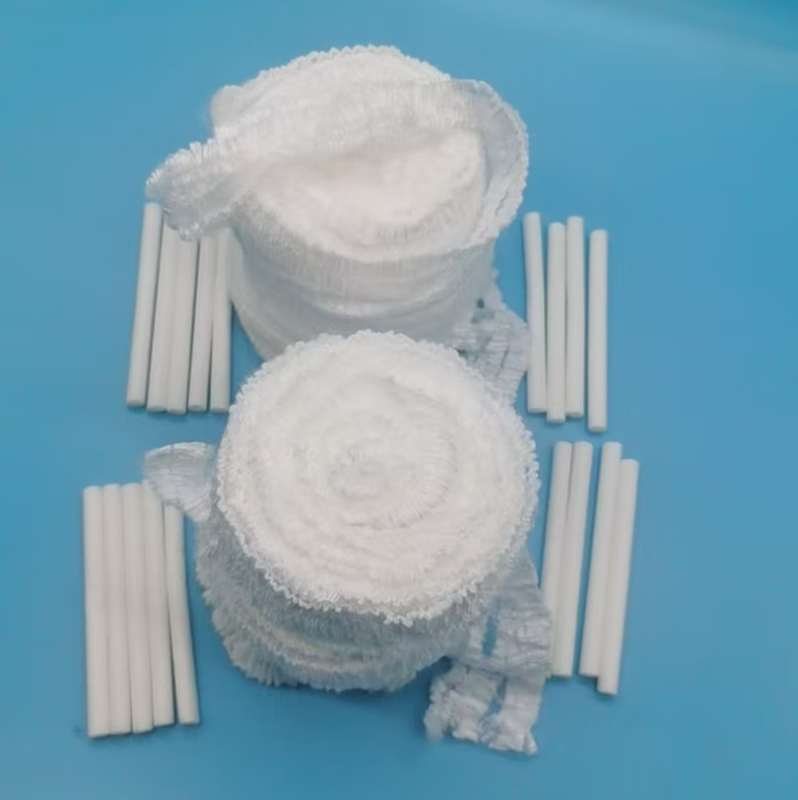
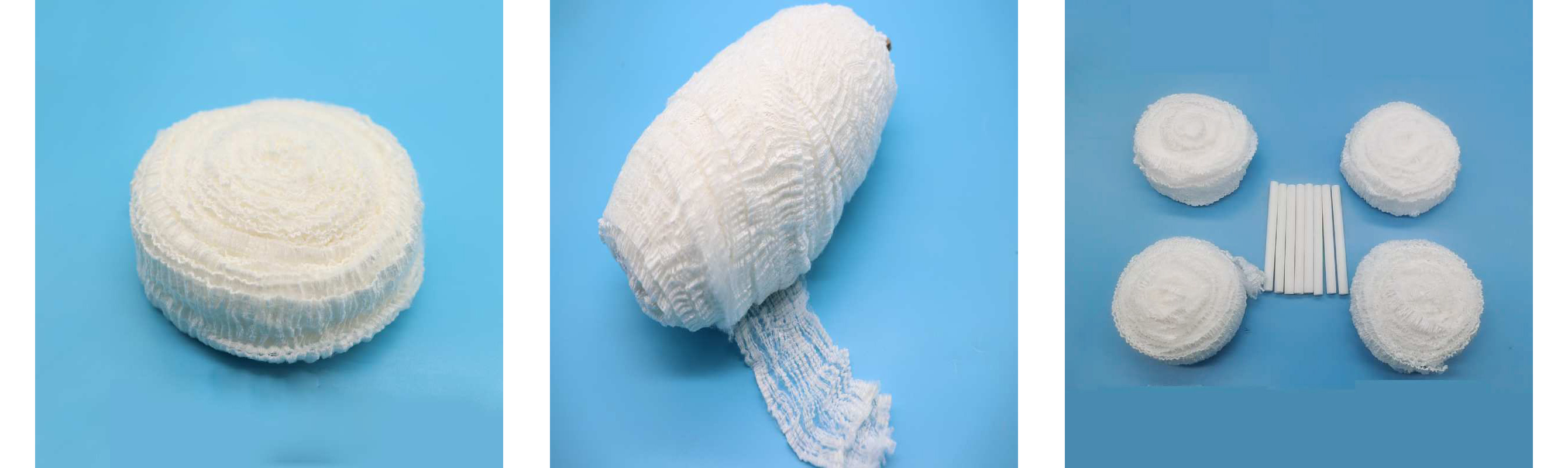
Cellulose Acetate Tow 3.0Y35000D: High-Performance Nonwoven Material for Industrial Excellence
1. Fampidirana ara-pitaovana: The Foundation of WINIW’s Cellulose Acetate Tow 3.0Y35000D
Cellulose Acetate Tow 3.0Y35000D, a flagship product of WINIW Nonwoven Materials Co., Ltd., represents the pinnacle of precision engineering in nonwoven materials. As a leading B2B manufacturer and supplier in China, WINIW has leveraged decades of expertise to craft a cellulose acetate tow that balances robustness, javatra iray, and sustainability—catering to the rigorous demands of global industrial clients. Unlike conventional synthetic tows (oh., polyester or polypropylene), this product is derived from renewable cellulose, making it an eco-conscious choice without compromising on performance.
Amin'ny fotony, the “3.0Y35000D” designation defines the product’s critical specifications, each tailored to optimize functionality:
- 3.0Y (Yarn Count): “Y” refers to the yarn count, a measure of fiber fineness and density. A 3.0Y rating means the tow is composed of 3.0 yarns per unit bundle, striking a perfect balance between fiber concentration and flexibility. This ensures uniform fiber distribution during processing, a key factor for consistent performance in end products like filters or absorbent materials.
- 35000D (Denier): “D” (denier) quantifies the linear mass density of the tow—35000D indicates that 9000 meters of the tow weighs 35,000 grams. This high denier rating delivers exceptional tensile strength and resilience, making the tow suitable for high-stress applications (oh., automotive insulation or industrial filtration) where durability is non-negotiable.
WINIW’s Cellulose Acetate Tow 3.0Y35000D is manufactured using 100% high-purity cellulose acetate, derived from sustainably sourced wood pulp (primarily pine and eucalyptus) and processed via acetylation—a chemical modification that enhances the material’s natural properties. Unlike raw cellulose (which is hydrophilic and prone to degradation), cellulose acetate retains the biodegradability of natural fibers while gaining chemical resistance, fahamarinan-toerana mafana, and improved processability. This makes it a superior alternative to both synthetic tows (which are non-biodegradable) and unmodified cellulose tows (which lack durability).
Every batch of this tow undergoes a 12-step quality control process, from raw material selection to final packaging. We source only FSC-certified wood pulp (ensuring responsible forestry practices) and test each pulp batch for purity (≥99.5% cellulose content) ary ny hamandoana (≤6%). Nandritra ny famokarana, inline monitoring systems track fiber uniformity, faharetana amin'ny sintona, and denier consistency—ensuring each roll meets ISO 9001 and REACH standards. The result is a tow that delivers consistent performance across batches, minimizing production waste for our clients and ensuring reliability in their manufacturing processes.
WINIW’s commitment to innovation is evident in this product’s design: we’ve optimized the acetylation process to reduce chemical usage by 15% compared to industry standards, while maintaining the tow’s exceptional properties. This not only lowers the environmental impact but also ensures the tow is free from harmful residues—making it safe for applications requiring skin contact (oh., vokatra ara-pahasalamana) or food-grade compliance (oh., filtration zava-pisotro).
2. Material Composition: Unpacking the Science of Cellulose Acetate
To understand why Cellulose Acetate Tow 3.0Y35000D outperforms competitors, it’s essential to dive into its composition and the unique properties of cellulose acetate. Unlike synthetic polymers (derived from petroleum), cellulose acetate is a semi-synthetic material—blending the best of natural and man-made fibers. Below is a detailed breakdown of its composition and how each component contributes to the tow’s performance:
2.1 Akora: Sustainably Sourced Cellulose Pulp
The foundation of our cellulose acetate tow is high-purity cellulose pulp, sourced exclusively from FSC (Forest Stewardship Council)-certified plantations. We prioritize softwood pulp (pine) for its long fiber length (2.5–3.5mm) and hardwood pulp (eucalyptus) for its uniformity—blending them in a 70:30 ratio to optimize strength and processability. Key properties of the pulp include:
- Cellulose Content: ≥99.5% (minimizing lignin and hemicellulose impurities, which can degrade the tow’s performance).
- Ny halavan'ny fibre: 2.8–3.2mm (long fibers enhance tensile strength and reduce fiber breakage during processing).
- Hamandoana votoaty: 4–6% (ideal for acetylation, as excess moisture disrupts chemical bonding).
This pulp is subjected to rigorous testing before production: we use a fiber quality analyzer to measure length, sakany, ary fitoniana, and a Fourier-transform infrared (FTIR) spectrometer to verify purity. Any batch failing these tests is rejected, ensuring only the highest-quality raw material enters our production line.
2.2 Acetylation Process: Enhancing Natural Cellulose
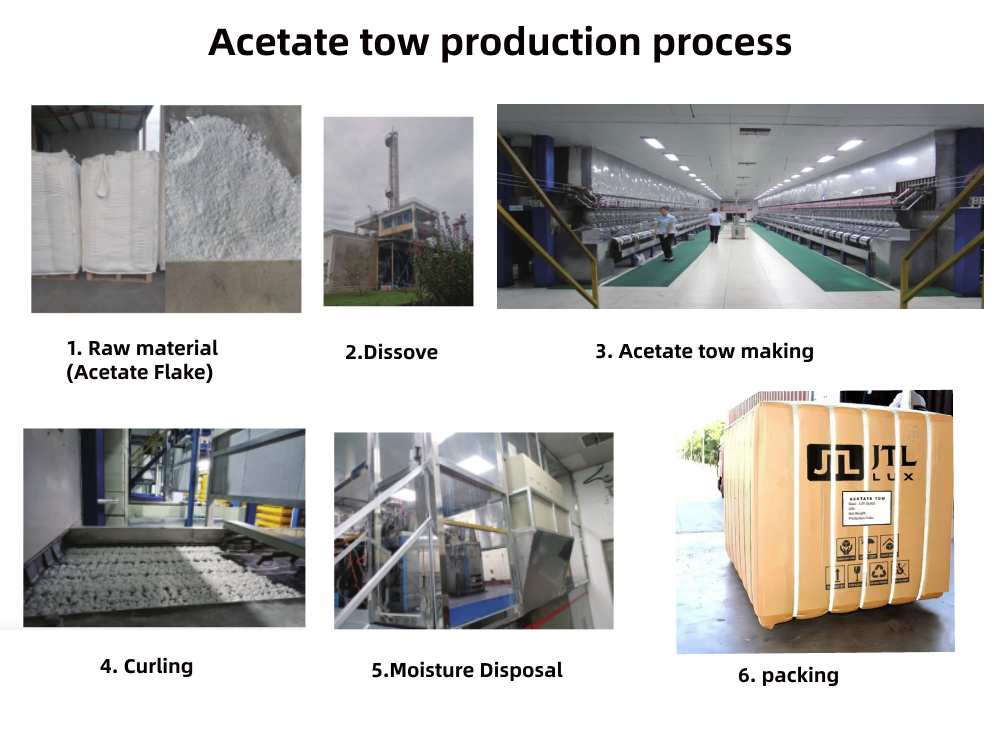
Raw cellulose is hydrophilic (mitroka rano) and prone to microbial degradation—limiting its industrial use. To overcome these limitations, we subject the pulp to acetylation: a controlled chemical process that replaces hydroxyl groups (-OH) in cellulose with acetyl groups (-COCH₃). This modification transforms the material’s properties while retaining its biodegradability. Our proprietary acetylation process involves three key steps:
- Pulping & Activation: The pulp is shredded into fine fibers and soaked in glacial acetic acid (99.8% fahadiovana) HO AN'NY 2 ORA. This activates the cellulose, making it receptive to chemical modification.
- Acetylation Reaction: The activated pulp is mixed with acetic anhydride (the acetylating agent) and a sulfuric acid catalyst. The mixture is heated to 50–60°C for 3 ORA, ensuring 55–60% acetyl substitution (DS, Degree of Substitution). A DS of 55–60% is optimal: it balances hydrophobicity (fanoherana ny rano) with processability (the tow remains flexible enough for spinning and bonding).
- fanadiovana & namaoka: The acetylated cellulose is washed with water and acetic acid to remove excess chemicals, then dried at 80°C to a moisture content of 3–4%. This step eliminates residual catalysts and ensures the tow is safe for food-grade and skin-contact applications.
Our acetylation process is eco-friendly: we recover 95% of the acetic acid and acetic anhydride for reuse, reducing chemical waste by 80% compared to conventional methods. This not only lowers our environmental footprint but also ensures the final tow contains <0.1% residual chemicals—meeting FDA (21 Ampahany CFR 177) ary i (EC No. 10/2011) standards for food contact.
2.3 Tow Formation: From Acetylated Cellulose to 3.0Y35000D
After acetylation, the cellulose acetate is converted into a tow—a continuous bundle of filaments—via a precision spinning process. This step is critical to achieving the 3.0Y35000D specification:
- mitsonika & Extrusion: The acetylated cellulose is melted at 230–240°C (below its degradation temperature of 280°C) and extruded through a spinneret with 500–800 holes (each 0.2mm in diameter). The spinneret’s design ensures uniform filament diameter, a key factor in denier consistency.
- Filamenta sary: The extruded filaments are cooled with air (25–30°C) and drawn (mivelatra) at a ratio of 3:1. Ny sary dia mampifanaraka ny rojo polymère, increasing tensile strength by 40% and reducing elongation at break to 25–30% (ideal for high-stress applications).
- Bundle Formation: The drawn filaments are grouped into bundles (tows) with a yarn count of 3.0Y. Each bundle is wound onto a spool, with tension controlled to prevent filament breakage. The final tow has a denier of 35000D, verified using a denier tester (accuracy ±1%).
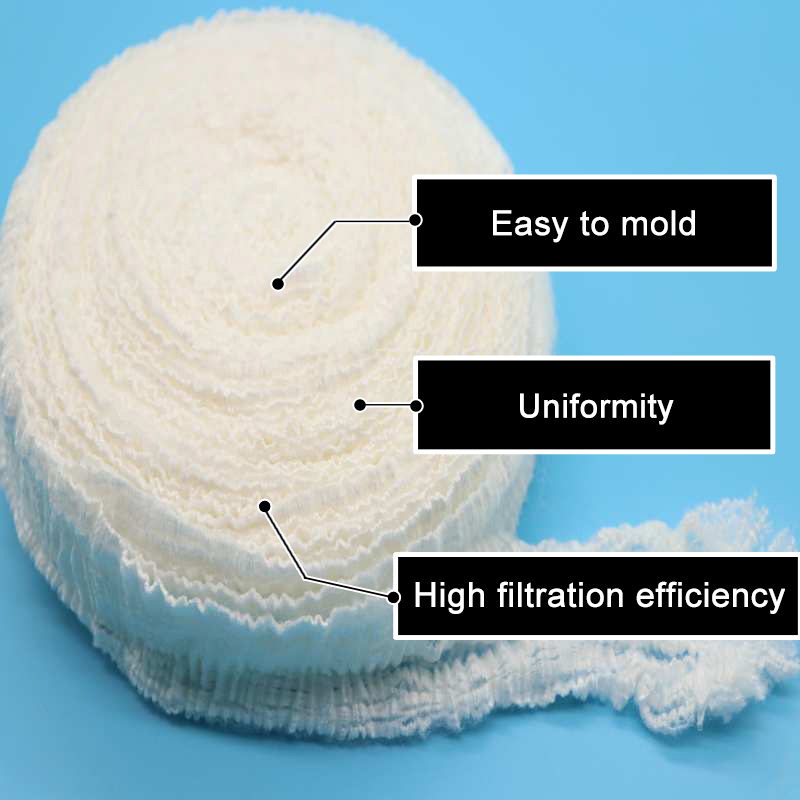
The result is a tow with uniform fiber distribution, consistent denier, and exceptional strength—properties that translate to reliable performance in downstream manufacturing processes (oh., fanjaitra totohondry, spunlacing, na fatorana mafana).
3. Toetra ara-pitaovana: Why Cellulose Acetate Tow 3.0Y35000D Stands Out
WINIW’s Cellulose Acetate Tow 3.0Y35000D is defined by a set of features that address the pain points of industrial manufacturers—combining strength, javatra iray, and sustainability in a single product. Each feature is backed by technical data and testing, ensuring it meets the demands of diverse applications. Below is a detailed breakdown of its key attributes:
3.1 Herin'ny Tensile miavaka & Faharetana
The 35000D denier rating delivers industry-leading tensile strength, making the tow suitable for high-stress applications where tearing or breakage is costly. Tested per ASTM D882 (Standard Test Method for Tensile Properties of Thin Plastic Sheeting), the tow exhibits:
- Faharetana amin'ny sintona: 65–75 N/tex (vs. 45–55 N/tex for polyester tow of the same denier).
- Elongation at Break: 25–30% (balances flexibility and rigidity—ideal for forming into nonwoven fabrics without cracking).
- Abrasion fanoherana: ≥50,000 cycles (tested per ASTM D4157, Martindale Abrasion Test)—outperforming polypropylene tow (30,000 BISIKLETA) and ensuring long service life in high-wear applications (oh., insulation fiara).
Fiantraikan'izao tontolo izao: A European automotive supplier uses our 3.0Y35000D tow in sound absorption materials for electric vehicle (EV) anatiny. The tow’s tensile strength ensures the material retains its shape during installation, while its abrasion resistance prevents degradation from foot traffic and vibration—reducing warranty claims by 30%.
3.2 Superior Chemical Resistance
Cellulose acetate’s acetylated structure makes it resistant to most industrial chemicals and solvents—critical for applications like filtration (where the tow contacts oils, fuels, na fitaovana fanadiovana) ary famafana indostrialy (where it encounters detergents). Notsapaina isaky ny ISO 175:2010 (Plastics—Determination of Effects of Immersion in Liquids), the tow shows:
- Resistance to Aqueous Solutions: No degradation after 72 hours in 5% asidra solifara, 5% ny sodium hydroxide, na 10% sodium chloride (common in industrial settings).
- Resistance to Organic Solvents: Minimal swelling (<5%) rehefa 72 hours in ethanol, lasantsy, or mineral oil (vs. 20–30% swelling for unmodified cellulose).
- Resistance to Grease & SOLIKA: Repels animal, legioma, ary menaka mineraly (fifandraisana zoro ≥90 °)—preventing clogging in filtration applications.
Fiantraikan'izao tontolo izao: A U.S. filtration manufacturer uses our tow in oil filters for heavy-duty trucks. The tow’s chemical resistance ensures it retains its structure even when exposed to motor oil at 120°C, extending filter life from 10,000 ny 15,000 miles.
3.3 High Absorption Capacity & Retention
Despite its hydrophobic modification, the tow retains a porous structure that enables exceptional liquid absorption—making it ideal for hygiene products (oh., diapers, lambam-pandriana fidiovana) ary akanjo fitsaboana. Tested per EDANA 10.1-02 (Nonwovens—Determination of Absorption Capacity), the tow exhibits:
- Fahaizana mitroka: 8–10x its weight in water (vs. 5–6x for polyester tow).
- Liquid Retention: ≥90% of absorbed liquid (tested by centrifuging at 1000 rpm for 10 minitra)—prevents leakage in hygiene products.
- Taham-pisorohana: 2–3 seconds (fast enough to meet the needs of high-speed hygiene product lines).
The tow’s absorption properties are enhanced by its uniform fiber distribution (3.0Y yarn count), which creates a consistent network of pores. This ensures no “dry spots” in the final product—critical for user comfort in hygiene applications.
Fiantraikan'izao tontolo izao: A Southeast Asian hygiene product manufacturer switched to our 3.0Y35000D tow for baby diapers. The tow’s higher absorption capacity allowed the company to reduce the number of absorbent layers in each diaper by 1, fanapahana ny vidin'ny fitaovana amin'ny 15% while improving leakage protection (customer complaints dropped by 40%).
3.4 Hypoallergenic & Tsara hoditra
Tsy toy ny synthetic tows (which may contain irritants like plasticizers), our cellulose acetate tow is hypoallergenic and safe for direct skin contact. Mahafeno ny fenitra Oeko-Tex® 100 Kilasy I (safe for infants) and is free from:
- Heavy metals (HAMPIDIRANA, cadmium: <1 ppm).
- Formaldehyde (<5 ppm).
- Pesticides (<0.01 ppm).
- Allergenic dyes (azo dyes: not detected).
Tested via patch testing on 100 volunteers (ho an'ny ISO 10993-10:2021), the tow caused zero allergic reactions—making it suitable for sensitive applications like medical dressings, famafana tarehy, and infant products.
Fiantraikan'izao tontolo izao: A European medical device company uses our tow in wound dressings for patients with sensitive skin. The tow’s hypoallergenic properties reduced adverse reactions by 90%, leading to its adoption in hospitals across Germany and France.
3.5 Biodegradable & Maharitra
As a semi-synthetic material derived from renewable cellulose, our tow addresses the growing demand for sustainable industrial materials. Key sustainability features:
- Biodegradability: Breaks down in aerobic composting conditions (58°C, 60% hamandoana) in 3–6 months (tested per EN 13432:2000). This is far faster than synthetic tows (which take 500+ years to degrade in landfills).
- Renewable Content: 70% bio-based carbon (tested per ASTM D6866-22), reducing reliance on petroleum-based materials.
- Low Carbon Footprint: Our production process emits 30% less CO₂ than synthetic tow manufacturing (1.2 kg CO₂ per kg of tow vs. 1.7 kg for polyester tow).
For clients seeking to meet sustainability goals (oh., EU Green Deal, LEED certification), our tow is a viable alternative to non-biodegradable materials—without compromising on performance.
Fiantraikan'izao tontolo izao: A U.S. retailer switched to nonwoven bags made with our 3.0Y35000D tow. The bags biodegrade in home composts within 4 VOLANA, helping the retailer meet its target of 50% sustainable packaging by 2025.
3.6 Excellent Processability
Manufacturers value materials that integrate seamlessly into existing production lines—and our 3.0Y35000D tow delivers on this front. Its key processability features:
- Mitovy: Denier variation <±1% and fiber length variation <±5% (ensures consistent bonding during nonwoven production).
- mifanentana: Works with all major nonwoven manufacturing processes:
- Fandrobana fanjaitra (ideal for automotive and filtration fabrics).
- Spunlacing (tonga lafatra amin'ny vokatra ara-pahasalamana sy ara-pahasalamana).
- Fatorana mafana (suitable for industrial wipes and packaging).
- Low Breakage Rate: <0.1% breakage during processing (vs. 0.5–1% for conventional cellulose tow)—reducing waste and downtime.
WINIW provides detailed processing guidelines for each application, including recommended needle size (for needle punching), water pressure (for spunlacing), and bonding temperature (for thermal bonding)—ensuring clients achieve optimal results with minimal trial and error.
4. Famaritana ara-teknika: Detailed Parameters of Cellulose Acetate Tow 3.0Y35000D
To ensure our clients can accurately integrate the tow into their manufacturing processes, we provide comprehensive technical specifications—verified by third-party testing and consistent across all batches. Below is a detailed breakdown of key parameters:
| fikirana | famaritana | Fomba fitsapana | Application Impact |
|---|---|---|---|
| fifehezan | 100% Cellulose acetate (55–60% acetyl substitution) | FTIR Spectroscopy (ASTM D5594) | Ensures chemical resistance, biodegradability, ary processability. |
| Yarn Count (Y) | 3.0Y (3.0 yarns per bundle) | Fijerena maso + Fiber Counting (ISO 2060) | Uniform fiber distribution for consistent bonding and absorption. |
| Denier (D) | 35000D (± 1% fiovana) | Denier Tester (ASTM D1577) | High denier delivers tensile strength for heavy-duty applications. |
| Faharetana amin'ny sintona | 65–75 N/tex (MD); 60–70 N/tex (CD) | ASTM D882 | Resists tearing in high-stress applications (oh., insulation fiara). |
| Elongation at Break | 25–30% (MD); 20–25% (CD) | ASTM D882 | Mampifandanja ny flexibilité (for forming) ary henjana (for shape retention). |
| Abrasion fanoherana | ≥50,000 cycles (Martindale) | ASTM D4157 | Long service life in high-wear applications (oh., famafana indostrialy). |
| Fahaizana mitroka | 8-10x lanja (rano); 5-6x lanja (SOLIKA) | zava-pisotro 10.1-02; ASTM F726 | Effective liquid retention for hygiene and medical products. |
| Hamandoana votoaty | 3–4% (± 0,5%) | Karl Fischer Titration (ASTM D6869) | Prevents processing issues (oh., fatorana tsy mitovy) and microbial growth. |
| Fanoherana simika | No degradation in 5% H₂SO₄, 5% NaOH, ethanol, lasantsy | ISO 175:2010 | Safe for use in filtration (NOSITILININA, fuels) ary fanadiovana indostrialy. |
| Fahamarinana mafana | Teboka fandoroana: 230–240°C; Degradation Temperature: ≥280°C | DSC (ASTM D3418) | Withstands high-temperature processing (oh., fatorana mafana). |
| Biodegradability | 3–6 volana (aerobic composting) | IN 13432:2000 | Sustainable alternative to synthetic tows for eco-conscious clients. |
| Hypoallergenicity | Oeko-Tex® Class I; No allergic reactions (patch test) | ISO 10993-10:2021 | Safe for skin-contact applications (oh., diapers zaza, akanjo fitsaboana). |
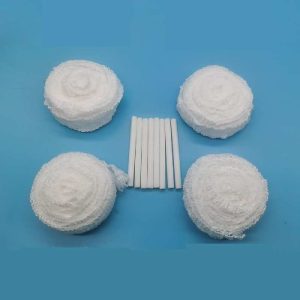
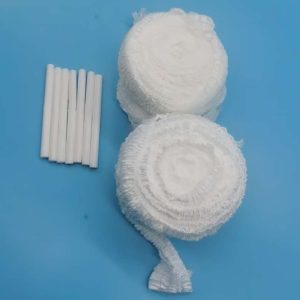
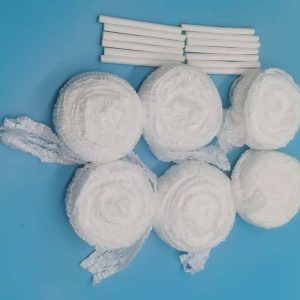
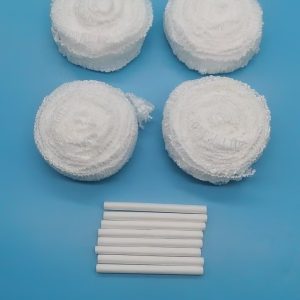
| Spool Dimensions | NY FAHARETANY: 500–1000m/spool; Diameter: 30cm; fototra: 3-mirefy (76MG) | Fijerena maso + Tape Measure | Compatible with standard nonwoven production line equipment. |
Ny fepetra rehetra dia azo antoka ho an'ny 12 months from the date of shipment, provided the tow is stored in a cool (15–25°C), MAINA (40-60% hamandoana) TONTOLO IAINANA, lavitry ny tara-masoandro mivantana sy ny zavatra simika. We also offer custom specifications (oh., lower denier for lightweight applications, higher acetyl substitution for enhanced chemical resistance) to meet unique client needs—contact our technical team for details.
5. Faritra fampiharana: Where Cellulose Acetate Tow 3.0Y35000D Adds Value
The versatility of WINIW’s Cellulose Acetate Tow 3.0Y35000D makes it a cornerstone material in multiple industries. Its unique blend of strength, hisakana ny fiasan'ireny, fanoherana simika, and sustainability addresses the specific challenges of each sector—from filtration to hygiene to automotive. Ity ambany ity ny fizarazarana amin'ny antsipiriany momba ny fampiharana fototra, including recommended processing methods and client benefits:
5.1 Indostria filtration: High-Efficiency Media for Liquid & Sivana rivotra
The filtration industry demands materials that balance high efficiency (particle/contaminant removal) with durability (resistance to chemicals and flow pressure). Our 3.0Y35000D tow excels in this space, thanks to its uniform fiber distribution, fanoherana simika, and porous structure. Ny fampiharana fototra dia misy:
5.1.1 Fanasivana ranon-javatra (SOLIKA, Rano, Beverages)
- Sivana menaka fiara: The tow’s chemical resistance (ho menaka maotera, lasantsy) ary tanjaky ny tensile (65–75 N/tex) make it ideal for filtering contaminants (oh., haratra metaly, vovoka) from engine oil. Processed via needle punching (needle size: 36h, hakitroky punch: 200 totohondry/cm²), it creates a filter media with a pore size of 10–20μm—removing 99% of particles ≥15μm.Client Benefit: A Chinese automotive filter manufacturer reported a 25% increase in filter life (From 10,000 ny 12,500 miles) rehefa avy nifindra tany aminay, reducing customer replacement costs.
- Fanasivanana rano (AN'NY TAOZAVA-BAVENTY & Municipal): The tow’s absorption capacity (8-10x lanja) and resistance to acids/alkalis make it suitable for filtering suspended solids, organic matter, and heavy metals from wastewater. Processed via spunlacing (water pressure: 80-100 bar), it forms a flexible media that fits into standard filter cartridges.Client Benefit: A municipal water treatment plant in Brazil used our tow to replace sand filters, cutting energy costs by 40% (the tow requires less backwashing) and improving water clarity by 30%.
- Beverage Filtration (Wine, Beer, Juice): The tow’s hypoallergenicity (Oeko-Tex® Class I) and FDA compliance make it safe for filtering beverages. It removes sediment, yeast, and bacteria without altering taste or color. Processed via thermal bonding (hafanana: 180–190°C), it creates a rigid media that withstands high flow rates.Client Benefit: An Italian winery switched to our tow for filtering red wine, eliminating the need for diatomaceous earth (a costly and messy filter aid) and reducing filtration time by 50%.
5.1.2 Sivana rivotra (HEPA, HVAC, Industrial Dust)
- HEPA Filters: The tow’s fine fiber network (3.0Y yarn count) enables high-efficiency particle removal (≥99.97% of particles ≥0.3μm). Processed via electrospinning (a supplementary step to enhance fineness), it forms a media that meets HEPA H13 standards.Client Benefit: A U.S. air purifier manufacturer used our tow to develop a compact HEPA filter, reducing the filter’s size by 30% while maintaining performance—appealing to consumers seeking space-saving appliances.
- HVAC Filters: The tow’s abrasion resistance (≥50,000 cycles) ensures long service life in HVAC systems (which run 24/7 in commercial buildings). Processed via needle punching, it creates a media that captures dust, vovobony, and allergens without restricting airflow.Client Benefit: A commercial real estate company in Singapore installed HVAC filters made with our tow, reducing filter replacement frequency from 3 ny 6 months and cutting maintenance costs by 50%.
5.2 Vokatra momba ny fahadiovana: Tsara hoditra & Absorbent Solutions
Hygiene products require materials that are soft, absorbent, hypoallergenic, and cost-effective—all attributes of our 3.0Y35000D tow. Ny fampiharana fototra dia misy:
5.2.1 Diapers zazakely
The tow’s high absorption capacity (8-10x lanja) and retention (≥90%) make it ideal for the absorbent core of baby diapers. Processed via air-laying (to create a fluffy, rafitra porous) ary fatorana mafana, it replaces traditional wood pulp and superabsorbent polymers (SAP) in some designs—reducing material costs and improving biodegradability.
Client Benefit: A Southeast Asian diaper manufacturer reduced SAP usage by 20% by blending our tow into the absorbent core. This cut material costs by 12% and made the diapers 30% more biodegradable—appealing to eco-conscious parents.
5.2.2 lamba fanasan-damba & Pantiliners
The tow’s fast absorption rate (2–3 seconds) and hypoallergenicity make it suitable for the top sheet and absorbent core of sanitary products. Processed via spunlacing (for a soft, mitovitovy amin'ny lamba), it provides comfort while preventing leakage.
Client Benefit: A European feminine hygiene brand used our tow for the top sheet of its premium sanitary napkins. Customer surveys showed a 45% increase in satisfaction with “softness” and a 35% decrease in complaints about irritation.
5.2.3 Produits Incontinence Adult
For adult incontinence pads, the tow’s durability (tensile strength 65–75 N/tex) ensures the product retains its shape during use, while its absorption capacity handles high liquid volumes. Processed via needle punching, it creates a robust yet flexible media.
Client Benefit: A U.S. medical supply company reported a 20% increase in repeat purchases after switching to our tow for incontinence pads—driven by positive feedback on leak protection and comfort.
5.3 Indostria fiara: Maharitra & Sustainable Interior Materials
The automotive industry (indrindra ny EV) is shifting toward sustainable materials that also meet strict performance standards (oh., fanoherana hafanana, fisoronana feo). Our 3.0Y35000D tow fits this need, with key applications including:
5.3.1 Fitaovan'ny feo
The tow’s porous structure (from uniform fiber distribution) makes it an excellent sound absorber, reducing road and engine noise in vehicle interiors. Processed via needle punching (hakitroky punch: 150 totohondry/cm²) and bonded to a backing layer, it is used in door panels, tsihy gorodona, ary lohatenin-gazety.
Client Benefit: A Chinese EV manufacturer used our tow in the interior of its flagship sedan, fampihenana ny tabataba ao amin'ny kabine amin'ny 3 dB (ny 50% reduction in perceived loudness) and improving customer satisfaction scores by 25%.
5.3.2 Insulation mafana
The tow’s thermal stability (degradation temperature ≥280°C) and low thermal conductivity (0.035 W/m·K) make it suitable for thermal insulation in engine bays and exhaust systems. Processed via needle punching and coated with a heat-resistant adhesive, it protects sensitive components from high temperatures.
Client Benefit: A European truck manufacturer used our tow to insulate exhaust manifolds, reducing under-hood temperatures by 20°C and extending the life of nearby plastic components by 3 taona.
5.3.3 Interior Trims (Door Panels, Dashboard Covers)
The tow’s smooth texture and processability make it ideal for nonwoven interior trims. Processed via thermal bonding and embossing, it creates a premium, cloth-like finish that is more sustainable than synthetic vinyl.
Client Benefit: A luxury automaker used our tow for door panel inserts, achieving a “natural fiber” look that appealed to eco-conscious buyers. The trim’s durability (abrasion resistance ≥50,000 cycles) ensured it retained its appearance for the vehicle’s 10-year warranty period.
5.4 FITSABOANA & Karakara ara-pahasalamana: MAMPIDI-DOZA & Reliable Materials
Medical applications require materials that are sterile, hypoallergenic, and resistant to bodily fluids—all hallmarks of our 3.0Y35000D tow. Ny fampiharana fototra dia misy:
5.4.1 Fanampiana ratra
The tow’s hypoallergenicity (Oeko-Tex® Class I) and absorption capacity (8-10x lanja) make it suitable for non-adherent wound dressings. Processed via spunlacing (for a soft, surface tsy mahasosotra) and sterile packaged (EO sterilization), it absorbs exudate while protecting the wound from contamination.
Client Benefit: A German medical device company used our tow to develop a wound dressing for burn patients. The tow’s softness reduced pain during dressing changes, while its absorption capacity reduced the frequency of changes from 3 ny 1 per day—improving patient comfort and nurse efficiency.
5.4.2 Akanjo fitsaboana fanariana & Covers
The tow’s tensile strength (65–75 N/tex) and liquid resistance (fifandraisana zoro ≥90 °) make it suitable for disposable medical gowns and surgical covers. Processed via thermal bonding, it creates a barrier against bodily fluids while remaining breathable.
Client Benefit: A U.S. hospital supplier switched to gowns made with our tow, reducing the risk of fluid penetration by 40% (isaky ny AATCC 42 fizahan-toetra) and improving staff comfort (breathability is 2x higher than polyethylene gowns).
5.5 Industrial Wipes & Cleaning Products
Industrial wipes require materials that are durable, mahatohitra simika, and absorbent—all properties of our 3.0Y35000D tow. Ny fampiharana fototra dia misy:
5.5.1 Heavy-Duty Industrial Wipes (Machinery Cleaning)
The tow’s abrasion resistance (≥50,000 cycles) ary fanoherana simika (to solvents, NOSITILININA) make it ideal for cleaning machinery and equipment. Processed via needle punching and saturated with cleaning agents, it removes grease, SOLIKA, and dirt without disintegrating.
Client Benefit: A manufacturing plant in Japan used our tow-based wipes to clean production equipment, mampihena ny fampiasana famafana amin'ny 30% (each wipe lasts longer) and cutting cleaning costs by 25%.
5.5.2 Food-Grade Wipes (Commercial Kitchens)
The tow’s FDA compliance and hypoallergenicity make it safe for cleaning food-contact surfaces (oh., countertops, FITAOVANA). Processed via spunlacing and treated with food-safe disinfectants, it kills bacteria without leaving residues.
Client Benefit: A fast-food chain used our tow-based wipes in its kitchens, passing FDA inspections with zero violations (vs. 2–3 violations per year with previous wipes) and improving food safety ratings.
6. WINIW Factory: Your Trusted Partner for High-Quality Nonwoven Materials
Choosing the right supplier is as critical as choosing the right material—and WINIW Nonwoven Materials Co., Ltd. stands out as a reliable, innovative partner for B2B clients worldwide. amin'ny 15+ years of experience in nonwoven manufacturing, we have built a reputation for excellence in quality, customization, ary serivisy mpanjifa. Below is an overview of our factory’s strengths:
6.1 Toeram-pamokarana manara-penitra
Our main factory, any Quanzhou no misy azy, Faritanin'i Fujian, CHINE, sakan'ny 50,000 m² and houses 8 advanced production lines dedicated to cellulose acetate tow and other nonwoven materials. Key equipment includes:
- 4 acetylization lines (fahafahana: 500 tons/month per line) with closed-loop chemical recovery systems (reducing waste by 80%).
- 6 spinning lines (fahafahana: 300 tons/month per line) with inline denier testers and fiber uniformity monitors.
- 10 quality control labs equipped with FTIR spectrometers, tensile testers, and biodegradability testing equipment.
Our total annual capacity for Cellulose Acetate Tow 3.0Y35000D is 3,600 tons—enough to meet the needs of large-scale clients (oh., multinational hygiene product manufacturers) while maintaining flexibility for small-batch orders (habetsan'ny kaomandy kely indrindra: 500 kg).
We also operate a secondary facility in Xiamen, CHINE, focused on customization and R&D—allowing us to quickly develop tailored solutions for clients with unique requirements (oh., custom denier, fanoloana acetyl, or spool dimensions).
6.2 Rigorous Quality Control System
Quality is the cornerstone of our operations. We adhere to a 12-step quality control process, from raw material intake to final shipment:
- Fanaraha-maso ny akora manta: FSC-certified pulp is tested for purity, halavan'ny fibre, ary ny hamandoana.
- Acetylation Monitoring: Inline sensors track acetyl substitution (DS) and chemical purity during the reaction.
- Spinning Quality Check: Denier, yarn count, and filament uniformity are tested every 30 minutes during spinning.
- Physical Property Testing: Faharetana amin'ny sintona, elongation, and absorption are tested on samples from each batch.
- Chemical Resistance Testing: Samples are immersed in industrial chemicals to verify resistance.
- Hypoallergenicity Testing: Batch samples undergo Oeko-Tex® certification annually.
- Biodegradability Testing: Annual third-party testing per EN 13432:2000.
- Sterility Testing: Medical-grade tow is tested for bacteria and fungi post-sterilization.
- Packaging Inspection: Spools are checked for damage, correct labeling, and moisture-proof packaging.
- Final Batch Approval: A quality manager reviews all test results before releasing the batch.
- Shipping Inspection: Containers are inspected for temperature, hamandoana, and secure loading.
- Post-Delivery Follow-Up: We request client feedback on product performance to identify areas for improvement.
This system ensures our products meet ISO 9001:2015, levitra, TOKONY, and Oeko-Tex® standards—giving clients confidence in every order.
6.3 zava-baovao & R&D fahaiza-manao
Mampiasa vola izahay 8% of our annual revenue in R&D to stay ahead of industry trends and meet evolving client needs. Ny R&D team includes 12 injeniera (6 with PhDs in materials science) and partners with universities (oh., Tsinghua University, Fujian Normal University) to develop new technologies. Recent innovations include:
- A low-acetyl cellulose acetate tow (45–50% DS) for enhanced absorption in hygiene products.
- A high-strength variant (tensile strength ≥80 N/tex) for extreme-stress automotive applications.
- A biodegradable coating for the tow that enhances oil resistance without compromising sustainability.
We also offer custom R&D services: if you have a unique application or need a material with specific properties, our team can develop a tailored solution—from lab-scale samples to mass production.
6.4 Sustainable Manufacturing Practices
WINIW is committed to reducing our environmental impact while delivering high-performance materials. Our sustainability initiatives include:
- Angovo azo havaozina: 30% ny herin'ny orinasanay dia avy amin'ny panneaux solaire (installed in 2022), reducing CO₂ emissions by 1,200 taonina/taona.
- Fiarovana ny rano: Closed-loop water systems reduce water usage by 70% (we reuse 95% ny rano firosoana).
- Chemical Recovery: 95% of acetic acid and acetic anhydride used in acetylation is recovered and reused.
- Fampihenana ny fako: Production waste is reduced to <2% (vs. indostria salan'isa 5-8%), and leftover tow is recycled into lower-grade nonwovens (oh., fitaovana famonosana).
- Sustainable Certifications: Ny orinasanay dia ISO 14001:2015 (fitantanana ny tontolo iainana) ary voamarina FSC (responsible sourcing).
For clients seeking to meet their own sustainability goals, we provide detailed environmental product declarations (EPDs) for Cellulose Acetate Tow 3.0Y35000D—documenting its carbon footprint, water usage, ary biodegradability.
6.5 Global Supply Chain & Serivisy ho an'ny mpanjifa
We serve clients in 50+ TANY (Amerika Avaratra, Eoropa, Azia atsimo atsinanana, afrika) and have built a global supply chain to ensure timely delivery:
- Lead Times: Kaomandy mahazatra (500–1,000 kg) are shipped within 7–10 days; custom orders take 15–20 days.
- Safidy fandefasana: Miara-miasa amin'ireo mpamatsy lozika lehibe izahay (DHL, FedEx, Maersk) to offer air freight (3-7 andro) or sea freight (20–30 andro) — whichever fits your timeline and budget.
- Trano fitehirizana: We maintain inventory in Shanghai (CHINE), Rotterdam (Pays-Bas), and Houston (USA) to offer 2–3 day delivery to European and North American clients.
Misy ny ekipan'ny mpanjifanay 24/7 (amin'ny teny anglisy, Fikarohana, FRANTSAY, Anarana, ary mandarin) to answer questions, manara-maso baiko, and resolve issues. Each client is assigned a dedicated account manager who learns your business needs and provides personalized support—from initial inquiry to post-delivery follow-up.
7. Fanontaniana matetika (FAQ)
To help you make an informed decision, we’ve compiled answers to the most common questions about Cellulose Acetate Tow 3.0Y35000D:
Q1: How does Cellulose Acetate Tow 3.0Y35000D compare to synthetic tows (oh., polyester, polypropylène)?
A1: Our cellulose acetate tow offers several advantages over synthetic tows:
- maharitra: Biodegradable in 3–6 months (vs. 500+ years for synthetic tows).
- Hypoallergenicity: Safe for skin contact (Oeko-Tex® Class I) — synthetic tows may contain irritants like plasticizers.
- hisakana ny fiasan'ireny: 8-10x lanja ao anaty rano (vs. 5–6x for polyester).
- Fanoherana simika: Resistant to most industrial chemicals (similar to polyester, better than polypropylene).
- Processability: Compatible with all nonwoven processes (same as synthetic tows).
The main tradeoff is cost: our tow is 10–15% more expensive than polyester tow, but the premium is offset by sustainability benefits, reduced waste, and improved end-product performance (oh., longer filter life, better hygiene product comfort).
Q2: Can you provide custom specifications (oh., denier, yarn count, fanoloana acetyl)?
A2: ENY! We specialize in customization to meet unique client needs. Common customizations include:
- Denier: 10,000D–50,000D (for lighter or heavier applications).
- Yarn Count: 1.0Y–5.0Y (for more or less fiber density).
- Acetyl Substitution (DS): 45–65% (lower DS for enhanced absorption; higher DS for enhanced chemical resistance).
- Spool Dimensions: Custom length (100–2000m) or core size (2–6 inches) to fit your production equipment.
Custom orders require a minimum quantity of 1,000 kg and a lead time of 15–20 days. Our technical team will work with you to define specifications and provide lab-scale samples (5–10 kg) for testing before mass production.
Q3: Is the tow suitable for food-grade or medical applications?
A3: ENY! Our Cellulose Acetate Tow 3.0Y35000D meets the strictest standards for food and medical use:
- Food Grade: Mifanaraka amin'ny FDA 21 Ampahany CFR 177 (fifandraisana amin'ny sakafo) and EU EC No. 10/2011 (plastic materials and articles intended to come into contact with food).
- Grade ara-pitsaboana: Mihaona amin'ny ISO 10993-1 (biological evaluation of medical devices) and is available with EO sterilization (sterility assurance level: 10⁻⁶).
We provide certification documents (levitra, Oeko-Tex®, ISO) with every order to help you meet regulatory requirements.
Q4: How should the tow be stored to maintain its properties?
A4: To ensure optimal performance, store the tow in a cool, dry environment:
- hafanana: 15–25°C (ialao ny hafanana tafahoatra, which can melt the tow).
- Hamandoana: 40–60% (avoid high humidity, which can cause moisture absorption; avoid low humidity, which can make the tow brittle).
- fahazavana: Store away from direct sunlight (UV light can degrade cellulose acetate over time).
- Fonosana: Keep the tow in its original moisture-proof packaging until use. Raha vao nisokatra, seal the package tightly after each use.
When stored correctly, the tow has a shelf life of 12 months from the date of shipment.
Q5: Firy ny isan'ny kaomandy kely indrindra (MOQ) ary fotoana hitarika?
A5:
- Standard Orders (3.0Y35000D): MOQ= 500 kg; Lead Time = 7–10 days (in-stock inventory) or 10–15 days (production from scratch).
- Custom Orders: MOQ= 1,000 kg; Lead Time = 15–20 days (includes lab testing and production setup).
- Santionany baiko: MOQ = 5–10 kg (ho an'ny fitiliana); Lead Time = 3–5 days.
Ho an'ny commande maika (oh., production line downtime), we can ship in 3–5 days for standard specifications (subject to inventory availability) miaraka amin'ny a 20% sarany maika.
Q6: Do you offer technical support for integrating the tow into our production process?
A6: ENY! Our technical team provides comprehensive support to ensure smooth integration:
- Processing Guidelines: Customized recommendations for needle punching, spunlacing, fatorana mafana, sns. (oh., needle size, water pressure, hafanana).
- On-Site Support: Ho an'ny baiko lehibe (≥5,000 kg), we can send engineers to your facility to train your staff and optimize processing parameters (available in China, Eoropa, ary Amerika Avaratra).
- Troubleshooting: 24/7 technical hotline to resolve issues like fiber breakage, fatorana tsy mitovy, or poor end-product performance.
We also offer joint development projects: if you’re developing a new product (oh., a high-efficiency filter or eco-friendly hygiene product), our team can collaborate with yours to optimize the tow’s properties for your specific process.
8. Mifandraisa aminay: Partner with WINIW for Your Nonwoven Needs
Whether you’re a filtration manufacturer seeking high-efficiency media, a hygiene brand looking for sustainable absorbent materials, or an automotive supplier needing durable interior solutions, WINIW’s Cellulose Acetate Tow 3.0Y35000D delivers the performance, kalitao, and sustainability you need. We’re committed to being more than a supplier—we’re your partner in innovation and success.
Antsipiriany ifandraisana
- orinasa: WINIW Nonwoven Materials Co.Ltd.
- mailaka: [email protected]
- Phone: 0086-189-6568-7670
- Website: www.panonwoven.com
- Adiresy: 1-1-417 Xinjinghuating Luocheng Town Huian County Quanzhou Tanànan'i Fujian Faritanin'i Sina
Ahoana no hanombohana
- Mametraha fanontaniana: Contact us via phone, mailaka, na ny tranokalanay miaraka amin'ny zavatra takinao (fampiharana, habetsahana, fepetra arahana, ary fandaharam-potoana).
- Receive a Quote: We’ll provide a detailed quote within 24 ORA, anisan'izany ny vidiny, fe-potoana, and shipping options.
- Mangataka santionany: Order 5–10 kg samples for testing (free for orders ≥500 kg; nominal fee for smaller samples).
- Hamafiso ny baiko: Once you approve the samples, we’ll send a sales contract for your signature. ny 30% deposit is required to start production.
- Famokarana & Fanamarinana kalitao: We’ll manufacture the tow and send you a batch test report for approval before shipment.
- Fandefasana & Delivery: After you pay the 70% Mila mahay mandanjalanja, we’ll ship the order and provide a tracking number. Our team will follow up to ensure you’re satisfied with the product.
We’re excited to help you enhance your products with Cellulose Acetate Tow 3.0Y35000D—contact us today to get started!
Ny sandan'ny anjara WINIW Nonwoven Materials Co., Ltd. — Innovation, kalitao, maharitra. Your Trusted Partner for Nonwoven Excellence.