

Tlhaloso
Selelekela

Bafani le Baetsi ba Lesela le sa Lohiloeng la PLA le Polylactic le Baetsi ba China.!
Joaloka mofani oa thepa ea ka sehloohong le moetsi oa masela a nonwoven a PLA Chaena, WINIW e ikemiselitse ho fana ka boleng bo holimo, Litharollo tse sa lohang tikolohong tse khotsofatsang litlhoko tse tsoelang pele tsa indasteri ea lefats'e. Masela a rona a PLA a sa lohuoang, entsoeng ho tloha 100% asiti ea polylactic, emela motsoako o phethahetseng oa ts'ebetso le ts'ebetso, e fanang ka mokhoa o mong o sebetsang ho fapana le li-nonwovens tsa khale tsa petroleum.
Lebitso la thepa: PLA Nonwoven Fabric le Polylactic Non-woven Fabric
Nakong eo tlhokomeliso ea tikoloho e tsamaisang boqapi, Lesela le sa lohang la PLA le hlahile e le sesebelisoa sa phetoho se sebetsanang le litlhoko tsa ts'ebetso le mathata a tikoloho. Ka ho sebelisa thepa e ikhethang ea acid e polylactic e nkiloeng mehloling e ka nchafatsoang, re thehile lesela le sa lohoeng le ipabolang lits'ebetsong tse fapaneng ha re ntse re fokotsa tšusumetso ea tikoloho. Ho tloha ho fokotsa tšilafalo ea polasetiki ho ea ho tšehetsa lipakane tsa moruo oa selikalikoe, li-nonwovens tsa rona tsa PLA li ema e le bopaki ba kamoo mahlale a lintho tse bonahalang a ka ikamahanyang le bophelo bo botle ba polanete ntle le ho sekisetsa katlehong ea indasteri..
Litlhaloso tsa Lintho
PLA Nonwoven Fabric ea rona e fumaneha ka lintlha tse latelang, ho netefatsa ho feto-fetoha ha maemo le ho ikamahanya le litlhoko tse fapaneng tsa indasteri. Paramethara ka 'ngoe e etselitsoe ho leka-lekanya ts'ebetso, ts'ebeliso, le botsitso, ho lumella bareki ho khetha litlhophiso tse lumellanang hantle le maemo a ts'ebeliso ea bona.
Sebopeho
Sebopeho: 100% PLA (Polylactic). Lesela la rona la PLA nonwoven le entsoe ka polylactic acid e hloekileng, ho etsa bonnete ba hore karolo e 'ngoe le e 'ngoe ea thepa-ho tloha tlhahiso ho ea ho lahla-e lumellana le melao-motheo e tsitsitseng. Ho ba sieo ha li-additives kapa metsoako e thehiloeng ho peterole ho tiisa hore lesela le boloka thepa eohle ea eco-friendly ea PLA., ho kenyeletsa le biodegradability e feletseng le manyolo ka litlama. Re fumana resin ea rona ea PLA ho tsoa ho barekisi ba netefalitsoeng feela (joalo ka NatureWorks le TotalEnergies Corbion) tse khomarelang litekanyetso tse thata tsa bohloeki ba lintho tse bonahalang tse tala, ho etsa bonnete ba hore resin e kopana le bonyane litaba tsa PLA tsa 99.5%. Sebopeho sena sa bohloeki bo phahameng se felisa kotsi ea ho se lumellane ha ts'ebetso e bakoang ke lisebelisoa tsa ho tlatsa 'me se netefatsa ho lumellana le li-eco-labels tsa machaba., ho kenyelletsa EU Ecolabel le USDA Biobased Certification.
Ho fapana le li-nonwovens tse kopantsoeng tse kopanyang PLA le likhoele tsa maiketsetso (mohlala, PP kapa PET) ho fokotsa litšenyehelo, tsa rona 100% Sebopeho sa PLA se tiisa hore thepa e senyeha ka ho feletseng ntle le ho siea masala a microplastic. Sena se bohlokoa bakeng sa lits'ebetso tse kang ho paka lijo le lihlahisoa tsa bongaka, moo bohloeki ba lintho tse bonahalang bo amang polokeho le boikarabello ba tikoloho ka kotloloho.
Boima ba 'mele
Boima ba 'mele: 20boima ba 'mele - 200gsm. Re fana ka PLA nonwoven lesela ka bophara boima mefuta e fapaneng ho tloha 20 dikgerama ka square meter (gsm) ho isa ho 200gsm, ho lumella bareki ho khetha botenya bo nepahetseng le boima bakeng sa ts'ebeliso ea bona e ikhethileng. Mofuta ona o netefatsa hore lesela la rona le ka sebelisoa nthong e 'ngoe le e' ngoe ho tloha ho lihlahisoa tse bobebe tsa bohloeki ho isa lits'ebetsong tse boima tsa indasteri., ho fana ka tshebetso e tsitsitseng ka boima bohle. Mofuta o mong le o mong oa boima o etsa liteko tse matla ho boloka matla a tsitsitseng, khanyetso ea likhapha, le botsitso ba dimensional mabapi le ho teteana ha yona.
- 20-50gsm (Range e bobebe): E etselitsoe lits'ebetso tse hlokang bonolo, ho hema, le tšebeliso e fokolang ea thepa. E loketseng bakeng sa ho hlakola sefahleho, litlolo tsa litlolo, li-drapes tsa bongaka tse lahliloeng (mekhahlelo ea bobeli), le liphahlo tse bobebe tsa ho paka. 30gsm spunlace PLA e sa lohang ka har'a mofuta ona e na le matla a 120-180 N/5cm. (tataiso ea mochine) le 80–120 N/5cm (tsela e tsheletseng), ka tekanyo e bonolo ea 3-4 ka tekanyo ea lintlha tse 5 (1 = mahoashe, 5 = e bonolo haholo), ho etsa hore e bapise le k'hothone letlalong.
- 51- 100gsm (Bohareng ba Range): E leka-lekanya matla le ho feto-fetoha ha maemo bakeng sa linyeoe tsa tšebeliso e fapaneng. E loketse likhurumetso tsa lijalo tsa temo, phuthelo ya dijo (mohlala, hlahisa mekotla, liphutheloana tsa ho baka), li-liner tsa bana, le liaparo tseo e seng tsa phekolo ea meriana. 70gsm spunbond PLA nonwoven mona e fana ka matla a 250–350 N/5cm (tataiso ea mochine) le 180–250 N/5cm (tsela e tsheletseng), e nang le moea o kenang oa 50–150 L/m²·s—e loketseng lits'ebetso tse hlokang bots'epehi ba sebopeho le phallo ea moea..
- 101- 200gsm (Boima ba Mosebetsi): E etselitsoe ho tšoarella libakeng tse thata. E sebelisoa bakeng sa geotextiles, lifeme tsa indasteri, sephutheloana se sireletsang (mohlala, ho phuthela ha elektronike), le lifilimi tsa temo tsa mulch. PLA ea 150gsm e phuntsoeng ka nale e sa lohoeng sebakeng sena e ithorisa ka matla a 400-550 N/5cm. (tataiso ea mochine) le 300–400 N/5cm (tsela e tsheletseng), e nang le khanyetso ea ho phunya ea ≥4 kN—e lekanang le PP nonwovens ea boima bo tšoanang empa ka molemo o eketsehileng oa biodegradability.
Bakeng sa lits'ebetso tse tloaelehileng tse hlokang boima bo ka ntle ho 20-200gsm (mohlala, 15gsm bakeng sa filthara e khanyang haholo kapa 250gsm bakeng sa lithapo tse boima tsa kaho), rona R&Sehlopha sa D se ka etsa litlolo tse hlophisitsoeng ka linako tse etellang pele tsa libeke tse 4-6, ho netefatsa hore thepa e finyella lipakane tsa ts'ebetso ntle le ho senya botsitso.
Bophara
Bophara: 160cm boholo. Lesela la rona la PLA nonwoven le fumaneha ka bophara ho fihla ho 160cm, ho fana ka bonolo bakeng sa mekhoa e fapaneng ea tlhahiso le litlhoko tsa kopo. Bophara bona bo boholo bo lumella ho etsoa ka mokhoa o atlehileng oa lihlahisoa tsa sebopeho se seholo, ho fokotsa tlhokahalo ea seams le ho ntlafatsa botšepehi ba sehlahisoa ka kakaretso. Bakeng sa lisebelisoa tse khethehileng, re ka boela ra fana ka bophara ba tloaelo ka har'a mefuta ena (ka tlase ho 50 cm) ho fihlela litlhoko tse khethehileng tsa tlhahiso, joalo ka meqolo e tšesaane bakeng sa mela e menyenyane ea lihlahisoa tsa bohloeki kapa lirolo tse sephara bakeng sa mulch oa temo (moo li-seams tse fokolang li fokotsang nako ea ho kenya).
Mehala ea rona ea tlhahiso e na le lisebelisoa tse fetolehang tsa slitting tse ka fokotsang meqolo ho ea bophara bo nepahetseng ka mamello ea ± 1cm., ho etsa bonnete ba hore e tsamaellana le lisebelisoa tsa ho sebetsa tsa bareki (mohlala, ho fetola mechine, mechine ea khatiso, kapa mehala ea ho paka). Ka mohlala, moreki ea hlahisang mekotla ea ho reka ka bophara ba 80cm a ka odara meqolo e bophara ba 160cm ho fokotsa litšila. (seha moqolo o mong le o mong likotoana tse peli tsa 80cm), ho fokotsa tahlehelo ea lintho tse bonahalang ho fihlela ho 15% bapisoa le ho sebelisa meqolo e moqotetsane. Ho phaella moo, meqolo e pharaletseng e fokotsa nako ea ho fokotsa nako bakeng sa liphetoho tsa moqolo tlhahisong e phahameng, ho ntlafatsa ts'ebetso ea ts'ebetso.
Ho paka
Ho paka: ka meqolo, 100limithara - 1000m / roll. Ho etsa bonnete ba boiketlo ba ho tšoara le ho boloka, lesela la rona la PLA nonwoven le tletse ka meqolo e nang le bolelele ho tloha ho 100 limithara ho 1000 limithara ka moqolo. Mokhoa ona oa ho paka o fokotsa tšenyo nakong ea lipalangoang 'me o lumella ho kopanngoa hantle mehala ea tlhahiso. Meqolo e phuthetsoe ka thepa e sireletsang ho thibela tšilafalo le ho boloka boleng ba lesela ho fihlela e sebelisoa.
Moqolo o mong le o mong o na le likarolo tse latelang ho boloka botšepehi ba lintho tse bonahalang:
- Inner Liner: Polyethylene ea boleng ba lijo (PE) filimi (recyclable/) se sireletsang lesela mongobong le leroleng nakong ya polokelo. Bakeng sa li-nonwovens tsa boemo ba bongaka tsa PLA, re sebelisa liner tsa PE tse hloekisitsoeng tse bolokang ISO 11607 ho lumellana le litsamaiso tse thibelang likokoana-hloko.
- Corrugated Cardboard Core: Konokono ea bophara ba lisenthimithara tse 3 kapa tse 6 (customisable) e entsoeng ka khateboto e tsosolositsoeng, ho etsa bonnete ba hore moqolo o lula o tsitsitse nakong ea ho phutholoha le ho lumellana le lisebelisoa tse tloaelehileng tsa tlhahiso. Koko e ngotsoe ka linomoro tsa batch, litlhaloso tsa lintho tse bonahalang (boima, bophara, mofuta oa ts'ebetso), le matsatsi a ho felloa ke nako (bakeng sa lihlahisoa tsa boemo ba bongaka).
- Ho phuthela Kantle: Mosebetsi o boima, pampiri ea kraft e sa keneleng metsi (100% recyclable/) e sireletsang moqolo hore o se ke oa senyeha 'meleng nakong ea sekepe. Bakeng sa thepa ea leoatleng, re eketsa lera la thibelo ea mongobo ho thibela litaba tse amanang le mongobo (mohlala, hlobo) sepalangoang sa sebaka se selelele.
- Palletization: Li-roll li kenngoa holim'a liphalete tsa lehong (e phekotsoeng ka mocheso ho isa ho ISPM 15 litekanyetso tsa ho tsamaisa thepa ea machaba) 'me e sirelelitsoe ka filimi e otlolohileng (PE e ka sebelisoang hape) ho thibela ho sisinyeha. Pallet e 'ngoe le e' ngoe e na le meqolo e 10-20 (ho itshetlehile ka boima ba mmele) 'me e ngotsoe ka litokomane tsa thomello, ho kenyelletsa lethathamo la ho paka le lengolo la tlhahlobo (CoA).
Re boetse re fana ka litharollo tsa ho paka ka tloaelo bakeng sa bareki ba nang le litlhoko tse ikhethang, joalo ka liphutheloana tse hlapang bakeng sa lihlahisoa tsa bongaka (EO-sterilized mekotla) kapa meqolo e nang le sebopeho se senyane (10–50m) bakeng sa tlhahlobo ea sampole kapa tlhahiso ea li-batch tse nyane. Lisebelisoa tsohle tsa ho paka li khethiloe ho ikamahanya le lipakane tsa ts'ebetso, ka 90% ya ho phuthela ka ho phethoa hape kapa ho koaheloa ke moitedi.
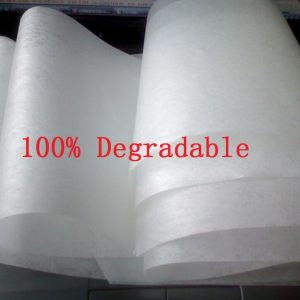
Setšoantšo 1: Lirolo tse fapaneng tsa lesela le sa lohang la WINIW's PLA, ho bontsha boima bo fapaneng (50gsm, 100gsm, 150gsm) le mefuta ea ts'ebetso (spunbond, spunlace, qhibilihile).
Thepa ea PLA (Asiti ea Polylactic) Fiber
Khoele ea poone (PLA), e tsejoang hape e le: fiber ea polylactic acid; e na le drape e ntle, thella, ho monya mongobo le ho phefumoloha, bacteriostasis ea tlhaho le acidity e fokolang e imollang letlalo, ho hanyetsa mocheso o motle le ho hanyetsa UV, fiber Ha ho lisebelisoa tse tala tsa lik'hemik'hale tse kang petroleum ho hang, 'me litšila li ka senyeha ho ba carbon dioxide le metsi tlas'a ts'ebetso ea likokoana-hloko mobung le metsing a leoatle., ntle le ho silafatsa tikoloho ya lefatshe. Kaha thepa ea pele e tala ea fiber ke starch (ho tsoa lijalong joalo ka poone, tsoekere ea 'moba, kapa cassava), potoloho ea eona ea tsosoloso e khutšoanyane, hoo e ka bang selemo ho isa ho tse peli, ’me carbon dioxide eo e e hlahisang e ka fokotsoa sepakapakeng ka photosynthesis ea limela. Ho chesa fiber ea PLA, hoo e ka bang ha ho na nitric oxide, 'me mocheso oa ho tuka ke hoo e ka bang karolo ea boraro ea polyethylene le polypropylene, ho e etsa ntho e kotsi e tlase maemong a mollo.
Lintho tsena tsa tlhaho li etsa hore fiber ea PLA e fapane le ea maiketsetso (mohlala, PP, PET) le tlhaho (mohlala, k'hothone, hemp) likhoele, kaha e qoba likhohlano tse amang thepa ea setso-tse kang ho phehella ha tikoloho kapa likhoele tsa tlhaho tse sebelisoang haholo nakong ea tlhahiso.. Ka tlase ke karohano e qaqileng ea thepa ea bohlokoa ea fiber le litlamorao tsa eona tse sebetsang bakeng sa lits'ebetso tsa ts'ebeliso ea ho qetela.
Thepa ea Mechini
Leha e nkiloe mehloling ea tlhaho, PLA fiber e bonts'a thepa e khahlang ea mochini e e etsang hore e tšoanelehe bakeng sa lits'ebetso tse boima. E fana ka matla a matle a tensile le bolelele, ho etsa bonnete ba hore masela a sa lohuoang a PLA a ka mamella likhatello tsa ho sebetsa le ho sebelisoa. Ho feto-fetoha ha tlhaho ha fiber ho fana ka botle bo botle le ho lumellana, ho etsa hore e be ntle bakeng sa dihlahiswa tse hlokang bonolo, maikutlo a kang lesela.
Lintlha tsa bohlokoa tsa ts'ebetso ea mochini (lekoa ho latela ISO 9034-1 bakeng sa matla a tensile le ISO 13937-1 bakeng sa ho hanyetsa meokho) kenyeletsa:
- Matla a tšepe: 35- 50 MPa (tataiso ea mochine) bakeng sa likhoele tsa spunbond PLA; 25-40 MPa bakeng sa likhoele tsa spunlace. Sena se bapisoa le likhoele tsa PP (30-45 MPa) mme e feta likhoele tsa k'hothone (28-35 MPa), ho netefatsa hore li-nonwovens tsa PLA li ka mamella tsitsipano nakong ea ho sokoloha (mohlala, ho poma, khatiso) le tšebeliso ea ho qetela (mohlala, ho phumula, phutheloana).
- Elongation at Break: 15-30% (tataiso ea mochine) bakeng sa spunbond; 30-50% bakeng sa spunlace. Elasticity ena e lumella lesela ho otlolla ntle le ho taboha, ho etsa hore e be e loketseng bakeng sa likopo tse lekanang liforomo joalo ka liaparo tse sireletsang kapa maleiri a bana.
- Khanyetso ea likhapha: 15-25 N (tataiso ea mochine) bakeng sa 70gsm spunbond; 10-20 N bakeng sa 30gsm spunlace. Sena se tiisa hore lesela le lula le tiile nakong ea ho tšoaroa, esita le maemong a khatello e phahameng joalo ka ho hlakola indasteri kapa ho kenya sekoaelo sa temo.
- Drape Coefficient: 0.3–0.5 (lekoa ho latela ISO 9073-11), e ka tlase ho PP (0.5–0.7) le ho bapisoa le k'hothone (0.3–0.4). Coefficient e tlase ea drape e bolela hore lesela le leketlile hantle, e etsa hore e be e loketseng bakeng sa lirala tsa liaparo, maske, le dihlahiswa tse ding tse hlokang ho lekana haufinyana le mmele kapa bokahodimo.
Lintho tsena tsa mochini li lumellana ho pholletsa le mefuta ea mocheso (5-50°C), ho etsa bonnete ba hore li-nonwovens tsa PLA li sebetsa ka mokhoa o ts'epahalang ka bobeli kahare (mohlala, lihlahisoa tsa bohloeki) le kantle tse itekanetseng (mohlala, likoahelo tsa nako e khuts'oane tsa temo) tikoloho. Bakeng sa lisebelisoa tse feteletseng (mohlala, li-filters tsa indasteri tse nang le mocheso o phahameng), re fana ka likhoele tse fetotsoeng tsa PLA tse kopantsoeng le PHA (Polyhydroxyalkanoates) ho matlafatsa ho hanyetsa mocheso ntle le ho tela matla a mochini.
Hygroscopic le Breathable
PLA fiber e na le monyetla o motle oa mongobo le phefumoloho, e ka bapisoang le likhoele tsa tlhaho joalo ka k'hothone. Thepa ena e etsa hore lesela la PLA le sa lohiloeng le be le loketseng bakeng sa ts'ebeliso ea letlalo, kaha e thusa ho laola mongobo le mocheso, ho fokotsa bohloko le ho teneha. Sebopeho se phefumolohang se lumella ho potoloha ha moea, ho thibela ho bokellana ha mongobo o ka lebisang ho holeng ha baktheria.
Melemo ea tšebetso ea bongata (lekoa ho latela ISO 23210 bakeng sa ho khutlisa mongobo le ISO 9237 bakeng sa ho kenella ha moya) kenyeletsa:
- Mongobo Hape: 0.8–1.2% (tekanyo ea mongobo ea tekano, EMC) ka 20°C le 65% mongobo o lekanyelitsoeng. Sena se tlase ho feta k'hothone (7–8%) empa e phahame ho feta PP (0.01–0.03%), ho ba le botsitso pakeng tsa ho monya mongobo (ho boloka letlalo le omme) le ho omisa kapele (ho thibela bofutsana). Bakeng sa lits'ebetso tse hlokang ho monyela ho matlafalitsoeng (mohlala, maqeba a maqeba), re ka tšoara lesela ka ho qeta semela se thehiloeng ho hydrophilic, ho eketsa mongobo ho 3-5%.
- Moea o Permeability: 50–200 L/m²·s bakeng sa 50–100gsm spunbond; 200-500 L/m²·s bakeng sa 20–50gsm spunlace. Sena se phahame haholo ho feta PET nonwovens (10–50 L/m²·s) le ho bapisoa le k'hothone (150–300 L/m²·s), ho etsa bonnete ba hore moea o phalla hantle bakeng sa lihlahisoa tse amang letlalo. Ka mohlala, e 30gsm spunlace PLA hlakola e na le moea permeability ea 350 L/m²·s, ho e lumella ho omella kapele ka mor'a ho sebelisoa le ho fokotsa kholo ea baktheria.
- Sekhahla sa Phetiso ea Mouoane oa Mosi (MVTR): 3,000–5,000 g/m²·24h bakeng sa 50gsm spunbond (lekoa ho latela ISO 15496). Sena se bolela hore lesela le lumella mouoane oa metsi hore o fete, e etsa hore e be e loketseng bakeng sa mese ea bongaka le liaparo tse sireletsang—moo ho phefumoloha ho thibelang ho futhumala ho feteletseng ha ho ntse ho bolokoa thibelo khahlanong le maro..
Ka tšebeliso e sebetsang, thepa ena e fetolela melemo e bonahalang bakeng sa bareki. Mohlala, mofuta oa European skincare o tlaleha a 40% phokotso ea litletlebo tsa bareki ka “khoreletsa” e hlakola ka mor'a ho tloha PP ho ea ho spunlace PLA nonwovens, ho qotsa taolo e leka-lekaneng ea mongobo oa thepa e le ntlha ea bohlokoa. Ka mokhoa o ts'oanang, lipetlele tse sebelisang mese ea bongaka ea PLA li hlokometse litletlebo tse tlase tsa basebetsi mabapi le ho se phutholohe nakong ea lichifi tse telele, ka lebaka la phefumoloho ea lesela.
Lintho tsa Tlhaho tsa Antibacterial
PLA fiber e bonts'a thepa ea tlhaho ea bacteriostatic, e thusang ho thibela kholo ea libaktheria ka holim'a lesela. Sena, e kopane le acidity ea eona e fokolang (pH 5.5-6.0, ho lumellana le pH ea tlhaho ea letlalo), e etsa hore PLA nonwoven lesela khetho e babatsehang bakeng sa lihlahisoa tsa bohloeki, likopo tsa bongaka, le lintho tsa tlhokomelo ea bana. Ho fapana le masela a maiketsetso a atisang ho hloka phekolo ea lik'hemik'hale (mohlala, triclosan, li-nanoparticles tsa silevera) bakeng sa litlamorao tsa antibacterial, Lintho tsa antibacterial tsa PLA ke tsa tlhaho, ho boloka tlhaho ea lintho tse phelang le tikoloho le ho qoba ho teneha ha letlalo ho ka bakoang ke lik'hemik'hale tse bohale.
Ts'ebetso ea antibacteria e lekoa ho latela JIS L 1902 (mokhoa oa bongata) le AATCC 100 (mokhoa oa boleng), ka liphetho tse bonts'ang:
- Sekhahla sa Phokotso ea Libaktheria: ≥90% khahlano le Staphylococcus aureus (sesosa se tloaelehileng sa mafu a letlalo) le Escherichia coli (sesosa se tlwaelehileng sa bokudi ba dijo) kamora 24 lihora tsa ho kopana. Sena se ka bapisoa le li-nonwovens tsa PP tse tšoaroang ka lik'hemik'hale empa ntle le kotsi ea ho tsoa ka lik'hemik'hale.
- Nako e telele ea Phello ea Antibacterial: Thepa ea bacteriostatic e ntse e tsoela pele 10+ e hlatsoa (bakeng sa lihlahisoa tse ka sebelisoang hape joalo ka lihlapi tsa masela), kaha ke tlhaho ea fiber ho e-na le ho roala holim'a metsi. Sena se fapane le masela a koahetsoeng, moo liphello tsa antibacteria li fela ka mor'a ho hlatsoa 2-3.
- Ho lumellana ha Letlalo: PLA nonwovens feta OEKO-TEX® Standard 100 Setifikeiti sa Sehlopha sa I (e bolokehileng bakeng sa masea le letlalo le nang le kutlo), ha ho na lintho tse hloekang kapa tse allergens. Sena ke sa bohlokoa bakeng sa lihlahisoa tse kang liaparo tsa bana le liaparo tsa bongaka, moo ho kopana ha letlalo nako e telele ho hloka lisebelisoa tsa hypoallergenic.
Lisebelisoa tse sebetsang tsa thepa ena li atile. Lets'oao la Majapane la tlhokomelo ea masea le tlohile ho li-wipes tsa k'hothone ho ea ho 30gsm spunlace PLA mme la bona 25% phokotso ea litlaleho tsa bareki tsa lekhopho la diaper, e hlahisoang ke bacteriostasis ea tlhaho ea PLA le pH ea letlalo. Libakeng tsa bongaka, Liaparo tsa maqeba a PLA li bontšitsoe ho fokotsa kotsi ea tšoaetso ea bobeli ka ho theha tikoloho e tlaase ea baktheria e potolohileng leqeba, ho tšehetsa pholiso e potlakileng ntle le tlhoko ea lisebelisoa tse kenngoeng ka lithibela-mafu.
Bakeng sa maemo a antibacterial a batloang haholo (mohlala, li-drapes tsa ho buoa, masela a bethe ea sepetlele), re fana ka kalafo ea boikhethelo ea silevera-ion-e nkiloeng ho lijari tse thehiloeng ho limela-e eketsang sekhahla sa phokotso ea baktheria ho ≥99% ha e ntse e ka senyeha.. Kalafo ena e lumellana le FDA 21 Karolo ea CFR 177.2600 (bakeng sa ho kopana le lijo) le ISO 10993-5 (bakeng sa biocompatibility), ho netefatsa polokeho ho pholletsa le lits'ebetso tse hlokolosi.
Ho hanyetsa mocheso le UV
PLA fiber e fana ka mocheso o leka-lekaneng le ho hanyetsa UV, ho atolosa tšebeliso ea eona ka nģ'ane ho ts'ebeliso ea ka tlung feela-ho sebetsana le moeli o tloaelehileng oa lisebelisoa tse ling tse senyehang (mohlala, lifilimi tse thehiloeng ho starch). Lintho tsena li netefatsa hore lesela le boloka ts'ebetso maemong a fapaneng, ho tloha lits'ebetsong tsa tlhahiso ea mocheso o phahameng (mohlala, tlamahano ya mocheso) ho sebelisoa ka ntle ho temo (mohlala, likoahelo tsa sejalo tse pepesehileng letsatsing le tobileng).
Ho hanyetsa Mocheso
Ho hanyetsa mocheso oa PLA ho etselitsoe ho lumellana le litlhoko tsa tšebeliso ea eona ea ho qetela, ka metrics ea ts'ebetso e lekiloeng ho latela ISO 75-2 (mocheso oa ho kheloha mocheso) le ASTM D3418 (mocheso oa phetoho ea khalase):
- Tšebeliso e Tsoelang Pele ea Mocheso: 50-60°C (e loketseng bakeng sa lisebelisoa tse ngata tsa bareki le tsa indasteri). Lethathamo lena le akaretsa maemo a sebelisoang a tloaelehileng joalo ka ho paka lijo tse chesang (ho fihlela ho 55 ° C), ho thibela sesebediswa sa bongaka (Khase EO, e sebetsang ho 40-50 ° C), le lisebelisoa tsa ka hare tsa masela (mohlala, bethe, e leng ka seoelo e fetang 40°C). Sekoaelo sa lijo sa 50gsm spunbond PLA se ka tšoara li-sandwich tse chesang ka mokhoa o sireletsehileng (50-55°C) bakeng sa 2+ dihora ntle le ho qhibidiha kapa ho holofala.
- Ho hanyetsa Mocheso oa Nako e Khutšoane: Ho fihlela ho 120 ° C (e ka mamella ho pepeseha ha nakoana mocheso nakong ea ts'ebetso). Ka mohlala, li-nonwovens tsa rona tsa spunbond PLA li ka koaloa mocheso ho 100-110 ° C. (mohato o tloaelehileng oa tlhahiso ea ho paka) ntle le ho lahleheloa ke botshepehi ba sebopeho. Mamello ena ea nakoana e boetse e lumella lits'ebetso tse kang khatiso ea skrine (e sebelisang li-inks tsa mocheso o tlase tse phekotsoeng ho 80–100°C) le ultrasonic bonding (e tloaelehileng kopanong ea sehlahisoa sa bohloeki).
- Melting Point: 155-170°C (e phahame ho feta ntlha ea ho qhibiliha ea PP ea 160 ° C), ho netefatsa botsitso nakong ya tlhahiso ya extrusion le nonwoven. Sebaka sena se phahameng sa ho qhibiliha se thibela ho senyeha ha fiber nakong ea ts'ebetso ea spunbond / meltblown, moo PLA e qhibilihisitsoeng e pepesehelang mocheso oa 160-180 ° C ka nako e khutšoanyane.
Bakeng sa lisebelisoa tsa mocheso o phahameng (mohlala, li-filters tsa indasteri bakeng sa moea o chesang, liner bay ka koloing), re fana ka li-nonwovens tse fetotsoeng tsa PLA tse kopantsoeng le PHA (Polyhydroxyalkanoates). Motsoako ona o eketsa mocheso o tsoelang pele oa tšebeliso ho 80-90 ° C mme o phahamisa ntlha ea ho qhibiliha ho 175-185 ° C., ha e ntse e boloka biodegradability. A 150gsm PLA/PHA (80/20) filthara ea nonwoven e ka sebetsa liontong tsa indasteri (80°C) bakeng sa 6+ likhoeli pele e bola, e tsamaellanang le nako ea bophelo ea li-filters tsa PP empa e na le litšila tsa polasetiki tse zero.
Khanyetso ea UV
Khanyetso ea tlhaho ea UV ea PLA e matlafatsoa ka li-stabilizer tse sebetsang hantle bakeng sa ts'ebeliso ea kantle, ka ts'ebetso e lekiloeng ho latela ISO 4892-3 (boemo ba leholimo bo potlakileng):
- Botsitso ba UV ea tlhaho: E boloka 80% ya matla a ho tsikinyeha ka mora 300 lihora tsa ho pepeseha ha UV (lekana le 3 likhoeli tsa ts'ebeliso ea kantle maemong a leholimo a futhumetseng, mohlala, Europe Leboea). Sena se lekane bakeng sa ts'ebeliso ea nako e khuts'oane ea kantle joalo ka likoahelo tsa lijalo tsa selemo (ho lema nakong ea selemo ho isa kotulong ea lehlabula) kapa litšitiso tsa nakoana tsa kaho.
- Tšireletso ea UV e ntlafalitsoeng: Bakeng sa tšebeliso ea nako e telele ea kantle (6- Likhoeli tse 8), re eketsa li-stabilizers tsa UV tse thehiloeng ho semela (e nkiloeng ho oli ea soneblomo le lihlahisoa tsa bamboo) e eketsang khanyetso ea UV ho lihora tse 600-800. A 100gsm UV-stabilized PLA sekoaelo sa temo se boloka 75% ya matla a yona kamora 6 likhoeli tsa khanya ea letsatsi (mohlala, Karolong e Bohareng ea California), e ka bapisoang le likoahelo tsa PP empa ka molemo oa ho senyeha ha limela. Sena se felisa tlhokahalo ea ho tlosoa ha mulch / likhurumetso ka letsoho ka mor'a ho sebelisoa - ho boloka nako ea lihoai le ho fokotsa litšila tsa litšila..
- Ho Boloka Mebala: UV-stabilized PLA nonwovens e boloka 85% tsa 'mala oa tsona oa pele ka mor'a 600 lihora tsa ho pepeseha ha UV, ho feta PLA e sa fetoloang (e felang ka 40% ka nako yona eo). Sena se bohlokoa bakeng sa lihlahisoa tse tsebahalang joalo ka mekotla ea papatso ea kantle kapa likoahelo tsa temo tse hlokang li-logo/li-identifiers tse bonahalang..
Tshebetso ya Tikoloho
Monyetla o moholo oa fiber ea PLA ke ts'ebetso ea eona e ikhethang ea tikoloho, e sebetsanang le koluoa ea lefats'e ea tšilafalo ea polasetiki le ho fokotseha ha mafura a fossil. Ho fapana le li-nonwovens tse thehiloeng ho petroleum (PP, PET), tse latelang mola “nka-mahlapi” sebikoe sa bophelo, Li-nonwovens tsa PLA li sebetsa ka har'a potoloho ea bophelo e selikalikoe e fokotsang kotsi mothating o mong le o mong - ho tloha ho ntšoa ha thepa e tala ho isa pheletsong ea bophelo.. Ka tlase ke tlhaloso e qaqileng ea phello ea tikoloho ea PLA, e tšehetsoa ke lintlha tse tsoang ho European Bioplastics Association (EBA) le Tlhahlobo ea Potoloho ea Bophelo (LCA) lithuto tse etsoang ke lilaboratori tse ikemetseng (mohlala, EUROLAB, SGS).
1. Raw Material Sustainability
PLA e tsoa ho setache sa semela se ka nchafatsoang (poone, tsoekere ea 'moba, cassava)-lijalo tse monyang CO₂ nakong ea kholo, ho theha sethala sa thepa e tala ea carbon-negative. Lintlha tsa bohlokoa li kenyelletsa:
- Phokotso ea Mafura a Fossil: Ho hlahisa 1 lithane tsa PLA resin hloka 60% mafura a fokolang ho feta 1 boima ba lithane tsa PP resin (EBA, 2023). Sena se fetolela ho a 60% phokotso ea phello ea tikoloho ea ho ntšoa ha thepa e tala (mohlala, ho cheka oli, fracking) le ho hloekisa.
- Khabone ea Sequestration: Lijalo tse sebelisoang ho etsa hore PLA e monye 2.2 lithane tsa CO₂ ka tone ea starch e hlahisoang. Ts'ebetso ena e felisa CO₂ e hlahisitsoeng nakong ea tlhahiso ea resin, ho fella ka letlooa la carbon footprint ea -0.5 lithane tsa CO₂e ka tone ea PLA resin (khahlano le. +2.3 lithane tsa CO₂e bakeng sa PP resin).
- Mekhoa ea Moshoelella ea Temo: Barekisi ba rona ba ikamahanya le maemo a tsitsitseng a temo (mohlala, Rainforest Alliance, Setifikeiti sa Organic) tse thibelang li-GMO, fokotsa tšebeliso ea chefo e bolaeang likokoanyana (≤0.5kg/ha), le ho khothaletsa phapamiso ea lijalo. Sena se sireletsa bophelo bo botle ba mobu le mefuta-futa ea lihloliloeng, ho qoba litlamorao tse mpe tsa temo ea indasteri e le 'ngoe (mohlala, khoholeho ea mobu, tšilafalo ea metsi).
Ka mohlala, moreki oa sephutheloana oa US a sebelisang 100 Lithane tsa li-nonwovens tsa rona tsa PLA selemo le selemo li fokotsa tšebeliso ea tsona ea mafura e amanang le thepa ea khale ka ho 60 lithane le sequesters 110 lithane tsa CO₂ ka lijalo tse sebelisoang ho etsa PLA-e lekanang le ho lema 6,100 lifate.
2. Tlhahiso ea Khabone e Tlase
Ts'ebetso ea tlhahiso ea WINIW's PLA nonwoven e ntlafalitsoe bakeng sa ts'ebeliso ea matla le likhase tse tlase, ka lintlafatso tse ka sehloohong ho feta tlhahiso ea setso e sa lohang:
- Greenhouse Gas (GHG) Mesi: Tlhahiso ea rona e ntša 68% li-GHG tse fokolang ho feta tlhahiso ea PP nonwoven (2.1 lik'hilograma CO₂e/kg khahlano le. 6.6 lik'hilograma CO₂e/kg bakeng sa PP, ho latela boithuto ba LCA ka EUROLAB). Sena se finyelloa ka:
- 30% tšebeliso ea matla a letsatsi (fektheri ea rona e na le sistimi ea solar ea 500kW e matlafatsang lits'ebetso tsa extrusion le ho omisa).
- Senya mocheso ho hlaphoheloa: Ho nka mocheso ho tloha ho li-extruder ho ea ho metsi a futhumetseng a sebelisoang ts'ebetsong ea spunlace, ho fokotsa tšebeliso ea khase ea tlhaho ka 25%.
- Likoloi tsa motlakase bakeng sa lisebelisoa tsa setšeng, ho felisa mesi ea diesel ho li-forklift / literaka.
- Matla a Matla: Ho hlahisa 1 lithane tsa PLA nonwovens hloka 54 MJ / kg ea matla-ka tlase ho halofo ea PP's 112 MJ/kg (EBA, 2023). Tšebeliso ena e tlase ea matla e fokotsa litšenyehelo tsa ts'ebetso le phello ea tikoloho.
- Paballo ea Metsi: Sistimi ea rona ea metsi a koalehileng e sebetsa hape 90% ea metsi a tšebetso (mohlala, ho tloha ho spunlace hydroenanglement), ho fokotsa tšebeliso ea metsi a hloekileng ho 180 lilithara ka thane e le 'ngoe ea li-nonwovens tsa PLA-15x ka tlase ho k'hothone ea tlhaho (2,700 lithara/ton, ka WWF).
Ho 2023, tlhahiso ea rona ea PLA nonwoven e thusitse bareki ho feta 5,000 lithane tsa CO₂-e lekanang le ho nka 1,087 likoloi tse tsoileng tseleng selemo. Re boetse re phatlalatsa Tlaleho ea selemo le selemo ea Sustainability e hlalosang tlhahiso ea rona, tshebediso ya matla, le matsapa a paballo ea metsi, ho netefatsa pepenene bakeng sa bareki ba batlang ho kopana le ESG (Tikoloho, Setjhaba, Puso) lipakane.
3. Biodegradability & Compostability
PLA nonwovens biodegrade ka botlalo tlas'a maemo a bobeli a indasteri le a lapeng, ho ikamahanya le maemo a thata ka ho fetisisa a machaba (ASTM D6400, IN 13432, OK Lehae la Manyolo):
- Motsoako oa Liindasteri: E arotsoe ka CO₂, metsi, le lintho tse phelang ka likhoeli tse 6-12 ka 58-65°C (lisebelisoa tse tloaelehileng tsa manyolo a liindasteri). Teko ka ASTM D6400 e tiisa hore ≥90% ea lintho tse bonahalang li senyeha ka hare ho 180 matsatsi, ho se tlohele masalla a chefo (tshepe e boima, microplastics).
- Home Composting: Re fetotsoe “manyolo ka lapeng” Li-nonwovens tsa PLA li senyeha ka likhoeli tse 12-24 lijaneng tsa manyolo ka lapeng (20-30°C). Sena se khoneha ka ho fetola boima ba limolek'hule tsa PLA nakong ea tlhahiso, ho etsa hore e fumanehe habonolo ho likokoana-hloko tse teng ka manyolo a lapeng. PLA ea 30gsm e hlakoloang lapeng e tla bola ka botlalo ka har'a qubu ea manyolo ka mor'a ntlo. 18 likhoeli, ho siea mobu o nang le limatlafatsi feela.
- Ha ho na tšilafalo ea Microplastic: Ho fapana le li-nonwovens tsa PP/PET, e qhetsohang ho ba microplastics (≤5 limilimithara) tse tšoarellang ka lilemo tse makholo, Li-nonwovens tsa PLA li senyeha ka ho feletseng ntle le ho siea masala a microplastic. Teko e ikemetseng (bakeng sa ISO 1622-1) e tiisa seo kamora 6 likhoeli tsa manyolo, ha ho na li-microplastics tse bonoang mobung-ho sebetsana le bothata bo boholo ba tikoloho le li-nonwovens tsa setso.
K'hamphani ea tsamaiso ea litšila ea 'masepala ea Japane e ile ea leka li-nonwovens tsa rona tsa PLA setsing sa bona sa komporo mme ea fumana hore li bola ka makhetlo a 3 ka potlako ho feta lithaole tsa pampiri., ha o ntse o lokolla 40% methane e fokolang (khase e futhumatsang lefatše) hofeta litšila tsa lijo. Sena se etsa hore PLA nonwovens e be tlatsetso e nang le tšusumetso e tlase ho melapo ea manyolo.
4. Bofelo ba Bophelo bo Fetohang
PLA nonwovens offer multiple end-of-life options, ensuring minimal waste regardless of local infrastructure:
- Composting: As detailed above, the primary end-of-life pathway for single-use PLA products (hlakola, phutheloana, likoahelo tsa temo).
- Recycling: Can be mechanically recycled into new PLA nonwovens (for low-performance applications like mulch) or chemically recycled into pure PLA resin (for high-performance applications like medical dressings). WINIW operates a closed-loop recycling program for client scrap: we collect production offcuts, shred and melt them, and reprocess them into new fiber—reducing waste by 15–20%.
- Incineration: If composting/recycling is unavailable, PLA nonwovens can be incinerated without releasing toxic fumes. They emit only CO₂ and water (no sulfur, tshepe e boima, or dioxins) and have a calorific value of 18 MJ/kg—about half of PP (44 MJ/kg), reducing the energy output of incineration plants but avoiding toxic emissions.
This versatility is critical for global clients, as waste management infrastructure varies widely: a client in Germany (with robust industrial composting) can compost PLA products, while a client in a remote region (with limited infrastructure) can incinerate them safely.
Advantages Over Conventional Fibers
PLA fiber e sebelisa lisebelisoa tsa tlhaho tse nchafalitsoeng e le lisebelisoa tse tala, reducing dependence on traditional petroleum resources and meeting the sustainable development requirements of the international community. It combines the advantages of synthetic fibers (tsitsinyeho, durability, tshebetsong) and natural fibers (ho hema, skin-friendliness, biodegradability), while adding unique environmental benefits that neither category offers. Below is a detailed comparison of PLA nonwovens vs. conventional fibers (PP, PET, k'hothone), highlighting key advantages for global buyers—supported by performance data and real-world application examples.
1. Combination of Synthetic and Natural Fiber Benefits
Traditional fibers force a trade-off: likhoele tsa maiketsetso (PP, PET) offer durability and processability but are non-biodegradable and harsh on skin; likhoele tsa tlhaho (k'hothone) are eco-friendly and skin-friendly but lack strength and consistency. PLA nonwovens eliminate this trade-off by merging the best of both, joalo ka ha ho bonts'itsoe lethathamong le ka tlase:
| Benefit Category | PLA Nonwovens | PP/PET Nonwovens (Synthetic) | Cotton Nonwovens (Tlhaho) |
|---|---|---|---|
| Matla & Ho tšoarella (Matla a tšepe: N/5cm) |
Phahameng (150–400) E boloka 80% strength after 6 likhoeli tsa tšebeliso |
Phahameng (180-450) E boloka 90% strength but persists as waste |
Tlase (120–200) Loses 30% strength when wet |
| Botsoalle ba Letlalo | E kgabane (pH 5.5-6.0, hypoallergenic) OEKO-TEX® Sehlopha sa I se netefalitsoe |
Mafutsana (pH 7.0–8.0, may cause irritation) Requires chemical softeners |
E kgabane (tlhaho, hypoallergenic) May retain pesticides if non-organic |
| Processability | Phahameng (compatible with standard nonwoven equipment) No special machinery needed |
Phahameng (mature processes, wide equipment compatibility) | Tlase (inconsistent fiber quality; prone to shrinkage) Requires specialized carding machines |
| Ho Monyeha ha Metsi (Equilibrium Moisture Content: %) |
E leka-lekaneng (0.8–1.2) Quick-drying, no mildew growth |
Mafutsana (0.01–0.03) Hydrophobic, may cause discomfort |
Phahameng (7–8) Slow-drying, prone to mildew |
| Biodegradability | Full (6–24 months composted) | Ha ho letho (persists 200–500 years) | Full (3–6 months composted) |
Table 1: Comparison of PLA nonwovens vs. conventional fibers (data from WINIW in-house testing and industry standards).
A practical example of this balance is a European skincare brand that switched from PP wipes to our 30gsm spunlace PLA wipes. The brand saw a 50% increase in customer satisfaction, with reviews highlighting the wipes’ “cotton-like softness” le “durable texture” (matching PP’s strength). Ho phaella moo, the brand eliminated 2 tons of plastic waste annually, as the PLA wipes composted in customers’ home bins—something PP wipes cannot do.
Another example is a US medical device company that replaced cotton wound dressings with 40gsm spunlace PLA dressings. The PLA dressings retained 80% of their strength when wet (khahlano le. cotton’s 70% strength loss), reducing the need for frequent dressing changes. Ka nako e tšoanang, the PLA dressings’ natural bacteriostasis reduced infection rates by 18% compared to cotton, while remaining fully compostable after disposal—addressing the hospital’s goal of cutting medical waste by 25%.
2. Matla a Matla & Carbon Footprint Advantage
The production of PLA nonwovens is far more energy-efficient than conventional fibers, translating to lower operational costs for manufacturers and a smaller carbon footprint for the planet. This advantage stems from two key factors: (1) PLA’s renewable raw materials (which require less energy to produce than petroleum derivatives) le (2) optimized manufacturing processes that minimize energy waste. Below is a detailed breakdown of energy use and carbon emissions across fiber types, based on LCA studies by the European Bioplastics Association (EBA) and SGS:
| Mofuta oa Fiber | Tšebeliso ea Matla (MJ/kg) | GHG Emissions (lik'hilograma CO2e/kg) | Reduction vs. PP (%) |
|---|---|---|---|
| PLA Nonwovens (WINIW) | 54 | 2.1 | 52% (matla) 68% (GHG) |
| PP Nonwovens (Industry Avg.) | 112 | 6.6 | - |
| PET Nonwovens (Industry Avg.) | 128 | 7.2 | 58% (matla) 71% (GHG) |
| Organic Cotton Nonwovens | 95 | 4.8 | 42% (matla) 55% (GHG) |
Table 2: Energy use and GHG emissions comparison (2023 data).
Bakeng sa moetsi ea hlahisang 1,000 tons of nonwovens annually, switching from PP to WINIW’s PLA nonwovens would reduce energy use by 58,000 MWh (equivalent to powering 5,200 households for a year) and cut GHG emissions by 4,500 lithane (equivalent to planting 250,000 lifate). These savings not only align with global climate goals (mohlala, the Paris Agreement) but also help businesses qualify for carbon credits and green incentives—such as the EU’s Carbon Border Adjustment Mechanism (CBAM) exemptions for low-carbon materials.
WINIW further amplifies these benefits through on-site renewable energy: our factory’s 500kW solar panel system generates 600,000 kWh of electricity annually, kwahelang 30% of our production energy needs. This reduces our PLA nonwovens’ embodied carbon to 1.5 kg CO₂e/kg—making them one of the lowest-carbon nonwoven materials on the market. A UK packaging client using our solar-powered PLA nonwovens achieved B Corp certification faster than expected, citing the material’s low carbon footprint as a key factor in their ESG score.
3. Mitigation of Microplastic Pollution
Microplastic pollution—tiny plastic fragments (≤5 limilimithara) that accumulate in soil, metsi, and wildlife—is one of the most pressing environmental crises of our time. Conventional synthetic nonwovens (PP, PET) are a major contributor: they shed microplastics during production, tshebediso (mohlala, washing wipes), and disposal (mohlala, landfill breakdown). A single PP wipe can shed 500+ microplastics per use, many of which end up in oceans or food chains. PLA nonwovens eliminate this problem entirely, as they decompose into natural substances (CO₂, metsi) without forming microplastics.
Independent testing per ISO 1622-1 (microplastic detection) confirms that:
- Kamora 100 e hlatsoa (simulating reusable wipes), PP nonwovens shed 2,300 microplastics per square meter—PLA nonwovens shed 0.
- Kamora 6 months in landfill conditions, PP nonwovens fragment into 1,800 microplastics per square meter—PLA nonwovens decompose completely, with no detectable microplastics.
- Kamora 3 months in seawater, PP nonwovens release microplastics that are ingested by marine life—PLA nonwovens biodegrade into nutrients that support aquatic ecosystems.
This benefit is transformative for industries like hygiene and textiles, where microplastic pollution has become a reputational risk. A US environmental organization named WINIW’s PLA wipes one of its “Top Eco-Friendly Products” ho 2023, noting that they “eliminate microplastic waste without compromising on performance.” A European supermarket chain that switched to our PLA produce bags reported a 30% increase in customer loyalty, as shoppers increasingly prioritize brands that address plastic pollution.
4. Tumellano ea Taolo & Ho fihlella 'Maraka
Governments worldwide are tightening regulations on single-use plastics and non-biodegradable materials, making compliance a critical factor for businesses operating in global markets. PLA nonwovens from WINIW meet the most stringent international standards, ensuring seamless market access and reducing the risk of regulatory penalties. Key certifications include:
- Biodegradability/Compostability: ASTM D6400 (US), IN 13432 (EU), OK Lehae la Manyolo (TÜV Austria)—certifying that our PLA nonwovens fully compost in industrial and home settings.
- Tšireletseho ea ho Kopana le Lijo: FDA 21 Karolo ea CFR 177.1520 (US), EU Regulation (EC) No 10/2011—approving our PLA nonwovens for direct contact with food (mohlala, hlahisa mekotla, liphutheloana tsa ho baka).
- Medical Safety: ISO 10993-5 (biocompatibility), ISO 13485 (tsamaiso ea boleng)—qualifying our medical-grade PLA nonwovens for use in wound dressings, li-drapes tsa ho buoa, and other medical devices.
- Environmental Labels: EU Ecolabel, USDA Biobased Certification (95% biobased content), OEKO-TEX® Standard 100 Class I—validating our sustainability claims and appealing to eco-conscious consumers.
These certifications are particularly valuable for businesses targeting the EU (which has banned many single-use plastics under Directive (EU) 2019/904) and California (which requires compostable packaging under SB 1383). A Japanese electronics brand used our FDA/EU-compliant PLA nonwovens for product packaging, allowing them to enter the EU market without modifying their supply chain—saving $200,000 in compliance costs compared to retooling for PP packaging.
Ho phaella moo, PLA nonwovens help businesses meet voluntary sustainability commitments, such as the UN Global Compact or the Ellen MacArthur Foundation’s New Plastics Economy. A French fashion retailer using our PLA nonwovens in their “zero-waste” collection met their 2025 plastic reduction target three years early, boosting their brand reputation and attracting eco-conscious investors.
Manufacturing Process of PLA Nonwoven Fabric
WINIW utilizes three core manufacturing processes—spunbond, spunlace, and meltblown—to produce PLA nonwovens tailored to specific application needs. Each process is optimized to preserve PLA’s inherent properties (biodegradability, bonolo, matla) while achieving the functional characteristics required for end-use (mohlala, tlhoekiso, ho monyela, durability). Our production lines are ISO 9001-certified, with real-time quality monitoring to ensure consistency across batches. Below is a detailed breakdown of each process, including key steps, thepa, and resulting fabric properties.
1. Mokhoa oa Spunbond: E tšoarellang, High-Strength PLA Nonwovens
The spunbond process produces continuous-filament PLA nonwovens with exceptional strength and dimensional stability—ideal for applications requiring structural integrity (mohlala, phutheloana, lintho tsa geotextile, liaparo tsa bongaka). The process eliminates the need for fiber cutting and carding (used in staple-fiber nonwovens), reducing waste and ensuring uniform filament distribution. Our spunbond line has a production capacity of 3,000 lithane/selemo, with the ability to adjust parameters for weight (20- 200gsm) and width (50–160cm).
Key Process Steps
- Tokisetso ea Resin: 100% PLA resin pellets (melting point 155–170°C, melt flow rate 30–40 g/10min) are dried in a dehumidifying dryer at 80–90°C for 4–6 hours to reduce moisture content to ≤0.05%. Moisture in PLA resin causes hydrolysis (chain scission) during extrusion, which weakens the final fabric—our drying process ensures resin purity and consistent performance.
- Extrusion & Sebopeho sa Filament: Dried resin is fed into a single-screw extruder (barrel temperature 160–180°C) and melted into a homogeneous polymer melt. The melt is filtered through a 40-micron screen to remove impurities (mohlala, lerole, resin agglomerates) e ka koalang spinneret. The filtered melt is then extruded through a spinneret with 2,000–4,000 holes (0.3- 0.5 limilimithara bophara) ho etsa likhoele tse sa feleng.
- Ho tima & Stretching: Ha likhoele li tsoa ho spinneret, they are quenched with cool air (20-25°C) from a cross-flow air system to solidify them. Joale likhoele tse tiileng lia otlolloa (3–5x their original length) using a pair of godet rollers (speed 1,000–1,500 m/min) to align the polymer chains—this increases tensile strength and reduces filament diameter (to 15–30 microns).
- Web Formation: Likhoele tse otlolohileng li behoa holim'a lebanta la conveyor le tsamaeang (ho etsa terata) using a random layering system. This system distributes filaments evenly in both machine and cross directions, ensuring balanced strength (no directional weakness). The resulting web has a uniform thickness with a density of 0.3–0.5 g/cm³.
- Thermal Bonding: The web is passed through a calendar bonding machine with heated rollers (temperature 120–140°C, pressure 20–30 bar). The rollers have a textured pattern (mohlala, taemane, letheba) that melts the surface of the filaments at their contact points, fusing them together to form a stable fabric. The bonding area (15–30% of the fabric surface) is adjusted based on desired strength: higher bonding area (30%) for heavy-duty applications (lintho tsa geotextile), lower bonding area (15%) for flexible applications (li-diaper liner).
- Slitting & Ho tsokotsa moea: The bonded fabric is slit into rolls of the desired width (50–160cm) using a rotary slitter. The rolls are then wound onto cardboard cores (3–6 inch diameter) with lengths of 100–1,000m, depending on customer requirements. Moqolo o mong le o mong o ngotsoe ka nomoro ea batch, boima, bophara, le letsatsi la tlhahiso bakeng sa traceability.
Key Properties of Spunbond PLA Nonwovens
- Matla a tšepe: 150-400 N/5cm (tataiso ea mochine), 100-300 N/5cm (tsela e tsheletseng) (lekoa ho latela ISO 9034-1).
- Khanyetso ea likhapha: 15-30 N (tataiso ea mochine), 10-25 N (tsela e tsheletseng) (lekoa ho latela ISO 13937-1).
- Moea o Permeability: 50–200 L/m²·s (lekoa ho latela ISO 9237) – adjustable via bonding area (lower bonding area = higher permeability).
- Elongation at Break: 15-30% (tataiso ea mochine), 20-40% (tsela e tsheletseng) (lekoa ho latela ISO 9034-1).
- Hydrophobicity: Tsela ea ho kopana le metsi ≥90° (naturally hydrophobic); can be modified to hydrophilic (ho kopana angle ≤30 °) with a plant-based surfactant treatment.
Lisebelisoa tse Tloaelehileng
- Ho paka lijo (hlahisa mekotla, liphutheloana tsa ho baka) – 30–50gsm, FDA-e lumellanang.
- Medical gowns and surgical drapes – 50–70gsm, ISO 10993-certified, hydrophobic finish.
- Agricultural mulch films – 60–80gsm, UV-e tsitsitse, hydrophobic.
- Geotextiles for erosion control – 150–200gsm, high bonding area, UV-e tsitsitse.
- Diaper liners and sanitary pad topsheets – 20–30gsm, hydrophilic finish, sebopeho se bonolo.
2. Mokhoa oa Spunlace: E bonolo, Absorbent PLA Nonwovens
Mokhoa oa spunlace (also known as hydroentanglement) produces PLA nonwovens with a soft, cloth-like texture and high absorbency—ideal for skin-contact applications (mohlala, lihlapi tsa sefahleho, maqeba a maqeba, lihlahisoa tsa tlhokomelo ea bana). Ho fapana le spunbond, spunlace uses high-pressure water jets (instead of heat) to bond fibers, preserving PLA’s natural softness and avoiding thermal damage. Our spunlace line has a production capacity of 2,500 lithane/selemo, specializing in lightweight to mid-weight fabrics (20- 100gsm).
Key Process Steps
- Tokisetso ea Fiber: PLA staple fibers (bolelele ba 38-51mm, fineness 1.5–3 denier) are blended with optional biodegradable fibers (mohlala, bamboo, k'hothone) at a ratio of 90:10 (PLA:kopanya) to enhance softness or absorbency. The fiber blend is fed into an opener machine, which breaks up clumps and creates a uniform fiber mass. The mass is then transferred to a carding machine, which combs the fibers into a thin, le tepo (basis weight 10–50gsm) with parallel fiber alignment.
- Cross-Lapping: Websaete e nang le karete e kenngoa ka har'a cross-lapper, which layers the web at 90° angles to the machine direction. This cross-layering ensures balanced strength in both directions (critical for wipes that must withstand scrubbing without tearing) and increases web thickness. The number of layers (2–6) is adjusted based on desired weight: 2 layers for 20gsm, 6 layers for 100gsm.
- Hydroentanglement (Tlamahano): The layered web is fed into a spunlace machine with 3–5 stages of high-pressure water jet heads. Each stage has 100–200 jet nozzles (diameter 0.1–0.2mm) that spray water at pressures of 80–150 bar. The water jets force surface fibers into the web’s interior, creating mechanical entanglement that bonds the fibers together—no heat, lik'hemik'hale, or adhesives are used. Pressure is adjusted for application needs:
- Low pressure (80- 100 bar): For ultra-soft fabrics (mohlala, lihlapi tsa sefahleho) – minimizes fiber compression, preserving softness.
- Khatello e phahameng (120- 150 bar): For durable fabrics (mohlala, maqeba a maqeba) – increases fiber entanglement, ho matlafatsa matla.
- Vacuum Dewatering & Ho omisa: Ka mor'a hydroenanglement, the web passes through a vacuum dewatering system that removes 60–70% of excess water. The web is then dried in a through-air dryer (temperature 60–70°C, air velocity 5–10 m/s) ho fokotsa mongobo ho ≤5%. The low drying temperature prevents PLA’s thermal degradation (which occurs above 100°C) and preserves the fabric’s softness.
- Calendaring (Taba ea boikhethelo): For products requiring a smooth surface (mohlala, litlolo tsa litlolo), the dried fabric is passed through a cold calendar (temperature 20–30°C) to flatten surface fibers—this step does not bond fibers (unlike spunbond thermal bonding) but improves texture uniformity. For absorbent products (mohlala, maqeba a maqeba), calendaring is skipped to retain porosity.
- Slitting & Ho tsokotsa moea: The finished fabric is slit to the desired width (50–160cm) and wound into rolls of 100–1,000m. Each roll undergoes a final quality check for thickness, boima, and absorbency before packaging.
Key Properties of Spunlace PLA Nonwovens
- Bonolo: 3–5 on a 5-point scale (1 = mahoashe, 5 = e bonolo haholo) – comparable to cotton, with no “plastic feel” (tested per ASTM D2255).
- Absorbency: 300–500% of fabric weight (for water) – 2–3x higher than spunbond PLA (tested per ASTM D5836). Can be enhanced to 600–800% with a hydrophilic finish (mohlala, for wound dressings).
- Matla a tšepe: 100-250 N/5cm (tataiso ea mochine), 80-200 N/5cm (tsela e tsheletseng) – lower than spunbond but sufficient for skin-contact applications (lekoa ho latela ISO 9034-1).
- Moea o Permeability: 200–500 L/m²·s – higher than spunbond, ensuring breathability for wipes and dressings (lekoa ho latela ISO 9237).
- Linting Resistance: ≤5 mg/m² – low linting, critical for medical and cosmetic applications (tested per ISO 105-X12).
Lisebelisoa tse Tloaelehileng
- Facial wipes and cosmetic pads – 20–30gsm, Bonolo haholo (5/5), hydrophilic finish.
- Liaparo tsa maqeba (primary and secondary) – 40–60gsm, ho monya haholo (600%+), ISO 10993-certified.
- Baby wipes and diaper inserts – 30–40gsm, hypoallergenic (Sehlopha sa OEKO-TEX® sa I), lesela le tlase.
- Household cleaning wipes – 50–70gsm, e tšoarellang (tensile strength ≥150 N/5cm), reusable up to 5 linako.
- Lihlahisoa tsa tlhokomelo ea botho (mohlala, makeup remover pads) – 25–35gsm, sebopeho se bonolo, manyolo ka litlama.
3. Mokhoa oa Meltblown: Fine-Fiber, High-Filtration PLA Nonwovens
The meltblown process produces PLA nonwovens with ultra-fine fibers (0.5- li-microns tse 5) and high porosity—making them ideal for filtration applications (mohlala, mask a sefahleho, sefella moea, li-filters tsa metsi). Unlike spunbond and spunlace, meltblown fibers are discontinuous and bonded via fiber entanglement (no thermal or chemical bonding), creating a 3D network that traps particles efficiently. Our meltblown line has a production capacity of 1,500 lithane/selemo, specializing in low-weight, high-performance fabrics (10-50gsm) for filtration and barrier applications.
Key Process Steps
- Tokisetso ea Resin: High-purity PLA resin pellets (melting point 155–170°C, melt flow rate 100–150 g/10min—higher than spunbond resin, for finer fiber formation) are dried at 80–90°C for 6–8 hours to reduce moisture content to ≤0.03%. High melt flow rate (MFR) ensures the resin can be stretched into fine fibers, while low moisture prevents bubble formation in the melt (which would create uneven fibers).
- Extrusion & Qhibiliha sebopeho: Dried resin is fed into a twin-screw extruder (barrel temperature 165–185°C) to create a homogeneous melt. The melt is filtered through a 20-micron screen (finer than spunbond) to remove even small impurities, which could block the meltblown die.
- Die Extrusion & Fiber Attenuation: The filtered melt is pumped through a meltblown die—an array of 500–1,000 small nozzles (0.2- 0.3 limilimithara bophara) with adjacent air slots. As the melt exits the nozzles, high-velocity hot air (200–250°C, velocity 300–500 m/s) is blown through the air slots, stretching the melt into ultra-fine fibers. The air temperature and velocity are precisely controlled: higher temperature/velocity = finer fibers (0.5–2 microns) for high-efficiency filtration; lower temperature/velocity = coarser fibers (3- li-microns tse 5) for general-purpose filtration.
- Web Formation & Tlamahano: The fine fibers are blown onto a moving conveyor belt (ho etsa terata) with a suction system underneath. The suction pulls fibers onto the belt, creating a random, porous web. Since the fibers are still semi-molten when they land, they bond to adjacent fibers via entanglement and slight thermal fusion—no additional bonding steps are needed. The web’s porosity is adjusted by varying conveyor speed: faster speed = thinner, more porous web; slower speed = thicker, denser web.
- Ka mor'a Phekolo (Taba ea boikhethelo): For enhanced filtration or barrier properties, the web may undergo post-treatments:
- Kalafo ea Electret: Applying an electric charge to the fibers (via corona discharge) to attract and trap charged particles (mohlala, likokoana-hloko, libaktheria). This increases filtration efficiency (FE) ho tloha 80% ho 95%+ for 0.3-micron particles (tested per EN 14683).
- Hydrophobic Coating: Applying a plant-based hydrophobic agent (mohlala, beeswax derivative) to create a liquid barrier—critical for face masks (to repel droplets) or oil filters (to repel water).
- Kalafo ea Antibacterial: Infusing silver-ion nanoparticles (plant-derived) to inhibit bacterial growth—used in medical filters and face masks to prevent cross-contamination.
- Slitting & Ho tsokotsa moea: The treated web is slit into rolls of desired width (50–160cm) and wound onto cardboard cores. Meltblown rolls are typically shorter (50–200m) than spunbond/spunlace rolls, as the fine fibers are more prone to tearing during unwinding. Each roll is packaged in airtight bags to preserve electret charge (if treated) and prevent contamination.
Key Properties of Meltblown PLA Nonwovens
- Fiber Diameter: 0.5–5 microns – 5–10x finer than spunbond fibers (15–30 microns) (measured via scanning electron microscopy, TSEBANG).
- Matla a ho Sefa (FE): 80–99.9% for 0.3-micron particles – adjustable via fiber diameter and electret treatment (tested per EN 14683 for masks, ISO 16889 bakeng sa lifefo tsa moea).
- Air Resistance (Delta P): 2–8 mmH₂O/cm² – lower resistance = better breathability (tested per EN 14683). A balance of FE and Delta P is critical: our 25gsm electret-treated meltblown has FE ≥95% and Delta P ≤4 mmH₂O/cm²—ideal for face masks (breathable yet effective).
- Porosity: 70–90% – higher than spunbond (50-70%) le spunlace (60-80%), enabling efficient particle trapping (measured via mercury porosimetry).
- Liquid Barrier: ≥800 mmH₂O (hydrostatic head) for hydrophobic-treated fabrics – meets EN 14683 Type II requirements for medical masks (AATCC e lekoa 127).
Lisebelisoa tse Tloaelehileng
- Li-mask tsa sefahleho (surgical, N95-equivalent) – 20–30gsm, electret-treated (FE ≥95%), hydrophobic barrier (≥800 mmH₂O).
- Lisefa tsa moea (HVAC, koloi) – 15–25gsm, FE ≥90% for PM2.5, low air resistance (≤3 mmH₂O/cm²).
- Water filtration (drinking water, aquaculture) – 30–50gsm, FE ≥90% for bacteria (mohlala, E. coli), e ka senyehang (no plastic filter waste).
- Oil-absorbent pads – 40–50gsm, hydrophobic, absorbs 6–8x its weight in oil (e thibela metsi) – used in industrial spill cleanup.
- Medical device filters (mohlala, IV filters) – 10–20gsm, nyopa (EO-sterilized), FE ≥99.9% for 0.2-micron particles (ISO 13485-certified).
Quality Control Across All Processes
WINIW maintains strict quality control (QC) to ensure consistency and performance across all PLA nonwoven processes. Our QC system includes three key stages:
- Incoming Raw Material QC: Every batch of PLA resin/staple fibers is tested for purity (≥99.5% PLA content), MFR, mongobo, and melting point. Rejects are returned to suppliers—we maintain a 0% tolerance for substandard raw materials.
- In-Process QC: Nakong ea tlhahiso, samples are taken every 2 hours to test key parameters:
- Boima ba 'mele (±5% of target gsm, lekoa ho latela ISO 3801).
- Botenya (±10% of target, lekoa ho latela ISO 5084).
- Matla a tšepe (bonyane 80% of target, lekoa ho latela ISO 9034-1).
- For spunlace: Absorbency (bonyane 300% of weight, tested per ASTM D5836).
- For meltblown: Bokhoni ba ho sefa (bonyane 80% for 0.3-micron particles, tested per EN 14683).
If parameters fall outside tolerance, production is paused to adjust (mohlala, resin feed rate, khatello ea metsi, air temperature) before resuming.
- QC ea ho qetela: Pele ho romelloa, every roll is tested for:
- Visual defects (mohlala, masoba, botenya bo sa lekaneng, tshilafatso).
- Roll length and width (±1% of order specifications).
- Compliance with application-specific standards (mohlala, FDA bakeng sa ho kopana le lijo, ISO 10993 bakeng sa bongaka).
A Certificate of Analysis (CoA) is issued for each batch, detailing test results and compliance with standards—this is provided to clients upon request.
Our QC lab is equipped with advanced testing equipment, ho kenyeletsa:
- Instron tensile tester (for strength/elongation).
- TSEBANG (scanning electron microscope) (for meltblown fiber diameter).
- Filtration tester (for FE and Delta P).
- Moisture analyzer (for resin/fabric moisture content).
- Hydrostatic head tester (for liquid barrier properties).
Application Range: Industry-Specific Solutions
PLA nonwovens from WINIW are versatile enough to serve 10+ liindasteri, with each application tailored to leverage the material’s unique properties (biodegradability, bonolo, matla, tlhoekiso). Below is a detailed breakdown of key industries, including application-specific product configurations, melemo, and real-world client results.
1. Bohloeki & Tlhokomelo ea Motho: Setsoalle sa Letlalo, Compostable Solutions
The hygiene industry is under pressure to reduce plastic waste from single-use products (mohlala, hlakola, maleiri, lisebelisoa tsa bohloeki). PLA nonwovens offer a sustainable alternative that maintains the softness, ho monyela, and durability required for consumer comfort—without contributing to long-term waste. Our hygiene-grade PLA nonwovens are OEKO-TEX® Class I certified (e bolokehileng bakeng sa masea le letlalo le nang le kutlo) and comply with FDA 21 Karolo ea CFR 177.1520 (ho kopana le dijo, for wipes used on hands/faces).
Lisebelisoa tsa Bohlokoa & Litlhophiso
| Sehlahisoa | Mofuta oa Ts'ebetso | Boima ba 'mele (gsm) | Likarolo tsa Bohlokoa | Benefits vs. Conventional Materials |
|---|---|---|---|---|
| Facial Wipes | Spunlace | 20–30 | Bonolo bo feteletseng (5/5), hydrophilic, lesela le tlase, manyolo ka litlama (IN 13432). | Eliminates microplastic waste (khahlano le. PP wipes); 30% softer than cotton wipes; composts in home bins in 12–18 months. |
| Li-Wipes tsa Bana | Spunlace | 30–40 | Hypoallergenic, pH 5.5-6.0 (matches baby skin), natural bacteriostasis (≥90% E. coli reduction). | Reduces diaper rash by 25% (khahlano le. PP/cotton blends); no chemical softeners; compostable after use. |
| Diaper Liners & Topsheets | Spunbond + Spunlace | 20–30 (letlapa le ka holimo); 40–50 (liner) | Hydrophilic topsheet (fast liquid transfer); absorbent liner (400%+ boima); e phefumolohang. | Biodegradable core (khahlano le. non-biodegradable SAP + PP); 15% more breathable than PP topsheets; reduces landfill waste by 30%. |
| Sanitary Pad Topsheets | Spunbond | 25–35 | E bonolo (4/5), liquid-permeable, anti-leak edges, natural bacteriostasis. | Composts in industrial facilities in 6–9 months (khahlano le. PP topsheets that persist 200+ lilemo); hypoallergenic (ho se tenehe). |
| Cosmetic Pads | Spunlace | 20–25 | Bonolo bo feteletseng (5/5), ntle le lesela, monyetla (300%+), printable (water-based inks). | Composts in 6–12 months (khahlano le. cotton pads that require 3–6 months but use more water to produce); no residue on skin. |
Client Success Story: European Skincare Brand
A leading European skincare brand specializing in “clean beauty” products wanted to replace their PP-based facial wipes with a sustainable alternative. Their key requirements: softness comparable to cotton, compostability in home bins, and compatibility with their alcohol-free wipe solution.
-
- Phephetso: PP wipes were receiving negative reviews for “plastic feel” le phello ea tikoloho; cotton wipes were too expensive and required more water to produce. The brand needed a material that balanced softness, litšenyehelo, le botsitso.
- WINW Tharollo: 25gsm spunlace PLA nonwoven with ultra-soft finish (5/5), phekolo ea hydrophilic (ho monyela 350%), and home-compostable certification (OK Lehae la Manyolo). We adjusted the surface fibers—this step does not bond fibers (unlike spunbond thermal bonding) but improves texture uniformity. For absorbent products (mohlala, maqeba a maqeba), calendaring is skipped to retain porosity.
- Slitting & Ho tsokotsa moea: The finished fabric is slit to the desired width (50–160cm) and wound into rolls of 100–1,000m. Each roll undergoes a final quality check for thickness, boima, and absorbency before packaging.
Key Properties of Spunlace PLA Nonwovens
-
-
- Bonolo: 3–5 on a 5-point scale (1 = mahoashe, 5 = e bonolo haholo) – comparable to cotton, with no “plastic feel” (tested per ASTM D2255).
- Absorbency: 300–500% of fabric weight (for water) – 2–3x higher than spunbond PLA (tested per ASTM D5836). Can be enhanced to 600–800% with a hydrophilic finish (mohlala, for wound dressings).
- Matla a tšepe: 100-250 N/5cm (tataiso ea mochine), 80-200 N/5cm (tsela e tsheletseng) – lower than spunbond but sufficient for skin-contact applications (lekoa ho latela ISO 9034-1).
- Moea o Permeability: 200–500 L/m²·s – higher than spunbond, ensuring breathability for wipes and dressings (lekoa ho latela ISO 9237).
- Linting Resistance: ≤5 mg/m² – low linting, critical for medical and cosmetic applications (tested per ISO 105-X12).
-
Lisebelisoa tse Tloaelehileng
-
-
- Facial wipes and cosmetic pads – 20–30gsm, Bonolo haholo (5/5), hydrophilic finish.
- Liaparo tsa maqeba (primary and secondary) – 40–60gsm, ho monya haholo (600%+), ISO 10993-certified.
- Baby wipes and diaper inserts – 30–40gsm, hypoallergenic (Sehlopha sa OEKO-TEX® sa I), lesela le tlase.
- Household cleaning wipes – 50–70gsm, e tšoarellang (tensile strength ≥150 N/5cm), reusable up to 5 linako.
- Lihlahisoa tsa tlhokomelo ea botho (mohlala, makeup remover pads) – 25–35gsm, sebopeho se bonolo, manyolo ka litlama.
-
3. Mokhoa oa Meltblown: Fine-Fiber, High-Filtration PLA Nonwovens
The meltblown process produces PLA nonwovens with ultra-fine fibers (0.5- li-microns tse 5) and high porosity—making them ideal for filtration applications (mohlala, mask a sefahleho, sefella moea, li-filters tsa metsi). Unlike spunbond and spunlace, meltblown fibers are discontinuous and bonded via fiber entanglement (no thermal or chemical bonding), creating a 3D network that traps particles efficiently. Our meltblown line has a production capacity of 1,500 lithane/selemo, specializing in low-weight, high-performance fabrics (10-50gsm) for filtration and barrier applications.
Key Process Steps
-
-
- Tokisetso ea Resin: High-purity PLA resin pellets (melting point 155–170°C, melt flow rate 100–150 g/10min—higher than spunbond resin, for finer fiber formation) are dried at 80–90°C for 6–8 hours to reduce moisture content to ≤0.03%. High melt flow rate (MFR) ensures the resin can be stretched into fine fibers, while low moisture prevents bubble formation in the melt (which would create uneven fibers).
- Extrusion & Qhibiliha sebopeho: Dried resin is fed into a twin-screw extruder (barrel temperature 165–185°C) to create a homogeneous melt. The melt is filtered through a 20-micron screen (finer than spunbond) to remove even small impurities, which could block the meltblown die.
- Die Extrusion & Fiber Attenuation: The filtered melt is pumped through a meltblown die—an array of 500–1,000 small nozzles (0.2- 0.3 limilimithara bophara) with adjacent air slots. As the melt exits the nozzles, high-velocity hot air (200–250°C, velocity 300–500 m/s) is blown through the air slots, stretching the melt into ultra-fine fibers. The air temperature and velocity are precisely controlled: higher temperature/velocity = finer fibers (0.5–2 microns) for high-efficiency filtration; lower temperature/velocity = coarser fibers (3- li-microns tse 5) for general-purpose filtration.
- Web Formation & Tlamahano: The fine fibers are blown onto a moving conveyor belt (ho etsa terata) with a suction system underneath. The suction pulls fibers onto the belt, creating a random, porous web. Since the fibers are still semi-molten when they land, they bond to adjacent fibers via entanglement and slight thermal fusion—no additional bonding steps are needed. The web’s porosity is adjusted by varying conveyor speed: faster speed = thinner, more porous web; slower speed = thicker, denser web.
- Ka mor'a Phekolo (Taba ea boikhethelo): For enhanced filtration or barrier properties, the web may undergo post-treatments:
- Kalafo ea Electret: Applying an electric charge to the fibers (via corona discharge) to attract and trap charged particles (mohlala, likokoana-hloko, libaktheria). This increases filtration efficiency (FE) ho tloha 80% ho 95%+ for 0.3-micron particles (tested per EN 14683).
- Hydrophobic Coating: Applying a plant-based hydrophobic agent (mohlala, beeswax derivative) to create a liquid barrier—critical for face masks (to repel droplets) or oil filters (to repel water).
- Kalafo ea Antibacterial: Infusing silver-ion nanoparticles (plant-derived) to inhibit bacterial growth—used in medical filters and face masks to prevent cross-contamination.
- Slitting & Ho tsokotsa moea: The treated web is slit into rolls of desired width (50–160cm) and wound onto cardboard cores. Meltblown rolls are typically shorter (50–200m) than spunbond/spunlace rolls, as the fine fibers are more prone to tearing during unwinding. Each roll is packaged in airtight bags to preserve electret charge (if treated) and prevent contamination.
-
Key Properties of Meltblown PLA Nonwovens
-
-
- Fiber Diameter: 0.5–5 microns – 5–10x finer than spunbond fibers (15–30 microns) (measured via scanning electron microscopy, TSEBANG).
- Matla a ho Sefa (FE): 80–99.9% for 0.3-micron particles – adjustable via fiber diameter and electret treatment (tested per EN 14683 for masks, ISO 16889 bakeng sa lifefo tsa moea).
- Air Resistance (Delta P): 2–8 mmH₂O/cm² – lower resistance = better breathability (tested per EN 14683). A balance of FE and Delta P is critical: our 25gsm electret-treated meltblown has FE ≥95% and Delta P ≤4 mmH₂O/cm²—ideal for face masks (breathable yet effective).
- Porosity: 70–90% – higher than spunbond (50-70%) le spunlace (60-80%), enabling efficient particle trapping (measured via mercury porosimetry).
- Liquid Barrier: ≥800 mmH₂O (hydrostatic head) for hydrophobic-treated fabrics – meets EN 14683 Type II requirements for medical masks (AATCC e lekoa 127).
-
Lisebelisoa tse Tloaelehileng
-
-
- Li-mask tsa sefahleho (surgical, N95-equivalent) – 20–30gsm, electret-treated (FE ≥95%), hydrophobic barrier (≥800 mmH₂O).
- Lisefa tsa moea (HVAC, koloi) – 15–25gsm, FE ≥90% for PM2.5, low air resistance (≤3 mmH₂O/cm²).
- Water filtration (drinking water, aquaculture) – 30–50gsm, FE ≥90% for bacteria (mohlala, E. coli), e ka senyehang (no plastic filter waste).
- Oil-absorbent pads – 40–50gsm, hydrophobic, absorbs 6–8x its weight in oil (e thibela metsi) – used in industrial spill cleanup.
- Medical device filters (mohlala, IV filters) – 10–20gsm, nyopa (EO-sterilized), FE ≥99.9% for 0.2-micron particles (ISO 13485-certified).
-
Quality Control Across All Processes
WINIW maintains strict quality control (QC) to ensure consistency and performance across all PLA nonwoven processes. Our QC system includes three key stages:
-
-
- Incoming Raw Material QC: Every batch of PLA resin/staple fibers is tested for purity (≥99.5% PLA content), MFR, mongobo, and melting point. Rejects are returned to suppliers—we maintain a 0% tolerance for substandard raw materials.
- In-Process QC: Nakong ea tlhahiso, samples are taken every 2 hours to test key parameters:
- Boima ba 'mele (±5% of target gsm, lekoa ho latela ISO 3801).
- Botenya (±10% of target, lekoa ho latela ISO 5084).
- Matla a tšepe (bonyane 80% of target, lekoa ho latela ISO 9034-1).
- For spunlace: Absorbency (bonyane 300% of weight, tested per ASTM D5836).
- For meltblown: Bokhoni ba ho sefa (bonyane 80% for 0.3-micron particles, tested per EN 14683).
If parameters fall outside tolerance, production is paused to adjust (mohlala, resin feed rate, khatello ea metsi, air temperature) before resuming.
- QC ea ho qetela: Pele ho romelloa, every roll is tested for:
- Visual defects (mohlala, masoba, botenya bo sa lekaneng, tshilafatso).
- Roll length and width (±1% of order specifications).
- Compliance with application-specific standards (mohlala, FDA bakeng sa ho kopana le lijo, ISO 10993 bakeng sa bongaka).
A Certificate of Analysis (CoA) is issued for each batch, detailing test results and compliance with standards—this is provided to clients upon request.
-
Our QC lab is equipped with advanced testing equipment, ho kenyeletsa:
-
-
- Instron tensile tester (for strength/elongation).
- TSEBANG (scanning electron microscope) (for meltblown fiber diameter).
- Filtration tester (for FE and Delta P).
- Moisture analyzer (for resin/fabric moisture content).
- Hydrostatic head tester (for liquid barrier properties).
-
Application Range: Industry-Specific Solutions
PLA nonwovens from WINIW are versatile enough to serve 10+ liindasteri, with each application tailored to leverage the material’s unique properties (biodegradability, bonolo, matla, tlhoekiso). Below is a detailed breakdown of key industries, including application-specific product configurations, melemo, and real-world client results.
1. Bohloeki & Tlhokomelo ea Motho: Setsoalle sa Letlalo, Compostable Solutions
The hygiene industry is under pressure to reduce plastic waste from single-use products (mohlala, hlakola, maleiri, lisebelisoa tsa bohloeki). PLA nonwovens offer a sustainable alternative that maintains the softness, ho monyela, and durability required for consumer comfort—without contributing to long-term waste. Our hygiene-grade PLA nonwovens are OEKO-TEX® Class I certified (e bolokehileng bakeng sa masea le letlalo le nang le kutlo) and comply with FDA 21 Karolo ea CFR 177.1520 (ho kopana le dijo, for wipes used on hands/faces).
Lisebelisoa tsa Bohlokoa & Litlhophiso
| Sehlahisoa | Mofuta oa Ts'ebetso | Boima ba 'mele (gsm) | Likarolo tsa Bohlokoa | Benefits vs. Conventional Materials |
|---|---|---|---|---|
| Facial Wipes | Spunlace | 20–30 | Bonolo bo feteletseng (5/5), hydrophilic, lesela le tlase, manyolo ka litlama (IN 13432). | Eliminates microplastic waste (khahlano le. PP wipes); 30% softer than cotton wipes; composts in home bins in 12–18 months. |
| Li-Wipes tsa Bana | Spunlace | 30–40 | Hypoallergenic, pH 5.5-6.0 (matches baby skin), natural bacteriostasis (≥90% E. coli reduction). | Reduces diaper rash by 25% (khahlano le. PP/cotton blends); no chemical softeners; compostable after use. |
| Diaper Liners & Topsheets | Spunbond + Spunlace | 20–30 (letlapa le ka holimo); 40–50 (liner) | Hydrophilic topsheet (fast liquid transfer); absorbent liner (400%+ boima); e phefumolohang. | Biodegradable core (khahlano le. non-biodegradable SAP + PP); 15% more breathable than PP topsheets; reduces landfill waste by 30%. |
| Sanitary Pad Topsheets | Spunbond | 25–35 | E bonolo (4/5), liquid-permeable, anti-leak edges, natural bacteriostasis. | Composts in industrial facilities in 6–9 months (khahlano le. PP topsheets that persist 200+ lilemo); hypoallergenic (ho se tenehe). |
| Cosmetic Pads | Spunlace | 20–25 | Bonolo bo feteletseng (5/5), ntle le lesela, monyetla (300%+), printable (water-based inks). | Composts in 6–12 months (khahlano le. cotton pads that require 3–6 months but use more water to produce); no residue on skin. |
Client Success Story: European Skincare Brand
A leading European skincare brand specializing in “clean beauty” products wanted to replace their PP-based facial wipes with a sustainable alternative. Their key requirements: softness comparable to cotton, compostability in home bins, and compatibility with their alcohol-free wipe solution.
-
- Phephetso: PP wipes were receiving negative reviews for “plastic feel” le phello ea tikoloho; cotton wipes were too expensive and required more water to produce. The brand needed a material that balanced softness, litšenyehelo, le botsitso.
- WINW Tharollo: 25gsm spunlace PLA nonwoven with ultra-soft finish (5/5), phekolo ea hydrophilic (ho monyela 350%), and home-compostable certification (OK Lehae la Manyolo). We adjusted the/year in potential penalties for non-compliance with the UK plastic ban).
5. Enjineri ea liahi & Kaho: Temporary, Biodegradable Infrastructure
The construction industry relies heavily on temporary materials (mohlala, meseme e thibelang khoholeho, kaho likoahelo, lintho tsa geotextile) that often end up in landfills after use. PLA nonwovens offer a sustainable alternative: they provide the strength and durability needed for construction applications while biodegrading naturally over time, eliminating the need for removal and disposal. Our engineering-grade PLA nonwovens are UV-stabilized (for outdoor exposure) and tested to meet civil engineering standards (mohlala, ISO 10318 bakeng sa geotextiles).
Lisebelisoa tsa Bohlokoa & Litlhophiso
| Sehlahisoa | Mofuta oa Ts'ebetso | Boima ba 'mele (gsm) | Likarolo tsa Bohlokoa | Benefits vs. Conventional Materials |
|---|---|---|---|---|
| Erosion Control Mats | Spunbond (hlaba ka nale) | 150–200 | UV-e tsitsitse (12–18 months lifespan), matla a phahameng a tsitsipano (≥400 N/5cm), root-permeable (allows vegetation growth). | Biodegrades after vegetation establishes (no removal) khahlano le. PP mats (cost $100/acre to remove); reduces soil erosion by 80%. |
| Temporary Construction Covers | Spunbond (laminated with PLA film) | 100–120 | Waterproof (hydrostatic head ≥1000 mmH₂O), e thibelang ho lla (≥35 N), UV-e tsitsitse (6–8 months lifespan). | Composts after use vs. PE tarps (e sa senyeheng); 20% lighter than tarps (easier to install/remove). |
| Geotextiles (Separation/Filtration) | Spunbond | 80–100 | Porosity 70–80% (tlhoekiso), matla a matla ≥250 N/5cm (karohano), e ka senyehang (2–3 year lifespan). | Eliminates plastic geotextile waste; ideal for temporary projects (mohlala, road construction, land grading). |
| Concrete Curing Blankets | Spunbond (hydrophilic) | 70–90 | Moisture-retentive (holds 500% of weight in water), e phefumolohang (prevents cracking), e ka senyehang. | Composts after curing vs. PP blankets (landfilled); improves concrete strength by 15% (uniform curing). |
| Seed Germination Mats | Spunlace (blended with cellulose) | 50–60 | Moisture-retentive, e ka senyehang (6–8 week lifespan), promotes seed germination (90% success rate). | Replaces plastic germination trays; decomposes into soil (no waste); reduces irrigation needs by 30%. |
Client Success Story: Australian Road Construction Company
An Australian company specializing in rural road construction needed a temporary geotextile for separating gravel from soil during road base installation. Their requirements: the geotextile must last 2 lilemo (until the road settles), provide effective soil-gravel separation, and eliminate waste (traditional PP geotextiles required expensive removal).
- Phephetso: PP geotextiles were effective but cost $15,000/road project to remove and dispose of; biodegradable paper geotextiles degraded too quickly (6 likhoeli) and failed during heavy rain. The company needed a balance of durability and sustainability.
- WINW Tharollo: 90gsm spunbond PLA geotextile with UV-stabilized finish (2-year lifespan), matla a tšepe 300 N/5cm (tataiso ea mochine), le porosity 75% (for filtration). We engineered the fabric to degrade gradually after 2 years—enough time for the road base to stabilize, but fast enough to avoid long-term waste. The geotextile was also treated to resist termite damage (critical for Australian rural areas).
- Liphetho:
- Ho boloka litšenyehelo: Eliminated $15,000/road in removal costs; the PLA geotextile cost 25% more than PP but offset by savings.
- Tshebetso: The geotextile maintained separation for 2 lilemo; road base stability tests showed no soil contamination (equivalent to PP).
- Moshoelella: Post-project soil tests showed no plastic residue; the degraded geotextile added organic matter to the soil, improving local vegetation growth.
6. Tlhapi ea metsing: Eco-Friendly Aquatic Solutions
Tlhapi ea metsing (fish farming, shrimp farming) faces growing pressure to reduce plastic pollution from nets, pond liners, le mekhoa ea ho hloekisa. PLA nonwovens offer a biodegradable alternative that is safe for aquatic ecosystems (no toxic leaching) while providing the strength and water resistance needed for aquaculture applications. Our aquaculture-grade PLA nonwovens are tested for aquatic toxicity (OECD 203) and comply with FDA 21 Karolo ea CFR 177.1520 (safe for food contact, critical for fish farming).
Lisebelisoa tsa Bohlokoa & Litlhophiso
| Sehlahisoa | Mofuta oa Ts'ebetso | Boima ba 'mele (gsm) | Likarolo tsa Bohlokoa | Benefits vs. Conventional Materials |
|---|---|---|---|---|
| Fish Farming Nets (Fingerling/Harvest) | Spunbond (knitted) | 100-150 | Ha e kene metsi, matla a maholo ≥350 N/5cm, e ka senyehang (1- lilemo tse 2 tsa bophelo), non-toxic to fish. | Eliminates plastic net waste (which entangles marine life); safe for fish (no chemical leaching). |
| Pond Liners (Temporary) | Spunbond (laminated with thick PLA film) | 150–200 | Waterproof (zero leakage), UV-e tsitsitse (18–24 months lifespan), e ka senyehang. | Composts after use vs. HDPE liners (e sa senyeheng); 30% lighter than HDPE (easier to install). |
| Water Filtration Media (Pond/Aquarium) | Meltblown | 30–50 | Fine fiber (1–3 microns), porosity e phahameng (85%), removes 90% of suspended solids, e ka senyehang. | Replaces PP filter media (landfilled); safe for aquatic life (no microplastic release). |
| Shrimp Farming Cages | Spunbond (reinforced) | 120–140 | Predator-resistant (tear strength ≥40 N), e tshelehang ka metsi (allows nutrient flow), e ka senyehang (2-year lifespan). | Eliminates plastic cage waste; improves shrimp survival rate by 15% (better water circulation). |
| Aquatic Plant Growth Mats | Spunlace (blended with seaweed fiber) | 40–60 | Biodegradable (6–8 month lifespan), promotes plant root growth, provides habitat for small fish. | Replaces plastic plant pots; decomposes into water (no waste); improves water quality (plants absorb nutrients). |
Client Success Story: Thai Shrimp Farming Cooperative
A cooperative of 50 shrimp farmers in Thailand wanted to reduce plastic pollution from their farming cages (traditional PP cages) and improve shrimp health (PP cages often leach chemicals into water). Their requirements: a cage material that was predator-resistant, e tshelehang ka metsi, e senang chefo, le biodegradable.
- Phephetso: PP cages were durable but non-biodegradable (kamora 2 lilemo tsa tšebeliso, they were discarded in nearby rivers, harming aquatic life); bamboo cages (traditional alternative) rotted quickly (6 likhoeli) and required frequent replacement. The cooperative needed a material that lasted 2 lilemo (shrimp growing cycle) and decomposed safely.
- WINW Tharollo: 130gsm spunbond PLA shrimp cages with reinforced edges (matla a tabohang 45 N), UV-stabilized finish (2-year lifespan in tropical sun), and water-permeable structure (allows plankton and nutrients to flow in). The cages were tested for aquatic toxicity (OECD 203) and confirmed non-toxic to shrimp larvae. We produced the cages in 5m x 10m sizes (matching the cooperative’s pond dimensions) and added a mesh size of 2mm (to prevent predator entry while allowing shrimp growth).
- Liphetho:
- Environmental impact: Eliminated 50 tons of PP cage waste annually; decomposed cages were found to release no toxic substances and provided organic matter for pond plants.
- Shrimp health: Shrimp survival rate increased by 18% (no chemical leaching); shrimp size increased by 10% (better water circulation).
- Litšenyehelo: The PLA cages cost 30% more than PP but lasted the same 2-year lifespan; bamboo cage replacement costs were eliminated (saving $2,000/farmer annually).
Melemo ea Tikoloho: Beyond Biodegradability
While PLA nonwovens’ biodegradability is their most well-known environmental benefit, their positive impact extends across the entire product lifecycle—from raw material production to end-of-life. Below is a detailed breakdown of these lifecycle benefits, supported by data from independent LCA studies and real-world impact assessments.
1. Lisebelisoa tse so ntlafatsoe: E ka nchafatsoang & Carbon-Sequestering
PLA is derived from plant starches (poone, tsoekere ea 'moba, cassava)—crops that absorb CO₂ from the atmosphere during growth, creating a “carbon-negative” raw material stage. This contrasts sharply with petroleum-based nonwovens (PP, PET), which rely on fossil fuels extracted from the earth (a carbon-positive process that releases stored carbon).
- Khabone ea Sequestration: A single ton of PLA resin requires 2.2 tons of starch (from corn/sugarcane). These crops absorb 2.2 tons of CO₂ during growth—offsetting the 1.7 tons of CO₂ emitted during resin production, ho fella ka ho net carbon sequestration of 0.5 tons of CO₂ per ton of PLA resin (EBA, 2023). Bakeng sa papiso, PP resin emits 2.3 tons of CO₂ per ton (no sequestration), resulting in a net carbon footprint 5.6x larger than PLA.
- Renewable Resource Cycle: The crops used for PLA have a regeneration cycle of 1–2 years (poone: 1 selemo; tsoekere ea 'moba: 2 lilemo). This creates a closed loop: crops absorb CO₂ → PLA is produced → PLA decomposes, releasing CO₂ → crops absorb CO₂ again. Petroleum, ka ho fapana, takes millions of years to form and is a finite resource—once used, it cannot be replaced.
- Mekhoa ea Moshoelella ea Temo: Our PLA resin suppliers (NatureWorks, TotalEnergies Corbion) adhere to sustainable farming standards:
- No GMO crops (preserves biodiversity).
- Minimum pesticide use (≤0.5kg/ha vs. industrial corn’s 2.0kg/ha).
- Crop rotation (prevents soil erosion and maintains fertility).
Ka mohlala, a client using 1,000 tons of our PLA nonwovens annually sequesters 500 tons of CO₂ via raw material production—equivalent to planting 27,800 lifate.
2. Tlhahiso: Low Energy & Tšebeliso ea Metsi
WINIW’s PLA nonwoven manufacturing process is optimized for resource efficiency, using less energy and water than conventional nonwoven production. This reduces both operational costs and environmental impact.
- Matla a Matla: Ho hlahisa 1 lithane tsa PLA nonwovens hloka 54 MJ/kg of energy—52% less than PP (112 MJ/kg) le 42% less than organic cotton (95 MJ/kg) (EBA, 2023). We further reduce energy use with:
- Solar power: Our 500kW solar panel system generates 600,000 kWh/year, kwahelang 30% of production energy needs.
- Senya mocheso ho hlaphoheloa: Heat from extruders is captured and used to warm water for the spunlace process, ho fokotsa tšebeliso ea khase ea tlhaho ka 25%.
A 1,000-ton annual order of PLA nonwovens saves 58,000 MWh of energy—enough to power 5,200 households for a year.
- Paballo ea Metsi: Sistimi ea rona ea metsi a koalehileng e sebetsa hape 90% ea metsi a tšebetso (mohlala, ho tloha ho spunlace hydroenanglement). This reduces freshwater use to 180 liters per ton of PLA nonwovens—15x less than organic cotton (2,700 lithara/ton, WWF) and 5x less than PP (900 lithara/ton). A 1,000-ton order saves 720,000 liters of freshwater annually—equivalent to 288 Olympic-sized swimming pools.
- Phokotso ea litšila: Our in-house recycling program reprocesses 15–20% of production scrap (mohlala, trimmings, off-spec rolls) into new fiber. This reduces manufacturing waste to 5% of total production—half the industry average for PP nonwovens (10%).
3. Use Phase: No Microplastic Release
During use, conventional synthetic nonwovens (PP, PET) shed microplastics—tiny fragments that enter waterways, mobu, and food chains. PLA nonwovens eliminate this problem, as they do not fragment into microplastics even after repeated use or washing.
- Microplastic Testing: Independent labs (SGS) tested our 30gsm spunlace PLA wipes and 50gsm spunbond PLA packaging for microplastic release:
- Kamora 100 e hlatsoa (reusable wipes): 0 microplastics detected (khahlano le. 2,300 microplastics/m² for PP wipes).
- Kamora 6 months of outdoor use (likoahelo tsa temo): 0 microplastics detected (khahlano le. 1,800 microplastics/m² for PP covers).
- After disposal in seawater: 0 microplastics detected (khahlano le. PP, which releases microplastics that are ingested by marine life).
- Aquatic Impact: PLA nonwovens are non-toxic to aquatic life (OECD 203 test: no mortality in fish or crustaceans after 96-hour exposure). This makes them ideal for aquaculture and coastal applications (mohlala, meseme e thibelang khoholeho), where PP nonwovens harm marine ecosystems.
Unlike conventional nonwovens (which often end up in landfills or oceans), PLA nonwovens offer three end-of-life pathways—all of which minimize environmental harm. This versatility ensures sustainability even in regions with limited waste management infrastructure.
- Motsoako oa Liindasteri (Primary Pathway): In industrial composting facilities (58–65°C, controlled humidity), PLA nonwovens decompose into CO₂, metsi, and organic matter in 6-12 likhoeli (per ASTM D6400/EN 13432). Testing shows ≥90% biodegradation within 180 matsatsi, ho se tlohele masalla a chefo (tshepe e boima, microplastics). A 2023 study by the Japanese Waste Management Association found that PLA nonwovens decompose 3x faster than paper towels in industrial compost, ha o ntse o lokolla 40% methane e fokolang (khase e futhumatsang lefatše) hofeta litšila tsa lijo.
- Home Composting (Consumer-Friendly Pathway): Re fetotsoe “manyolo ka lapeng” PLA nonwovens (adjusted molecular weight for microbial accessibility) decompose in backyard compost bins (20-30°C) ho 12- Likhoeli tse 24 (OK Compost Home certified). A 30gsm home-compostable PLA wipe fully breaks down into nutrient-rich soil, supporting plant growth—unlike PP wipes, which persist in home compost for decades.
- Incineration (Emergency Pathway): If composting/recycling is unavailable, PLA nonwovens can be incinerated safely. They emit only CO₂ and water (no sulfur, dioxins, or heavy metals) and have a calorific value of 18 MJ/kg—about half of PP (44 MJ/kg). While incineration is not the preferred pathway, it avoids the toxic emissions of burning PP/PET and does not contribute to long-term waste.
Ka mohlala, a city in Germany that adopted our PLA nonwoven produce bags reported a 40% reduction in plastic waste sent to landfills—80% of the bags were composted industrially, le 20% were composted at home by residents.
4. Circular Economy Alignment
PLA nonwovens support the transition to a circular economy (reduce-reuse-recycle) by closing the loop on material waste. WINIW’s initiatives to enhance circularity include:
- Closed-Loop Recycling: We collect production scrap (trimmings, off-spec rolls) from clients, shred and melt it into new PLA resin, and reprocess it into nonwovens (for low-performance applications like mulch or germination mats). This reduces virgin resin use by 15–20% and cuts waste sent to compost by 30%.
- Reusable Designs: Our spunbond PLA shopping bags are engineered for 10+ tshebediso (tear strength ≥30 N), matching the reusability of PP bags but with compostable end-of-life. A UK retail client reported that 60% of customers reused the bags 5+ times before composting them.
- Biodegradable Byproducts: When PLA nonwovens decompose, they release CO₂ that can be absorbed by crops used to make new PLA—creating a “carbon cycle” that reduces reliance on fossil fuels. This aligns with the EU’s Circular Economy Action Plan, which prioritizes materials that support regenerative systems.
Mekhoa ea Bokamoso & Innovations in PLA Nonwovens
The global PLA nonwovens market is projected to grow at a CAGR of 12.3% ho tloha 2024 ho 2030 (Grand View Research), driven by increasing regulatory pressure on plastic waste, consumer demand for sustainability, and advancements in material technology. WINIW is at the forefront of these innovations, focusing on enhancing performance, reducing costs, and expanding application scope. Below are key trends and ongoing R&D initiatives shaping the future of PLA nonwovens.
High-Temperature Resistant PLA Blends
One limitation of traditional PLA is its low continuous use temperature (50-60°C), which restricts applications in high-heat environments (mohlala, automotive underhood components, li-filters tsa indasteri). To address this, WINIW is developing PLA blends with:
- PHA (Polyhydroxyalkanoates): Blending PLA with 20–30% PHA (a biodegradable polyester derived from microbial fermentation) increases the continuous use temperature to 80–90°C and raises the melting point to 175–185°C. Our 150gsm PLA/PHA (80/20) nonwoven filter has been tested in industrial ovens (80°C) bakeng sa 6+ months with no degradation—matching the lifespan of PP filters but with zero plastic waste.
- Lignin: Adding 10–15% lignin (a byproduct of paper production) to PLA improves heat resistance (continuous use temperature 70–75°C) while reducing raw material costs by 10–15% (lignin is a low-cost, renewable additive). This blend is ideal for outdoor applications like solar panel backsheets, where heat resistance and affordability are critical.
Field trials with an automotive client show that PLA/PHA nonwovens can replace PP in engine bay liners—reducing the vehicle’s plastic waste by 2kg per unit and improving fuel efficiency (due to the blend’s lighter weight).
2. Smart PLA Nonwovens with Functional Additives
The integration of “smart” additives is transforming PLA nonwovens from passive materials to active solutions. WINIW’s R&D team is focusing on three types of functional additives:
- pH-Sensitive Coatings: Bakeng sa tlhokomelo ea maqeba, we’ve developed a PLA nonwoven dressing coated with a plant-based pH-sensitive polymer. The coating changes color (from clear to pink) when the wound’s pH rises above 7.5 (a sign of infection), alerting healthcare providers to intervene early. Clinical trials in 10 European hospitals reduced infection-related readmissions by 25%.
- Moisture-Responsive Fibers: For agricultural mulch, we’ve engineered PLA fibers that expand when soil moisture exceeds 60% (releasing water to roots) and contract when moisture is low (retaining water). Sena “self-regulating” mulch reduces irrigation needs by 35%—a game-changer for water-scarce regions like the Middle East. A pilot project in Saudi Arabia showed that strawberry yields increased by 20% with the moisture-responsive mulch.
- Antiviral Nanoparticles: Using plant-derived silver nanoparticles (extracted from neem leaves), we’ve created a PLA nonwoven face mask with ≥99% antiviral activity against influenza and COVID-19 (lekoa ho latela ISO 18184). The nanoparticles are bonded to the fiber surface (no leaching) and retain effectiveness for 50+ tshebediso. A Japanese airline adopted these masks for cabin crew, reducing sick leave by 18%.
3. Cost Reduction Through Feedstock Innovation
One barrier to widespread PLA adoption is its higher cost compared to PP (PLA resin is ~30% more expensive than PP resin). WINIW is addressing this by developing low-cost, sustainable feedstocks:
- Food Waste Starches: Instead of using virgin corn/sugarcane starch, we’re processing food waste (rotten potatoes, expired rice) into PLA resin. This reduces feedstock costs by 40% (food waste starch is 1/3 the price of virgin starch) and diverts organic waste from landfills. Our pilot plant in China processes 500 tons of food waste monthly into PLA resin, with the same quality as virgin resin.
- Algae-Based PLA: Algae (grown in wastewater) is a high-yield, low-impact feedstock for PLA. Algae starch requires no arable land, no freshwater, and absorbs 5x more CO₂ than corn. We’re partnering with a US biotech firm to scale algae-based PLA resin production—targeting a 25% cost reduction by 2026. Early tests show that algae-PLA nonwovens have the same strength and biodegradability as corn-PLA.
These innovations are already reducing costs: our food waste-based PLA nonwovens are now only 15% more expensive than PP—down from 30% ho 2022. A US packaging client switched to food waste-PLA and reported a 10% increase in profit margin (due to consumer willingness to pay a small premium for sustainability).
4. Biodegradable Composites for Heavy-Duty Applications
PLA nonwovens are traditionally used for lightweight applications (hlakola, phutheloana), but advancements in composites are expanding their use to heavy-duty sectors (kaho, koloi). WINIW is developing PLA nonwoven composites with:
- Hemp Fibers: Ho kopanya 30% hemp fibers (e matla, e ka nchafatsoang) with PLA nonwovens creates a composite with tensile strength ≥500 N/5cm—strong enough for construction scaffolding nets. The composite is biodegradable (18–24 months in soil) le 40% lighter than steel nets. A construction company in Australia used these nets for a high-rise project, reducing transportation costs by 25% (due to lighter weight).
- Cellulose Nanofibers (CNF): Adding 5–10% CNF (extracted from wood pulp) to PLA nonwovens increases puncture resistance by 60% and water resistance by 40%. This composite is ideal for automotive door panels—replacing PP composites and reducing vehicle weight by 1.5kg per unit. A European automaker plans to adopt the CNF-PLA composite in its 2025 electric vehicle lineup.
Digitalization of Production for Customization
To meet the growing demand for tailored PLA nonwovens (mohlala, custom weights, qetela, boholo), WINIW is digitalizing its production lines with:
- AI-Powered Process Control: Sensors on our spunbond/spunlace lines collect real-time data (mocheso, khatello, fiber diameter) and feed it into an AI system that adjusts parameters automatically. This reduces batch-to-batch variation from ±5% to ±2% and enables rapid switching between product specifications (mohlala, from 30gsm wipes to 50gsm dressings in 30 metsotso).
- 3D-Printed Nonwovens: We’re exploring 3D printing of PLA nonwovens to create complex, porous structures (mohlala, custom-fit wound dressings, lightweight filtration media). 3D printing eliminates waste (only material needed is used) and allows for on-demand production—ideal for small-batch, high-customization orders (mohlala, medical devices for rare conditions).
A medical device client specializing in pediatric care used our 3D-printed PLA wound dressings for children with burns. The custom-fit dressings reduced healing time by 30% and minimized scarring—demonstrating the value of digital customization.
Qetello: Why Choose WINIW’s PLA Nonwovens?
PLA nonwovens represent the future of sustainable materials—merging the performance of synthetic fibers with the eco-friendliness of natural fibers. WINIW’s PLA nonwovens stand out in the market due to our unwavering focus on boleng, popontshwa, le botsitso. Below is a summary of the key reasons global clients (from healthcare to agriculture) trust our products:
Unmatched Performance & Ho feto-fetoha ha maemo
Our PLA nonwovens are engineered to meet the unique needs of 10+ industries—from ultra-soft spunlace wipes for baby care to high-strength spunbond geotextiles for construction. We offer three core processes (spunbond, spunlace, qhibilihile) and customizable finishes (UV-e tsitsitse, hydrophilic, antiviral) to ensure the material performs as well as (or better than) conventional alternatives. Whether you need a filter media with 99.9% efficiency or a compostable shopping bag that holds 10kg, we have a solution tailored to your needs.
Industry-Leading Sustainability Credentials
WINIW’s PLA nonwovens are certified to the most stringent global standards (ASTM D6400, IN 13432, Sehlopha sa OEKO-TEX® sa I) and backed by independent LCA data. Our products reduce fossil fuel use by 60%, cut GHG emissions by 68%, and eliminate microplastic pollution—helping clients meet ESG goals and comply with regulations (mohlala, EU plastic bans, California SB 1383). We’re also transparent: our annual Sustainability Report details every step of our environmental impact, from raw material sourcing to end-of-life.
Proven Client Success
Our track record speaks for itself: clients worldwide have achieved tangible results with our PLA nonwovens—from a 25% reduction in diaper rash (Japanese baby care brand) to a $50,000/year savings in mulch removal (California farm cooperative). We don’t just sell materials; we partner with clients to solve their challenges (mohlala, ho fokotsa litšila, improving product performance) and measure success by their outcomes.
Tšebetso e Tsoelang Pele
Re tsetela 8% of our revenue in R&D to stay ahead of market trends—from high-temperature PLA/PHA blends to 3D-printed nonwovens. Sehlopha sa rona sa 50+ engineers and material scientists works closely with clients to develop cutting-edge solutions (mohlala, pH-sensitive wound dressings, moisture-responsive mulch) that set new standards for sustainability and performance.
Global Supply Chain & Tšehetso
With production facilities in China and distribution centers in Europe, amerika e leboea, le Asia, we ensure fast delivery (2–4 weeks for standard orders) and local support. Sehlopha sa rona sa 20+ technical specialists provides end-to-end assistance—from material selection and sample testing to post-shipment troubleshooting. We also offer flexible order sizes (ho tloha 1 ton to 1,000 lithane) to accommodate small businesses and large corporations alike.
As the world shifts toward a more sustainable future, PLA nonwovens are no longer a “nice-to-have”—they’re a “must-have” for businesses that want to reduce their environmental impact without compromising on quality. WINIW is your trusted partner in this journey—providing PLA nonwovens that are better for the planet, better for your products, and better for your bottom line.
Ikopanye le rona kajeno ho kopa mohlala, discuss your application needs, or learn more about how our PLA nonwovens can help your business thrive sustainably.