

Description
China Suppliers and Manufacturers | Professional Eco-Friendly Nonwoven Solutions

1. Product Introduction: The Future of Sustainable Nonwovens
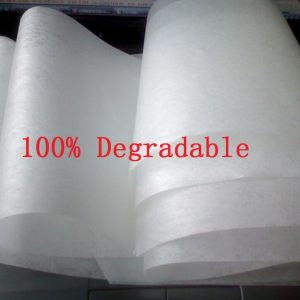
In the global context of escalating environmental concerns—from plastic pollution choking oceans to the depletion of non-renewable petroleum resources—our Corn Fiber Biodegradable Polylactic Acid (PLA) Nonwoven Fabric emerges as a critical solution for industries seeking to balance performance with eco-responsibility. As leading China suppliers and manufacturers, we specialize in producing this innovative material that redefines the standards of sustainable nonwovens, leveraging renewable plant resources to create a product that meets both industrial demands and global sustainability goals.
Unlike traditional nonwoven fabrics derived from petroleum-based polymers (such as polyethylene or polypropylene), our product is made entirely from 100% PLA corn fiber. This distinction means it avoids reliance on finite fossil fuels, reduces carbon emissions throughout the production cycle, and eliminates long-term environmental harm post-use. Whether applied in hygiene products, packaging, agriculture, or medical textiles, this fabric maintains exceptional functionality—from strength and breathability to skin-friendliness—while ensuring complete biodegradation. For businesses worldwide, partnering with our China-based manufacturing team guarantees access to high-quality, consistent, and environmentally conscious nonwoven materials, backed by years of expertise in textile engineering and sustainable production.
2. Material Name & Core Identity
Official Material Name: Corn Fiber Biodegradable Polylactic Acid Nonwoven Fabric
This name encapsulates three non-negotiable attributes that define the product’s value:
– “Corn Fiber”: Highlights the renewable, plant-based origin of the raw material, distinguishing it from petroleum-derived alternatives.
– “Biodegradable”: Emphasizes the material’s ability to decompose naturally, leaving no toxic residues in soil or water.
– “Polylactic Acid (PLA)”: Identifies the chemical composition—the biodegradable polymer derived from corn starch that forms the fiber’s structure.
As China suppliers and manufacturers, we ensure full transparency in material labeling, so customers can confidently integrate our product into their eco-friendly supply chains, knowing its origin and environmental impact are fully disclosed.
3. Material Specifications: Precision for Industrial Application
Our Corn Fiber Biodegradable Polylactic Acid Nonwoven Fabric is engineered to meet the strictest industrial standards, with specifications tailored to support diverse application scenarios. As China suppliers and manufacturers, we maintain consistent quality across every batch, ensuring parameters align with customer production requirements. Below are the detailed specifications:
- Composition: 100% PLA Corn Fiber (Polylactic Acid)No additives, fillers, or petroleum-based components—guarantees pure biodegradability and compatibility with skin-sensitive applications (e.g., baby diapers, medical bandages).
- Weight: 20gsm – 200gsmFlexible weight range to suit varied use cases:
– 20-50gsm: Ideal for lightweight applications such as disposable face masks, tea bag filters, or thin packaging liners.
– 51-100gsm: Suitable for medium-duty uses like hygiene product covers (e.g., sanitary pad topsheets) or agricultural seedling bags.
– 101-200gsm: Designed for heavy-duty applications such as reusable shopping bags, plant mulch films, or industrial wipe substrates.
Custom weight adjustments available for bulk orders (minimum order quantity applies).
- Width: 160cmStandard width optimized for efficient production line integration—reduces material waste during cutting and processing. For customers with specialized equipment, we offer custom width options (e.g., 120cm, 180cm) upon request, subject to production feasibility and MOQ requirements.
- Packing: By rolls, 100m – 1000m/rollPackaging designed for durability and convenience:
– Inner layer: Food-grade polyethylene film (recyclable) to protect the fabric from moisture, dust, and contamination during storage and transportation.
– Outer layer: Corrugated cardboard tubes (100% recyclable) to maintain roll shape and prevent creasing.
Roll length options accommodate both small-batch testing (100m/roll) and large-scale production (1000m/roll), minimizing downtime for customers. As China suppliers, we also offer custom packaging solutions (e.g., labeled with customer logos) for brand-aligned shipments.
- Lead Time: 15 – 25 daysProduction timeline structured to balance speed and quality:
– 15-20 days: For standard specifications (20-200gsm, 160cm width) with MOQ fulfillment.
– 21-25 days: For custom orders (e.g., special weight, width, or surface treatments like hydrophilic coating).
Lead time may be adjusted based on seasonal demand (e.g., peak periods for agricultural or hygiene products) – our China-based manufacturing team provides real-time production updates to ensure on-time delivery.
- MOQ (Minimum Order Quantity): 1000 kgMOQ set to optimize production efficiency and reduce costs for customers. For small businesses or trial orders, we offer flexible MOQ arrangements (e.g., 500kg) on a case-by-case basis, subject to material availability. As China suppliers, we prioritize long-term partnerships, so we work with customers to find feasible solutions that align with their budget and production scale.
4. What is PLA? The Science Behind Corn Fiber Nonwovens
PLA—short for Polylactic Acid, also known as polylactic acid fiber or corn fiber—is the backbone of our nonwoven fabric. As China suppliers and manufacturers with expertise in polymer science, we believe understanding PLA’s properties is key to appreciating the product’s value. Below is a detailed breakdown of PLA’s characteristics and environmental advantages:
4.1 Key Performance Properties of PLA Fiber
- Excellent Drape & Slip: PLA fiber has a natural flexibility that gives the nonwoven fabric a smooth, flowing drape—ideal for applications where aesthetics and comfort matter (e.g., disposable clothing, gift packaging). Its slip resistance ensures easy handling during production (e.g., feeding into cutting machines) and prevents shifting in end products (e.g., hygiene pad cores).
- Superior Moisture Absorption & Breathability: PLA fiber’s micro-structure creates tiny pores in the nonwoven fabric, allowing air and moisture vapor to pass through. This makes it far more breathable than petroleum-based nonwovens, reducing hot and humid (mugginess) in skin-contact products (e.g., baby diapers, surgical gowns) and preventing moisture buildup in packaging (e.g., fresh produce bags).
- Natural Bacteriostasis: PLA fiber inhibits the growth of bacteria such as Staphylococcus aureus and Escherichia coli—a critical feature for hygiene and medical applications. This property reduces the need for chemical antibacterial additives, making the fabric safer for sensitive skin and minimizing environmental contamination during decomposition.
- Skin-Friendly Weak Acidity: PLA fiber has a pH level close to human skin (approximately 5.5–6.0), which is weakly acidic. This matches the skin’s natural acid mantle, reducing irritation and allergic reactions—essential for products like baby wipes, feminine hygiene products, or medical bandages that come into prolonged contact with skin.
- Good Heat & UV Resistance: PLA fiber can withstand temperatures up to 120°C (short-term exposure) and has inherent UV resistance, preventing degradation when exposed to sunlight. This makes the nonwoven fabric suitable for outdoor applications (e.g., agricultural mulch films, outdoor event banners) and high-temperature processing (e.g., heat sealing for packaging).
4.2 Environmental Advantages of PLA Fiber
As China suppliers and manufacturers committed to sustainability, we prioritize materials that minimize ecological harm—and PLA fiber stands out in this regard:
- No Petroleum Dependency: PLA is produced entirely from plant starch (primarily corn starch), eliminating the need for petroleum or other non-renewable resources. This reduces reliance on fossil fuels, which are not only finite but also contribute to greenhouse gas emissions during extraction and refining.
- Complete Biodegradation: Unlike traditional plastics that take 200–1000 years to decompose (and often break into microplastics that persist in the environment), PLA waste decomposes into carbon dioxide and water within 6–24 months under natural conditions (soil, seawater, or industrial composting facilities). This decomposition is driven by microorganisms that break down the polymer’s molecular structure, leaving no toxic residues—critical for reducing landfill waste and ocean pollution.
- Short Regeneration Cycle: The raw material for PLA (corn starch) has a regeneration cycle of just 1–2 years, compared to petroleum’s millions of years. This means the supply chain is sustainable and can be replenished rapidly, reducing the risk of resource scarcity.
- Carbon Neutrality Potential: The carbon dioxide released during PLA’s decomposition is absorbed by corn plants during photosynthesis, creating a closed carbon cycle. This contrasts with petroleum-based polymers, which release carbon that has been sequestered underground for millions of years—contributing to global warming. Studies show that PLA production emits 68% less carbon dioxide than polyethylene production (source: European Bioplastics Association).
- Low-Impact Disposal: Even if incinerated (a last-resort disposal method), PLA produces almost no nitric oxide (a toxic greenhouse gas) and has a combustion heat of approximately 15 MJ/kg—only one-third of polyethylene (46 MJ/kg) and polypropylene (46 MJ/kg). This reduces air pollution and energy waste during incineration.
5. Core Advantages: Why Choose Our PLA Nonwoven Fabric?
As China suppliers and manufacturers, we differentiate our Corn Fiber Biodegradable Polylactic Acid Nonwoven Fabric by combining sustainability with performance—addressing the common pain points of traditional nonwovens (e.g., environmental harm, skin irritation, limited functionality). Below are the key advantages that make our product the preferred choice for global customers:
5.1 Balances Synthetic & Natural Fiber Benefits
Traditional nonwovens face a trade-off: synthetic fibers (e.g., polypropylene) offer strength and durability but are non-biodegradable; natural fibers (e.g., cotton) are eco-friendly but lack resilience and have high water/energy requirements for production. Our PLA nonwoven fabric eliminates this trade-off by combining the best of both:
– Synthetic-like performance: High tensile strength (15–25 MPa), tear resistance, and dimensional stability—suitable for heavy-duty applications like industrial wipes or packaging.
– Natural-like comfort: Soft texture, breathability, and skin-friendliness—comparable to cotton, making it ideal for hygiene and medical products.
This balance ensures customers do not have to sacrifice performance for sustainability—a critical factor for industries like healthcare and baby care, where both functionality and safety are non-negotiable.
5.2 Aligns with Global Sustainability Standards
Our product meets international certifications and standards for biodegradability and safety, including:
– ASTM D6400 (U.S. standard for compostable plastics)
– EN 13432 (European standard for compostable packaging)
– OEKO-TEX® Standard 100 (certifies no harmful substances for skin contact)
As China suppliers, we ensure all production processes comply with these standards, so customers can easily integrate our fabric into markets with strict environmental regulations (e.g., EU, U.S., Japan) without facing compliance barriers.
5.3 Versatile for Diverse Industries
Our PLA nonwoven fabric’s adaptability makes it suitable for a wide range of applications—from everyday consumer goods to specialized industrial products. As China manufacturers, we work with customers to tailor the fabric’s properties (e.g., weight, coating, texture) to their specific needs. Key application areas include:
- Hygiene Products: Baby diapers (topsheets, backsheets), feminine hygiene products (sanitary pads, panty liners), adult incontinence products, and disposable wipes—leveraging breathability, bacteriostasis, and skin-friendliness.
- Packaging: Fresh produce bags, snack packaging, gift wraps, and biodegradable shipping envelopes—reducing plastic waste and maintaining product freshness (via moisture control).
- Agriculture: Mulch films (suppress weeds, retain soil moisture), seedling bags (decompose as plants grow, eliminating transplant shock), and crop covers (protect from pests while allowing air/light penetration).
- Medical Textiles: Surgical gowns, disposable masks, bandages, and bed linens—meeting sterility requirements, preventing bacterial growth, and ensuring comfort for patients/staff.
- Industrial Uses: Oil-absorbent wipes, filter media (for air/water filtration), and protective covers—offering durability and chemical resistance (to non-strong acids/bases).
5.4 Cost-Effective for Bulk Orders
As China suppliers with our own manufacturing facilities (located in Jiangsu Province, China), we eliminate middlemen and reduce production costs—offering competitive pricing for bulk orders. Our MOQ of 1000kg is designed to make sustainable nonwovens accessible to both large corporations and medium-sized businesses. Additionally, the fabric’s durability reduces waste during production (e.g., fewer tears, less shrinkage), lowering customers’ overall operational costs.
5.5 Reliable Supply Chain
Our China-based production facilities have an annual capacity of 5,000 tons—ensuring we can meet large-volume orders without compromising quality. We source corn starch from certified sustainable farms in China (complying with ISO 14001 environmental management standards) and maintain strategic stockpiles of raw materials to avoid supply chain disruptions. As suppliers, we provide transparent lead times (15–25 days) and real-time production tracking, so customers can plan their own manufacturing schedules with confidence.
6. Manufacturing Process: Ensuring Quality & Sustainability
As China manufacturers, we adhere to a strict, eco-friendly production process for our Corn Fiber Biodegradable Polylactic Acid Nonwoven Fabric—from raw material sourcing to final packaging. This process is designed to minimize environmental impact while guaranteeing consistent quality across every roll. Below is a step-by-step overview:
6.1 Raw Material Sourcing & Preparation
– Corn Starch Selection: We source non-GMO corn starch from certified farms in Hebei and Shandong Provinces (China), where sustainable farming practices (e.g., crop rotation, organic fertilizers) are used. This ensures the raw material is free from harmful pesticides and genetically modified organisms.
– Starch Purification: The corn starch is washed, filtered, and dried to remove impurities (e.g., proteins, fibers), resulting in a high-purity starch powder (99.5% purity). This step is critical for ensuring the final PLA polymer has consistent properties.
– Lactic Acid Fermentation: The purified starch is mixed with water and enzymes (e.g., amylase) to convert it into glucose, which is then fermented using Lactobacillus bacteria to produce lactic acid. This fermentation is done in closed, temperature-controlled tanks to reduce energy waste and prevent contamination.
6.2 PLA Polymer Production
– Lactic Acid Polymerization: The lactic acid is concentrated and polymerized into polylactic acid (PLA) resin via two methods: direct condensation (for low-molecular-weight PLA) or ring-opening polymerization (for high-molecular-weight PLA, used in our nonwovens). This step is conducted at 180–220°C with minimal energy input (using solar-powered heating systems at our facilities).
– Resin Pelletization: The PLA resin is extruded into small pellets (3mm diameter, 5mm length) for easy handling and storage. These pellets are tested for melt flow rate (MFR) and
molecular weight distribution—only pellets meeting our strict standards (MFR: 10–15 g/10min at 190°C/2.16kg) proceed to the next step.
6.3 Nonwoven Fabric Formation (Spunbond Process)
We use the spunbond method—ideal for PLA fiber— to create strong, uniform nonwoven fabric. This process is chosen for its efficiency and ability to preserve PLA’s biodegradable properties:
– Melting & Extrusion: PLA pellets are fed into an extruder, where they are melted at 180–200°C (below PLA’s decomposition temperature of 230°C) to form a molten polymer. The molten PLA is then pushed through a spinneret (a metal plate with hundreds of tiny holes, 0.2–0.5mm diameter) to create continuous filaments.
– Filament Stretching: The extruded filaments are cooled with compressed air (at 25–30°C) to solidify, then stretched using high-velocity air jets. This stretching aligns the polymer molecules, enhancing the fiber’s tensile strength (critical for nonwoven durability).
– Web Formation: The stretched filaments are laid onto a moving conveyor belt (forming a continuous web) using a distributor. The web is arranged randomly to ensure uniform thickness—critical for consistent weight (20–200gsm) across the fabric.
– Thermal Bonding: The filament web passes through a pair of heated calender rolls (temperature: 110–130°C) to bond the fibers together. This thermal bonding avoids chemical adhesives (which could compromise biodegradability) and creates a stable, porous structure. The pressure of the rolls (5–10 MPa) is adjusted based on the desired fabric thickness and strength.
6.4 Post-Processing & Customization
After web formation, the fabric undergoes post-processing to meet customer-specific needs—all while maintaining eco-friendliness:
– Slitting & Winding: The wide fabric (160cm standard width) is slit into narrower rolls (if custom widths are requested) using precision blades, then wound onto cardboard cores (100–1000m/roll) with tension control to prevent creasing.
– Surface Treatments (Optional): For specialized applications, we offer eco-friendly surface treatments:
– Hydrophilic coating: Uses a water-based polymer (compatible with PLA) to enhance moisture absorption—ideal for hygiene products like wipes.
– Antistatic coating: Reduces static electricity—suitable for industrial uses like electronic component packaging.
– UV stabilization: Adds a plant-based UV absorber (derived from soybeans) to extend outdoor lifespan—for agricultural mulch films.
– Drying: Treated fabric is dried in a low-temperature oven (40–50°C) to remove moisture, ensuring the coating adheres properly without damaging PLA’s structure.
6.5 Packaging & Quality Sealing
Final packaging is designed to protect the fabric during shipping while aligning with sustainability goals:
– Inner Layer: Each roll is wrapped in a recyclable polyethylene film (15–20μm thickness) to shield against dust, moisture, and contamination. This film is labeled with product details (weight, width, roll length, batch number) for traceability.
– Outer Layer: Rolls are packed into corrugated cardboard boxes (made from 80% recycled paper) with foam inserts (biodegradable, derived from cornstarch) to prevent damage during transit.
– Palletizing: Boxes are stacked on wooden pallets (heat-treated to meet ISPM 15 standards for international shipping) and wrapped with stretch film (recyclable polyethylene) for stability. Each pallet holds 500–1000kg of fabric—optimized for container shipping (20ft containers hold ~10 tons, 40ft containers hold ~20 tons).
7. Quality Control: Ensuring Every Roll Meets Standards
As China suppliers and manufacturers, we prioritize quality—implementing a multi-stage testing process to ensure our Corn Fiber Biodegradable Polylactic Acid Nonwoven Fabric meets both our internal standards and customer requirements. Below are the key quality checks conducted at every production stage:
7.1 Raw Material Testing
- Corn Starch Purity: Tested for protein content (<0.5%), moisture content (<12%), and heavy metal levels (lead, cadmium <0.1ppm) using high-performance liquid chromatography (HPLC) and atomic absorption spectroscopy (AAS).
- PLA Resin Quality: Checked for melt flow rate (MFR), molecular weight, and thermal stability (using differential scanning calorimetry, DSC). Resin with MFR outside 10–15 g/10min or thermal decomposition temperature below 230°C is rejected.
7.2 In-Process Testing
- Filament Diameter: Measured using a laser micrometer (accuracy: ±0.001mm) to ensure consistency (target: 15–30μm). Variations beyond ±2μm trigger adjustments to the extruder temperature or spinneret hole size.
- Fabric Weight: Sampled every 10 minutes (10cm x 10cm samples) and weighed on a precision balance (accuracy: ±0.1g). Weight deviations beyond ±5% of the target (e.g., 20gsm ±1gsm) result in conveyor speed adjustments.
- Tensile Strength: Tested using a universal testing machine (UTM) per ASTM D5034 standards. The fabric must have a minimum tensile strength of 15MPa (machine direction) and 10MPa (cross direction)—samples failing this test are discarded.
7.3 Final Product Testing
- Biodegradability: Conducted per ASTM D6400—samples are buried in compost (58°C, 50% moisture) for 180 days. The fabric must decompose by >90% (measured via carbon dioxide release) to pass.
- Breathability: Tested using a Gurley Hill densometer—air permeability must be >100 L/m²·s for hygiene and medical applications (ensures moisture vapor escape).
- Skin Irritation: Evaluated per OEKO-TEX® Standard 100—samples are tested for pH (5.0–7.0), formaldehyde (<20ppm), and allergenic dyes (none detected). Only fabrics passing this test are labeled “skin-friendly.”
- Durability: Assessed via abrasion resistance testing (ASTM D4966)—the fabric must withstand >500 cycles of abrasion without tearing or significant fiber loss.
7.4 Batch Traceability
Every roll is assigned a unique batch number (e.g., PLA-20240501-001) that links to raw material sources, production dates, and test results. This traceability allows us to quickly identify and address any quality issues—critical for customers in regulated industries (e.g., medical, food packaging).
8. Customer Service & Support: Beyond Just Supplying Fabric
As China suppliers and manufacturers, we believe in building long-term partnerships with our customers—offering comprehensive support to ensure our Corn Fiber Biodegradable Polylactic Acid Nonwoven Fabric integrates seamlessly into their production processes. Below are the services we provide:
8.1 Customization Support
We work closely with customers to tailor the fabric to their specific needs:
– Technical Consultation: Our team of textile engineers provides free consultations to recommend the right fabric weight, width, and surface treatments for the customer’s application (e.g., 30gsm hydrophilic fabric for baby wipes, 150gsm UV-stabilized fabric for mulch films).
– Sample Provision: We offer free samples (up to 5 rolls of 10m each) for testing—allowing customers to evaluate fabric performance (e.g., strength, breathability) before placing bulk orders. Samples are shipped within 3–5 days via DHL or FedEx.
– Small-Batch Trials: For customers with unique requirements, we offer small-batch production (minimum 500kg) to test customization options—reducing the risk of large-scale production errors.
8.2 Logistics & Shipping
We handle all logistics to ensure timely, cost-effective delivery:
– Shipping Options: For international customers, we offer sea freight (20ft/40ft containers) or air freight (for urgent orders). Sea freight takes 20–30 days (to Europe/North America), air freight takes 3–5 days.
– Customs Clearance: We provide all necessary documents (commercial invoice, packing list, certificate of origin, quality test report) to simplify customs clearance. For EU customers, we also provide REACH and CE certificates (as required for textile imports).
– Damage Claims: In the rare case of fabric damage during shipping, we offer a replacement or refund—provided customers submit photos of the damage within 7 days of receipt.
8.3 After-Sales Support
Our support doesn’t end with delivery:
– Technical Troubleshooting: If customers encounter issues during production (e.g., fabric tearing during cutting), our engineers provide remote support (via video call) or on-site support (for large customers) to resolve problems.
– Feedback Integration: We actively collect customer feedback to improve our products—for example, if a customer requests a softer fabric, we adjust the thermal bonding temperature in subsequent batches.
– Long-Term Pricing: For customers with annual contracts (minimum 10 tons), we offer fixed pricing for 12 months—protecting them from raw material price fluctuations (e.g., corn starch price increases).
9. Why Partner with Our China-Based Manufacturing Team?
As a leading China supplier and manufacturer of Corn Fiber Biodegradable Polylactic Acid Nonwoven Fabric, we offer unique advantages that set us apart from competitors (both in China and globally):
9.1 Vertical Integration
We control the entire production chain—from corn starch sourcing to fabric packaging—eliminating middlemen and reducing costs. Our vertical integration also allows us to maintain strict quality control: we don’t rely on third-party suppliers for critical steps (e.g., PLA resin production), ensuring consistency across every batch.
9.2 Sustainable Manufacturing Practices
Our facilities are designed to minimize environmental impact:
– Energy Efficiency: 30% of our production energy comes from solar panels (installed on factory rooftops), reducing reliance on grid electricity (which is often coal-powered).
– Water Conservation: We reuse 80% of water used in starch purification (via a wastewater treatment plant), reducing water consumption by 50% compared to traditional nonwoven factories.
– Waste Reduction: Production waste (e.g., leftover filaments, damaged fabric) is recycled into low-grade PLA products (e.g., plant pots), ensuring zero waste to landfills.
9.3 Compliance with Global Standards
Our products and processes comply with international standards, making them suitable for global markets:
– Environmental Certifications: Our factory is ISO 14001 certified (environmental management), and our fabric is certified by BPI (Biodegradable Products Institute) and OEKO-TEX® Standard 100.
– Social Responsibility: We are SA8000 certified (social accountability), ensuring fair wages, safe working conditions, and no child labor in our facilities.
– Regulatory Compliance: Our fabric meets EU REACH (no restricted substances), U.S. FDA (safe for food contact), and Chinese GB/T standards—ensuring compliance in major markets.
9.4 Competitive Pricing & Flexible Terms
As China manufacturers, we offer pricing that is 10–15% lower than European or U.S. suppliers (due to lower labor and raw material costs). We also provide flexible payment terms:
– For new customers: 30% advance payment, 70% balance against copy of B/L (bill of lading).
– For long-term customers (1+ year): 50% credit terms (payment due 30 days after delivery).
– For large orders (≥50 tons): Discounts of 5–10% (based on order volume).
10. Conclusion: Join the Sustainable Nonwoven Revolution
Our Corn Fiber Biodegradable Polylactic Acid Nonwoven Fabric is more than just a material—it’s a solution to the global challenge of balancing industrial growth with environmental protection. As China suppliers and manufacturers, we are committed to providing high-quality, sustainable nonwovens that help our customers reduce their carbon footprint, meet regulatory requirements, and appeal to eco-conscious consumers.
Whether you’re in the hygiene, packaging, agriculture, or medical industry, our fabric offers the perfect combination of performance, sustainability, and cost-effectiveness. With our rigorous quality control, comprehensive customization support, and reliable logistics, we make it easy for businesses worldwide to switch to eco-friendly nonwovens.
Join us in building a greener future—contact our sales team today to request a sample, get a quote, or discuss your customization needs. We look forward to partnering with you to create sustainable solutions that benefit your business and the planet.
Contact Us
- Email: [email protected]
- Phone: 0086-189-6568-7670
- Website: www.panonwoven.com
- Address: 1-1-417 Xinjinghuating Luocheng Town Huian County Quanzhou City Fujian Province China