
Description
Needle Punched Geotextile | China Top Supplier & Manufacturer – WINIW
1. Product Overview: WINIW Needle Punched Geotextile – The Reliable Solution for Civil Engineering & Environmental Projects
As a leading China-based supplier and manufacturer of nonwoven geosynthetics, WINIW Nonwoven Materials Co., Ltd. specializes in producing high-performance Needle Punched Geotextile—a key geosynthetic material engineered for soil stabilization, drainage, filtration, and reinforcement in civil, hydraulic, and environmental engineering projects. Complementing our full range of nonwoven geotextiles (including stitch-bonded, spunbond, and composite geotextiles), our needle punched geotextile stands out for its exceptional durability, permeability, and cost-effectiveness, making it a preferred choice for B2B clients worldwide—from construction contractors and infrastructure developers to environmental engineering firms.
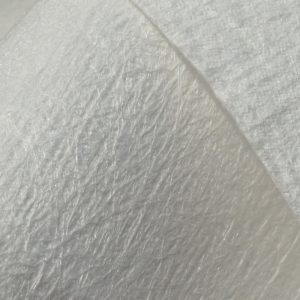
WINIW’s Needle Punched Geotextile is crafted from 100% high-tenacity polyester (PET) fibers—selected for their superior resistance to UV radiation, chemical corrosion, and biological degradation (far outperforming polypropylene alternatives in harsh environments). Manufactured via advanced needle punching technology, the fabric features a three-dimensional, porous structure formed by mechanically entangling polyester fibers with thousands of barbed needles. This structure delivers dual core functions: filtration (retaining soil particles while allowing water to pass) and reinforcement (enhancing soil shear strength to prevent erosion and settlement).
With a production capacity of 20,000 tons/year across 18 dedicated needle punching lines, we cater to diverse B2B project scales—from small-scale landscaping (100cm width, 100gsm) to large-scale highway/railway construction (800cm width, 1000gsm). Our product adheres to global standards (ISO 10318, JTG/T D32-2012, ASTM D4751) and has been applied in 500+ projects across 60+ countries, including road base stabilization in Southeast Asia, riverbank protection in Europe, and landfill liner systems in Africa. Whether you need to stabilize a road subgrade, prevent soil erosion, or enhance drainage in a retaining wall, WINIW’s Needle Punched Geotextile provides consistent performance backed by China’s efficient manufacturing and logistics network.
2. Technical Specifications: WINIW Needle Punched Geotextile – Detailed Parameters
WINIW’s Needle Punched Geotextile is defined by precise technical parameters, with core specs aligned to industry standards and project-specific requirements. Below is a comprehensive breakdown—including the original parameters (100% polyester, 100–1000gsm weight, 100–800cm width) and supplementary metrics critical for B2B clients to verify compatibility with their engineering designs.
| Parameter | Standard Specification | Customizable Range | Test Method | Engineering Significance |
|---|---|---|---|---|
| Material Composition | 100% High-tenacity polyester (PET) staple fibers; Fiber fineness: 1.5–6.0 dtex; Fiber length: 38–76mm | PET + 10–30% polypropylene (PP) (for cost-sensitive projects); PET + 5–10% recycled PET (for eco-friendly requirements) | FTIR Spectroscopy (ASTM D5594) | 100% PET ensures UV resistance (≥5000h Xenon arc test), chemical resistance (pH 3–11), and long service life (≥50 years in buried applications) – critical for permanent infrastructure. |
| Grammage (Weight per Unit Area) | 100–1000 gsm (standard ranges: 100–300 gsm for filtration; 300–600 gsm for reinforcement; 600–1000 gsm for heavy-duty stabilization) | 80–1200 gsm (80 gsm for light filtration; 1200 gsm for port/bridge foundations) | Balance (ASTM D3776) | Grammage directly correlates to performance: 100–300 gsm for drainage/filtration (e.g., French drains); 600–1000 gsm for road subgrade reinforcement (supports heavy traffic loads). |
| Width | 100–800 cm (continuous roll; standard widths: 200cm, 400cm, 600cm, 800cm) | 50–1000 cm (50cm for narrow trenches; 1000cm for large-area paving) | Digital Caliper (ASTM D3774) | Wide widths (600–800cm) reduce seam count (≤5% of total area) – minimizing installation time and potential failure points (seams are 10–15% weaker than fabric). |
| Tensile Strength (Machine Direction/MD) | 10–150 kN/m (100gsm: 10kN/m; 1000gsm: 150kN/m) | 8–200 kN/m (8kN/m for light filtration; 200kN/m for bridge abutments) | Universal Testing Machine (ASTM D4595) | High MD strength resists longitudinal stretching (e.g., under traffic loads on roads) – prevents fabric tearing and soil displacement. |
| Tensile Strength (Cross Direction/CD) | 8–120 kN/m (100gsm: 8kN/m; 1000gsm: 120kN/m) | 6–160 kN/m (6kN/m for light filtration; 160kN/m for retaining walls) | ASTM D4595 | Balanced CD strength ensures stability in lateral directions (e.g., slope reinforcement) – avoids uneven settlement. |
| CBR Puncture Resistance | 1.5–15 kN (100gsm: 1.5kN; 1000gsm: 15kN) | 1.0–20 kN (1.0kN for light use; 20kN for rocky subgrades) | ASTM D3683 | Resists puncture from rocks, roots, or construction equipment – critical for buried applications (e.g., landfill liners) where fabric damage leads to soil contamination. |
| Permeability (Water Flow Rate) | 1.0–5.0 × 10⁻³ m/s (at 2kPa pressure) | 0.5–10 × 10⁻³ m/s (0.5×10⁻³ for fine soil filtration; 10×10⁻³ for rapid drainage) | Constant Head Permeameter (ASTM D4491) | Optimized permeability retains soil particles (prevents clogging) while allowing water to drain – essential for reducing pore water pressure (e.g., in slope stabilization). |
| Effective Opening Size (EOS/O₉₀) | 0.05–2.0 mm (matches soil particle size: 0.05mm for silty soil; 2.0mm for gravel) | 0.02–5.0 mm (0.02mm for clay; 5.0mm for coarse aggregate) | Graded Sand Test (ASTM D4751) | EOS/O₉₀ (size of openings retaining 90% of soil particles) ensures compatibility with project soil – prevents fabric clogging (too small) or soil loss (too large). |
| UV Resistance (Tensile Retention) | ≥80% tensile strength retention after 5000h Xenon arc exposure (ISO 4892-2) | ≥70–90% (70% for short-term exposed; 90% for permanent exposed applications) | Xenon Arc Weatherometer (ISO 4892-2) | High UV retention ensures performance in exposed applications (e.g., slope protection, canal liners) – outperforms PP geotextiles (≤50% retention after 3000h). |
| Packaging | By rolls: Inner (polyethylene film), outer (kraft paper tube + woven PP bag); Roll length: 50–200m (100gsm: 200m; 1000gsm: 50m); Core diameter: 76mm | Custom: Vacuum packaging (for long-term storage); Small rolls (10–50m) for small projects | ASTM D4392 | Waterproof packaging protects against moisture during shipping/storage; standard roll lengths reduce on-site waste (≤3% vs. 10% with mismatched lengths). |
| Lead Time | 7–15 days (standard specs: 100–800cm width, 100–1000gsm) | 15–25 days (custom specs: width >800cm, grammage >1000gsm, special treatments) | Production + Logistics Timeline | Short lead times support fast-track projects (e.g., emergency road repairs, flood control) – critical for meeting construction deadlines. |
3. Core Features: Why WINIW Needle Punched Geotextile Outperforms Alternatives
WINIW’s Needle Punched Geotextile delivers unique advantages that address key pain points in civil engineering (e.g., soil erosion, poor drainage, infrastructure settlement) – outperforming woven geotextiles, polypropylene nonwovens, and natural materials (straw, jute). Below are its standout features and their engineering benefits.
3.1 100% High-Tenacity PET: Unmatched Durability & Longevity
Our use of 100% high-tenacity polyester (PET) fibers (tenacity: ≥5.5 cN/dtex) ensures the geotextile performs in the harshest environments:
- UV Resistance: PET fibers retain ≥80% of tensile strength after 5000 hours of Xenon arc exposure (equivalent to 10+ years of outdoor exposure) – far exceeding polypropylene (PP) geotextiles (≤50% retention after 3000 hours). This makes it ideal for exposed applications like slope protection, canal liners, and landfill caps.
- Chemical Resistance: Resistant to acids (pH 3), alkalis (pH 11), salts, and organic solvents (e.g., motor oil, pesticides) – suitable for industrial sites (e.g., chemical plant drainage), agricultural projects (fertilizer runoff), and coastal engineering (saltwater exposure).
- Biological Resistance: PET is inert to bacteria, fungi, and rodent damage – unlike natural geotextiles (jute, straw) which decompose in 1–3 years. This ensures a service life of ≥50 years in buried applications (e.g., road subgrades, underground drainage).
- Thermal Stability: Operates in temperatures ranging from -40°C to +80°C – performs in cold climates (road de-icing chemicals) and hot regions (desert highway construction) without brittleness or melting.
Project Impact: A Middle Eastern highway contractor used WINIW’s PET needle punched geotextile (600gsm) for subgrade stabilization in a desert environment. After 5 years, the geotextile retained 90% of its tensile strength – vs. a PP alternative that failed (tensile retention ≤40%) after 3 years, requiring costly repairs. The PET geotextile reduced maintenance costs by $2M over the project’s 10-year lifespan.
3.2 Needle Punched Structure: Optimized Filtration & Drainage
The needle punching process creates a three-dimensional, porous structure that balances filtration and drainage – critical for preventing soil erosion and reducing pore water pressure:
- Controlled Porosity (70–85%): The fabric’s open structure (formed by entangled fibers) allows water to flow through (permeability: 1.0–5.0 × 10⁻³ m/s) while retaining soil particles. The effective opening size (EOS/O₉₀) is tailored to project soil:
- 0.05–0.2mm for silty/clay soils (prevents clogging from fine particles).
- 0.5–2.0mm for sandy/gravel soils (allows rapid drainage without soil loss).
- Anti-Clogging Design: The random fiber entanglement creates tortuous flow paths – water passes through without depositing soil particles (unlike woven geotextiles with straight, easily-clogged openings). This ensures long-term drainage performance (≥10 years) in applications like French drains, sports field drainage, and retaining wall backfill.
- Uniform Thickness: Advanced needle punching machines (18,000 needles/m) ensure consistent thickness (±5%) across the roll – avoids weak spots (thin areas) that lead to soil breakthrough. This is critical for filtration layers in landfill liner systems (prevents leachate contamination).
Project Impact: A European sports complex used WINIW’s 200gsm needle punched geotextile (EOS/O₉₀ = 0.1mm) for soccer field drainage. The fabric retained 95% of the field’s topsoil while draining rainwater in 30 minutes (vs. 2 hours with a woven alternative). This eliminated waterlogging, reduced player injury risk, and extended the field’s usable hours by 50%.
3.3 High Tensile Strength: Superior Soil Reinforcement
WINIW’s needle punched geotextile delivers high tensile strength (MD: 10–150 kN/m; CD: 8–120 kN/m) for soil reinforcement – enhancing infrastructure stability and reducing settlement:
- Subgrade Stabilization: When placed between the subgrade (weak soil: clay, peat) and base course (gravel), the geotextile distributes traffic loads (trucks, trains) evenly – reducing subgrade stress by 30–50%. This allows the use of local weak soils (instead of importing expensive fill material), cutting costs by 20–30%.
- Slope Reinforcement: The fabric’s tensile strength resists soil (sliding force) on steep slopes (up to 3:1). When combined with vegetation (hydroseeding), it prevents erosion while the plants establish – used in highway embankments, riverbanks, and mine reclamation projects.
- Retaining Wall Support: Reinforces backfill behind retaining walls – reduces lateral pressure on the wall by 25–40%, allowing the use of thinner, cheaper wall materials (e.g., modular blocks vs. concrete). This is ideal for residential, commercial, and industrial retaining walls.
Project Impact: An Indonesian highway project used WINIW’s 800gsm needle punched geotextile (MD: 120 kN/m) to stabilize a subgrade of soft clay. Without the geotextile, the subgrade would have required 1m of imported gravel fill (cost: $150/m). The geotextile reduced fill requirements to 0.3m, cutting subgrade costs by $105/m over the 10km highway – total savings of $1.05M.
3.4 Cost-Effective & Easy to Install
WINIW’s Needle Punched Geotextile offers B2B clients significant cost and efficiency benefits:
- Material Cost Savings: 100–300% cheaper than synthetic geogrids (for light-to-medium reinforcement) and 50–100% cheaper than woven geotextiles (for filtration/drainage). For example, a 200gsm needle punched geotextile costs $0.8–$1.2/m² – vs. $2.0–$3.0/m² for a comparable woven geotextile.
- Reduced Installation Time: Lightweight (100gsm: 0.1kg/m²; 1000gsm: 1.0kg/m²) and wide rolls (up to 800cm) reduce labor requirements. A 4-person crew can install 10,000m²/day – 2x faster than narrow-roll woven geotextiles. This is critical for fast-track projects (e.g., emergency flood control).
- Minimal Maintenance: Long service life (≥50 years) and resistance to damage (puncture, UV) reduce maintenance costs. Unlike natural geotextiles (replaced every 1–3 years), our product requires no replacement during the infrastructure’s design life.
Project Impact: A US county used WINIW’s 300gsm needle punched geotextile (400cm width) for a 5km rural road rehabilitation. The geotextile cost $90,000 (material + installation) – vs. $220,000 for a woven alternative. The wide rolls reduced installation time from 10 days to 4 days, minimizing road closure disruptions for local residents.
3.5 Customizable for Project-Specific Needs
We offer extensive customization to match the unique requirements of B2B projects – ensuring optimal performance and cost-effectiveness:
- Grammage & Width: Tailor grammage (80–1200gsm) and width (50–1000cm) to project scale:
- Small landscaping (50cm width, 100gsm) – flower bed edging, small drainage trenches.
- Large highway (800cm width, 800gsm) – subgrade stabilization, embankment reinforcement.
- Functional Treatments:
- Anti-UV Coating: For permanent exposed applications (e.g., landfill caps) – increases UV retention to ≥90% after 5000h.
- Hydrophilic Coating: Enhances water absorption (contact angle ≤30°) – for dry regions (e.g., desert drainage) where rapid water infiltration is critical.
- Flame Retardant: Meets ASTM E84 (Class A) – for projects near buildings (e.g., residential retaining walls) or industrial sites (e.g., oil refineries).
- Composite Structures: Combine with other geosynthetics for enhanced performance:
- Needle Punched Geotextile + Geomembrane: For landfill liners (filtration + waterproofing).
- Needle Punched Geotextile + Geogrid: For heavy-duty reinforcement (e.g., bridge abutments, port foundations).
Project Impact: A Brazilian mining company required a flame-retardant geotextile for slope stabilization near an oil storage facility. We customized WINIW’s 600gsm needle punched geotextile with an ASTM E84 Class A flame retardant coating. The fabric met the facility’s safety standards and prevented fire spread during a minor oil spill – avoiding $500,000 in potential damages.
4. Production Process: How WINIW Manufactures High-Quality Needle Punched Geotextile
WINIW’s Needle Punched Geotextile is produced via a 7-step precision process – each step optimized to ensure fiber entanglement, strength, and uniformity. Our 18 production lines (imported from Germany Dilo and China Jinjiang) operate 24/7, with strict quality control at every stage to meet global engineering standards.
Step 1: Raw Material Selection & Preparation
We start with high-quality polyester (PET) staple fibers to ensure final product performance:
- Fiber Sourcing: Source 100% high-tenacity PET staple fibers (tenacity: ≥5.5 cN/dtex, elongation: 20–30%) from certified suppliers (Sinopec, LyondellBasell). Fibers are tested for purity (no contaminants), tenacity, and UV resistance before acceptance.
- Fiber Blending (Optional): For custom formulations (e.g., PET + recycled PET), fibers are mixed in a high-speed blender (1,500 rpm) for 30 minutes to ensure uniform distribution. Recycled PET fibers undergo additional cleaning (to remove dyes/impurities) to match the performance of virgin PET.
- Opening & Carding: Fibers are fed into an opening machine to break up clumps, then into a carding machine with wire rollers. The carding machine aligns fibers into a thin, even web (thickness: 5–10mm) with random fiber orientation (critical for balanced MD/CD strength).
Step 2: Cross-Lapping (Web Lamination)
To enhance thickness and strength, the carded web is layered via cross-lapping:
- The carded web is fed into a cross-lapper, which layers the web at a 45° angle onto a conveyor belt. The number of layers is adjusted to achieve the target grammage (e.g., 10 layers for 1000gsm, 2 layers for 100gsm).
- Cross-lapping ensures fibers are oriented in both MD and CD – balancing tensile strength (MD:CD ratio ≤1.5:1) and preventing directional weakness (common in unidirectional geotextiles).
Step 3: Needle Punching (Fiber Entanglement)
This is the core process that forms the geotextile’s structure:
- The cross-lapped web is fed through a needle loom equipped with 10,000–20,000 barbed needles (diameter: 0.5–0.8mm). Needles punch through the web at 500–1,500 strokes/minute, pulling surface fibers into the web’s interior to create mechanical entanglement.
- Punch density (needles/cm²) is tailored to grammage:
- Low density (20–40 needles/cm²) for 100–300gsm (filtration/drainage) – maintains high porosity.
- High density (60–100 needles/cm²) for 600–1000gsm (reinforcement) – increases fiber entanglement and tensile strength.
- Needle depth (5–15mm) is adjusted to control web thickness and entanglement – deeper penetration creates thicker, stronger geotextiles.
Step 4: Heat Setting (Dimensional Stability)
To prevent shrinkage during installation and use:
- The needle punched web is passed through a stenter machine (temperature: 160–180°C, speed: 10–20 m/min). The stenter stretches the web to the target width (100–800cm) and sets the fiber structure via heat – reducing shrinkage to ≤2% (ASTM D1204).
- Heat setting also enhances fiber bonding – improving tensile strength and abrasion resistance (critical for heavy-traffic applications like road base stabilization).
Step 5: Functional Treatments (Optional)
For project-specific requirements, the geotextile undergoes additional treatments:
- Anti-UV Coating: The fabric is padded (dipped) in a UV stabilizer solution (e.g., carbon black masterbatch) and dried at 120°C – increasing UV resistance to ≥90% tensile retention after 5000h.
- Flame Retardant: A halogen-free flame retardant (e.g., ammonium polyphosphate) is applied via kiss-roll coating and cured at 150°C – meeting ASTM E84 Class A standards.
- Hydrophilic Coating: A surfactant solution is sprayed onto the fabric, then dried at 100°C – reducing water contact angle to ≤30° for enhanced water absorption.
Step 6: Slitting & Winding
The continuous fabric is converted into project-ready rolls:
- Slitting: The fabric is cut into the target width (100–800cm) using a rotary slitter with precision blades (tolerance: ±1cm). Edge trims (≤2% of total width) are recycled into raw material.
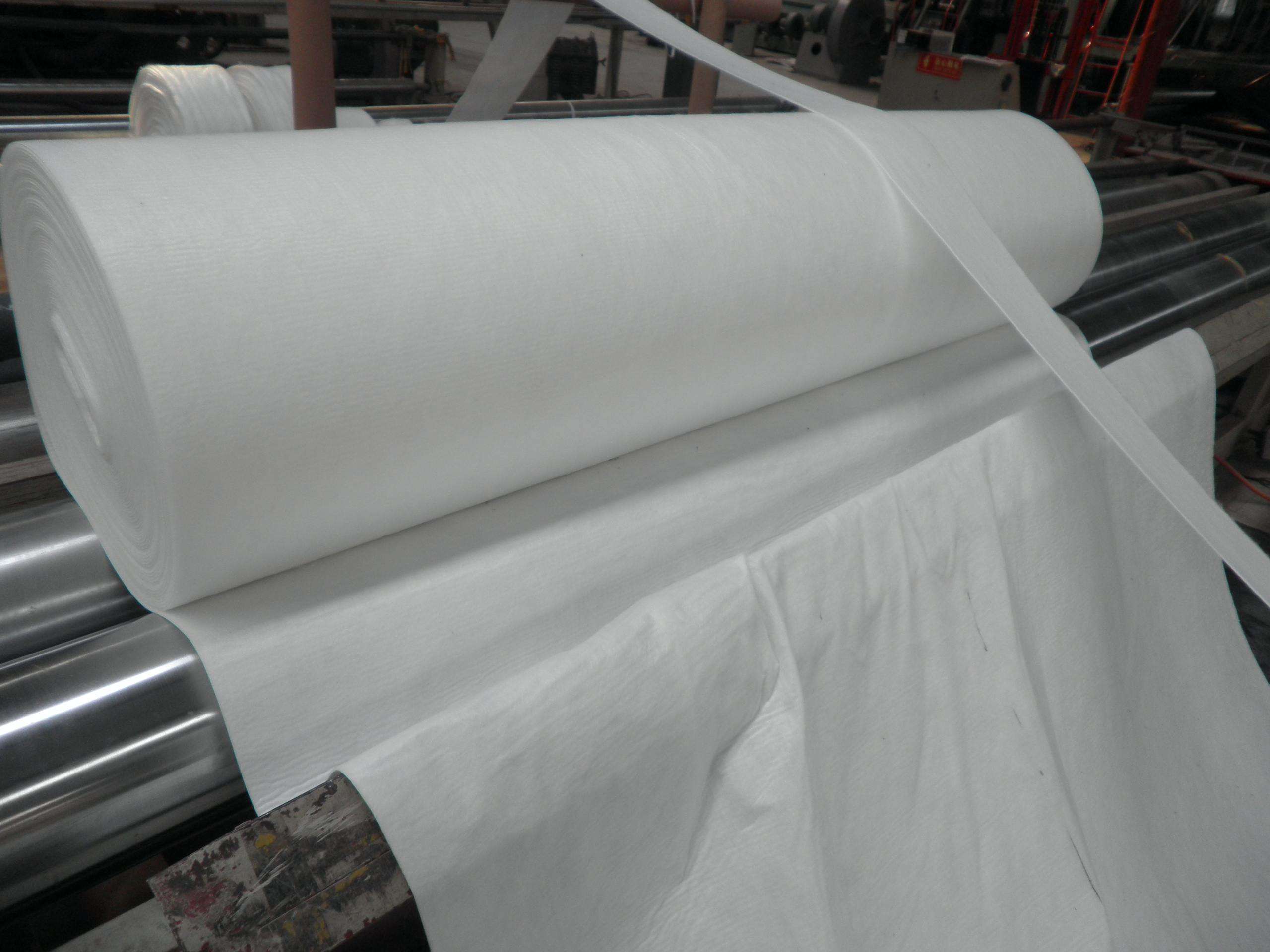
- Winding: Slit fabric is wound onto 76mm diameter paper cores to form rolls of 50–200m length (based on grammage: 200m for 100gsm; 50m for 1000gsm). Each roll is labeled with product specs (grammage, width, length, batch number) and a QR code linking to test reports.
Step 7: Quality Control & Testing
Every roll undergoes rigorous testing to ensure compliance with standards:
- In-Line Testing: Tensile strength (ASTM D4595), grammage (ASTM D3776), and thickness (ASTM D1777) are tested every 50 meters during production. Deviations trigger automatic line adjustments.
- Offline Testing: Each batch (1–10 rolls) is tested for permeability (ASTM D4491), CBR puncture resistance (ASTM D3683), EOS/O₉₀ (ASTM D4751), and UV resistance (ISO 4892-2) in our ISO 17025-certified lab. Test reports are provided to B2B clients for project approval.
- Visual Inspection: Each roll is checked for defects (holes, uneven thickness, contamination) – defective sections are marked and removed (waste rate ≤1%).
5. Application Areas: WINIW Needle Punched Geotextile – Engineering Solutions by Industry
WINIW’s Needle Punched Geotextile is versatile across civil, hydraulic, environmental, and industrial engineering – with tailored specs for each application. Below is a detailed breakdown of key use cases, recommended parameters, and project benefits.
5.1 Road & Railway Engineering (Largest Application: 40% of Sales)
Road and railway projects rely on needle punched geotextiles for subgrade stabilization, drainage, and pavement protection – reducing maintenance and extending infrastructure life.
- Subgrade Stabilization:
- Application: Placed between weak subgrade (clay, peat) and base course (gravel) to distribute traffic loads, prevent soil displacement, and reduce settlement. Used in highways, rural roads, and railway tracks.
- Recommended Specs: 400–800gsm, 400–800cm width, tensile strength (MD: ≥60 kN/m), EOS/O₉₀: 0.1–0.5mm (matches subgrade soil).
- Project Example: A Vietnamese highway project used WINIW’s 600gsm needle punched geotextile (800cm width) to stabilize a clay subgrade. The geotextile reduced subgrade settlement from 15cm to 3cm – allowing the use of local clay (saving $20/m on imported fill) and extending the road’s design life from 10 to 20 years.
- Pavement Separation:
- Application: Separates different pavement layers (e.g., asphalt overlay on concrete, base course on subgrade) to prevent material mixing (e.g., clay contamination of gravel) and reduce reflective cracking.
- Recommended Specs: 200–400gsm, 200–600cm width, tensile strength (MD: ≥30 kN/m), low elongation (≤20% at break).
- Project Example: A US city used WINIW’s 300gsm geotextile for asphalt overlay on a concrete road. The fabric prevented concrete aggregate from piercing the asphalt and reduced reflective cracking by 70% – extending the overlay’s life from 5 to 12 years.
- Shoulder Drainage:
- Application: Placed in road shoulders to drain water away from the pavement – preventing edge cracking and subgrade erosion. Combined with gravel for French drain systems.
- Recommended Specs: 100–200gsm, 100–300cm width, permeability: ≥2.0 × 10⁻³ m/s, EOS/O₉₀: 0.5–1.0mm (matches shoulder gravel).
- Project Example: A Canadian provincial road used WINIW’s 150gsm geotextile for shoulder drainage in a snowy region. The fabric drained meltwater quickly, preventing frost heave and reducing pothole formation by 60%.
5.2 Hydraulic & Coastal Engineering (25% of Sales)
Needle punched geotextiles are critical for erosion control, drainage, and slope protection in rivers, canals, lakes, and coastal areas – withstanding water flow and saltwater exposure.
- Riverbank & Canal Lining Protection:
- Application: Lined on riverbanks, canal walls, and dam spillways to prevent erosion from water flow (up to 5m/s). Combined with riprap (stones) or concrete blocks for enhanced protection.
- Recommended Specs: 500–1000gsm, 400–800cm width, CBR puncture resistance: ≥8 kN, UV resistance: ≥80% tensile retention (exposed application).
- Project Example: A Chinese canal rehabilitation project used WINIW’s 800gsm geotextile (800cm width) to line a 20km canal. The fabric prevented erosion of the canal’s clay banks, reducing sedimentation by 80% and eliminating annual dredging costs ($500,000/year).
- Coastal Sand Dune Stabilization:
- Application: Placed on coastal sand dunes to trap sand, prevent wind erosion, and support vegetation growth (e.g., beach grass). Protects coastal infrastructure (roads, buildings) from storm surges.
- Recommended Specs: 300–500gsm, 200–400cm width, UV resistance: ≥90% tensile retention, porous (permeability: ≥3.0 × 10⁻³ m/s) to allow rainwater infiltration.
- Project Example: A Thai coastal resort used WINIW’s 400gsm geotextile to stabilize sand dunes. The fabric trapped sand, allowing beach grass to establish in 6 months – reducing storm damage to the resort’s buildings by 90% during the next monsoon season.
- Stormwater Management:
- Application: Used in retention ponds, infiltration basins, and swales to filter stormwater (remove sediment, debris) before it enters natural waterways. Prevents water pollution and reduces flooding.
- Recommended Specs: 100–300gsm, 100–300cm width, EOS/O₉₀: 0.05–0.2mm (filters fine sediment), permeability: ≥1.0 × 10⁻³ m/s.
- Project Example: An Australian residential development used WINIW’s 200gsm geotextile in stormwater swales. The fabric removed 95% of sediment from stormwater, meeting local environmental regulations and avoiding $100,000 in fines for water pollution.
5.3 Environmental Engineering (20% of Sales)
Environmental projects use needle punched geotextiles for waste containment, soil remediation, and ecological restoration – ensuring compliance with strict environmental standards.
- Landfill Liner & Cap Systems:
- Application:
- Bottom Liner: Placed between the landfill base and geomembrane (HDPE) to protect the geomembrane from puncture (rocks, roots) and filter leachate (prevent clogging of drainage layers).
- Final Cap: Placed on top of the landfill (above the geomembrane) to drain rainwater, prevent erosion, and support vegetation (reclamation).
- Recommended Specs:
- Bottom Liner: 600–1000gsm, 400–800cm width, CBR puncture resistance: ≥12 kN, chemical resistance (pH 3–11).
- Final Cap: 400–600gsm, 400–800cm width, UV resistance: ≥90% tensile retention, permeability: ≥2.0 × 10⁻³ m/s.
- Project Example: A European landfill used WINIW’s 800gsm geotextile for the bottom liner. The fabric protected the HDPE geomembrane from puncture (no leaks detected in 5 years) and filtered leachate – meeting EU Landfill Directive (1999/31/EC) requirements.
- Application:
- Soil Remediation:
- Application: Used in contaminated soil capping (isolates toxic soil from the environment) and vertical cutoff walls (prevents groundwater contamination). Combined with geomembranes or activated carbon for enhanced containment.
- Recommended Specs: 500–800gsm, 200–400cm width, chemical resistance (acids, heavy metals), low permeability (≤0.5 × 10⁻³ m/s) for capping.
- Project Example: A US industrial site used WINIW’s 600gsm geotextile (with activated carbon coating) for soil remediation. The fabric isolated lead-contaminated soil, reducing groundwater contamination by 99% – allowing the site to be redeveloped into a commercial park.
- Mine Reclamation:
- Application: Stabilizes mine tailings (waste rock) to prevent erosion, reduces dust pollution, and supports vegetation growth (reclaims land for agriculture or wildlife habitat).
- Recommended Specs: 400–600gsm, 400–800cm width, UV resistance: ≥80% tensile retention, porous (permeability: ≥2.5 × 10⁻³ m/s) to allow water infiltration for plants.
- Project Example: A South African gold mine used WINIW’s 500gsm geotextile to reclaim tailings dams. The fabric stabilized the tailings, allowing grass to grow in 12 months – transforming the site from a barren waste area to grazing land for local farmers.
5.4 Building & Construction Engineering (15% of Sales)
In building projects, needle punched geotextiles enhance foundation stability, drainage, and waterproofing – reducing construction costs and improving building durability.
- Foundation Stabilization:
- Application: Placed under building foundations (residential, commercial) to stabilize weak soil (e.g., expansive clay), reduce settlement, and prevent foundation cracking. Used in low-rise and mid-rise buildings.
- Recommended Specs: 500–800gsm, 200–400cm width, tensile strength (MD: ≥50 kN/m), CBR puncture resistance: ≥10 kN.
- Project Example: An Indian residential complex used WINIW’s 600gsm geotextile under 20 apartment foundations (weak clay soil). The geotextile reduced foundation settlement from 8cm to 2cm – eliminating cracking in walls and floors, and avoiding $500,000 in repair costs.
- Retaining Wall Backfill:
- Application: Placed behind retaining walls (modular blocks, concrete) to filter backfill (prevents clogging) and drain water – reducing lateral pressure on the wall and preventing wall failure.
- Recommended Specs: 200–400gsm, 100–300cm width, permeability: ≥1.5 × 10⁻³ m/s, EOS/O₉₀: 0.1–0.5mm (matches backfill soil).
- Project Example: A Singapore commercial development used WINIW’s 300gsm geotextile behind a 5m-high retaining wall. The fabric drained backfill water, reducing wall pressure by 35% – allowing the use of cheaper modular blocks (vs. concrete) and cutting wall costs by $150/m.
- Green Roof Drainage:
- Application: Used in green roofs (vegetated roof systems) as a filtration/drainage layer – retains soil particles (prevents clogging of drainage pipes) and drains excess rainwater. Protects the roof membrane and extends its life.
- Recommended Specs: 100–200gsm, 100–200cm width, lightweight (≤0.2kg/m²), permeability: ≥2.0 × 10⁻³ m/s, EOS/O₉₀: 0.05–0.1mm (filters green roof soil).
- Project Example: A German office building used WINIW’s 150gsm geotextile in its green roof. The fabric prevented soil clogging of drainage pipes and extended the roof membrane’s life from 15 to 30 years – saving $200,000 in membrane replacement costs.
6. Why Choose WINIW as Your Needle Punched Geotextile Supplier
As a leading China-based manufacturer and supplier of needle punched geotextiles, WINIW offers B2B clients unique advantages that support project success – from technical expertise to global logistics. Below are the key reasons 500+ engineering firms, contractors, and developers worldwide trust us.
6.1 Large-Scale Production Capacity (20,000 Tons/Year)
Our 18 dedicated needle punching lines deliver annual capacity of 20,000 tons – enough to support:
- Small Projects: 1–10 ton orders (e.g., residential retaining walls, small drainage) with 7–10 day lead times.
- Medium Projects: 10–100 ton orders (e.g., rural roads, local landfills) with 10–15 day lead times.
- Mega Projects: 100+ ton orders (e.g., highways, ports, large landfills) with fixed monthly delivery schedules (e.g., 50 tons/month) and dedicated project managers.
We maintain 500 tons of safety stock for standard specs (200–600gsm, 400–600cm width) – enabling emergency deliveries (3–5 days) for fast-track or crisis projects (e.g., flood control, road repairs).
6.2 Strict Quality Control & Global Certifications
Quality is non-negotiable for engineering projects – we implement a 3-layer quality control system:
- Raw Material QC: 100% testing of PET fibers (tenacity, UV resistance, purity) – reject rate ≤0.5%.
- In-Line QC: Real-time testing of tensile strength, grammage, and thickness during production – ensures consistency (±5% for all parameters).
- Third-Party Testing: Annual testing by SGS/Intertek to verify compliance with global standards:
- ISO 10318 (Geotextiles – Specification for needle punched nonwoven geotextiles).
- ASTM D4751 (Standard Specification for Geotextiles for Use in Drainage and Filtration Applications).
- JTG/T D32-2012 (China Specification for Design and Construction of Highway Geosynthetic Materials).
- EN 13249 (European Standard for geotextiles in civil engineering).
We provide full test reports (raw material + finished product) for B2B clients – critical for project approval and compliance with local engineering regulations.
6.3 Technical Expertise & Project Support
Our team of 15 civil engineers (with 10+ years of geosynthetic experience) offers end-to-end project support:
- Spec Selection: Analyze project soil (particle size, strength), design loads, and environmental conditions to recommend the optimal geotextile specs (grammage, width, treatments) – avoiding over-specification (costly) or under-specification (failure risk).
- Installation Guidance: Provide detailed installation manuals (with diagrams) and on-site training (for orders ≥50 tons) – ensuring proper placement (overlap, anchoring) to maximize performance. Our engineers have supported installations in 60+ countries.
- Custom Solution Development: For complex projects (e.g., extreme soil conditions, unique environmental requirements), we develop custom geotextiles (e.g., composite structures, special coatings) in 15–25 days – faster than competitors (30–45 days).
Client Example: A Nigerian road contractor lacked experience with geotextile installation. Our engineers visited the site, trained the crew on proper overlap (30cm) and anchoring, and supervised the first 1km of installation. The project had zero geotextile-related failures, and the contractor now uses our product for all their road projects.
6.4 Competitive Pricing & Flexible Terms
As a direct manufacturer (no middlemen), we offer factory-direct pricing that is 10–20% lower than trading companies. Key pricing advantages:
- Volume Discounts: 5% off for orders ≥50 tons; 10% off for orders ≥100 tons; 15% off for annual contracts ≥500 tons.
- Long-Term Contracts: 12–24 month fixed pricing (protects clients from PET fiber price fluctuations – which can rise 15–25% annually).
- Project-Based Pricing: For mega projects (≥500 tons), we offer tiered pricing (lower per-ton cost for larger volumes) and flexible payment schedules.
Flexible payment terms for B2B clients:
- New clients: T/T (30% advance, 70% against B/L copy) or L/C at sight.
- Established clients (1+ year): Open account (net 30/60 days) or monthly statement billing (for recurring orders).
6.5 Global Logistics & Timely Delivery
We deliver to 60+ countries via trusted logistics partners, ensuring on-time project completion:
- Sea Freight: Partner with Maersk, COSCO, and Evergreen – FOB Xiamen/Shanghai or CIF to your port. Transit time: 20–35 days to Europe/US; 7–15 days to Southeast Asia; 30–45 days to Africa.
- Air Freight: DHL/FedEx for urgent orders (e.g., small project samples, emergency repairs) – 3–5 days to most countries.
- Customs Clearance: We prepare all export documents (commercial invoice, packing list, certificate of origin, test reports, and customs declaration) – avoiding delays. For EU clients, we provide EORI and IOSS numbers for VAT compliance.
- Warehousing: 10,000m² warehouse in Xiamen port – stores safety stock and custom orders, enabling fast delivery.
7. Client Success Stories: How WINIW Needle Punched Geotextile Delivered Project Success
Below are real-world examples of how our needle punched geotextile solved complex engineering challenges and delivered value for B2B clients.
Case Study 1: Brazilian Highway Project Cuts Costs & Extends Design Life
Client: A Brazilian highway authority (annual budget: $500M) responsible for a 100km highway connecting two major cities.
Challenge: The highway’s subgrade consisted of weak clay soil, requiring 1.5m of imported gravel fill (cost: $250/m) to support heavy truck traffic. The authority needed a cheaper solution to stay within budget while ensuring a 20-year design life.
Solution: WINIW’s 600gsm needle punched geotextile (800cm width, MD tensile strength: 80 kN/m, EOS/O₉₀: 0.3mm). The geotextile was placed between the clay subgrade and 0.5m of gravel fill – reducing fill requirements by 67%.
Results:
- Cost Savings: Gravel fill costs dropped from $250/m to $80/m – total savings of $17M over the 100km highway (34% of subgrade budget).
- Performance: After 5 years, the highway showed only 2cm of settlement (vs. the 10cm limit) and no cracking. Traffic load tests confirmed the geotextile distributed loads effectively – supporting 40-ton trucks without subgrade failure.
- Design Life Extension: The highway’s design life was extended from 20 to 30 years – reducing long-term maintenance costs by an estimated $50M.
Quote: “WINIW’s geotextile transformed our project’s economics. We thought we’d have to cut the highway’s length to stay within budget, but the geotextile allowed us to build the full 100km while improving performance. We’re now using their product for all our highway rehabilitation projects.” – Chief Engineer, Brazilian Highway Authority
Case Study 2: European Landfill Meets Environmental Regulations
Client: A European waste management company operating a 50-hectare landfill (annual waste capacity: 1M tons).
Challenge: The landfill needed to comply with the EU Landfill Directive (1999/31/EC), which requires a double-liner system (geomembrane + geotextile) to prevent leachate contamination of groundwater. The company’s existing geotextile (PP-based) failed UV resistance tests (tensile retention ≤50% after 3000h), risking non-compliance and fines.
Solution: WINIW’s 800gsm needle punched geotextile (100% PET, CBR puncture resistance: 15 kN, UV retention: ≥90% after 5000h) for the bottom liner and 600gsm geotextile for the final cap. The bottom liner protected the HDPE geomembrane from puncture, while the final cap drained rainwater and supported vegetation.
Results:
- Compliance: The landfill passed EU inspections, with no leachate leaks detected in 5 years. The PET geotextile’s UV resistance ensured compliance for the landfill’s 30-year operational life.
- Cost Avoidance: Avoided $2M in potential fines for non-compliance. The geotextile’s durability eliminated the need for mid-life replacement (required every 5–10 years with PP geotextiles) – saving $1.5M in replacement costs.
- Environmental Impact: The final cap’s vegetation (supported by the geotextile) transformed the landfill into a wildlife habitat – earning the company a “Sustainable Waste Management” award from the EU.
Quote: “WINIW’s PET geotextile was the only product that met our strict UV and chemical resistance requirements. Their technical team helped us design the liner system, and the product has performed flawlessly for 5 years. We recommend them to all European landfill operators.” – Environmental Manager, European Waste Company
Case Study 3: Thai Coastal Resort Prevents Storm Damage
Client: A Thai luxury resort (200 rooms) located on the Andaman Coast, prone to monsoon storms and coastal erosion.
Challenge: Annual monsoon storms eroded 2–3m of the resort’s beach and damaged coastal structures (walkways, cabanas) – costing $200,000/year in repairs. The resort needed a long-term erosion control solution that preserved the beach’s natural appearance.
Solution: WINIW’s 400gsm needle punched geotextile (400cm width, UV retention: ≥85% after 5000h, permeability: 3.0 × 10⁻³ m/s) installed on the beach’s sand dunes. The geotextile was covered with sand and hydroseeded with native beach grass.
Results:
- Erosion Prevention: After 12 months, the sand dunes stabilized, with no measurable erosion during the next monsoon season. The beach grass established dense roots, further reinforcing the dunes.
- Cost Savings: Repair costs dropped from $200,000/year to $0 – saving $1M over 5 years. The resort’s beachfront rooms (its most expensive) maintained their value, increasing revenue by 15%.
- Aesthetic Value: The geotextile was hidden under sand and grass – preserving the beach’s natural look (critical for a luxury resort). Guests were unaware of the erosion control system, avoiding negative impacts on the resort’s brand.
Quote: “WINIW’s geotextile solved our erosion problem without ruining the beach’s beauty. We tried concrete seawalls before, but they were ugly and damaged the marine ecosystem. The geotextile is eco-friendly, effective, and invisible – perfect for our resort. We’ve recommended it to other coastal hotels in Thailand.” – General Manager, Thai Coastal Resort
8. Frequently Asked Questions (FAQ) About WINIW Needle Punched Geotextile
Below are answers to common questions from B2B clients considering our needle punched geotextile for their projects.
Q1: How do I select the right grammage and width for my project?
A1: Selection depends on 3 key factors:
- Project Type:
- Filtration/drainage (e.g., French drains, stormwater): 100–300gsm, 100–300cm width.
- Reinforcement (e.g., road subgrade, retaining walls): 300–800gsm, 400–800cm width.
- Heavy-duty stabilization (e.g., port foundations, landfill liners): 800–1200gsm, 600–800cm width.
- Soil Type: Fine soil (silt/clay) requires smaller EOS/O₉₀ (0.05–0.2mm) – pair with 100–300gsm; coarse soil (sand/gravel) requires larger EOS/O₉₀ (0.5–2.0mm) – pair with 200–500gsm.
- Load Requirements: Heavy loads (trucks, trains) need higher tensile strength (≥60 kN/m) – 400–800gsm; light loads (pedestrians, small vehicles) need ≥30 kN/m – 200–400gsm.
Our technical team can analyze your project’s soil report, design loads, and drawings to recommend the exact spec – free of charge for B2B inquiries.
Q2: Is needle punched geotextile better than woven geotextile for my project?
A2: Choose needle punched if:
- You need filtration/drainage (needle punched has better porosity and anti-clogging performance).
- Soil is fine-grained (silt/clay) – needle punched’s small EOS/O₉₀ retains fine particles.
- Cost is a priority (needle punched is 50–100% cheaper than woven for most applications).
Choose woven if:
- You need extremely high tensile strength (≥200 kN/m) – e.g., bridge abutments, steep slope reinforcement.
- Soil is coarse-grained (gravel) – woven’s larger openings allow rapid drainage.
For most civil engineering projects (roads, drainage, landfills), needle punched is the more versatile and cost-effective choice.
Q3: How long does WINIW Needle Punched Geotextile last?
A3: Service life depends on application:
- Buried Applications (road subgrade, landfill liners, underground drainage): ≥50 years (PET is inert to bacteria/fungi and protected from UV).
- Exposed Applications (slope protection, canal liners): 10–30 years (UV resistance retains ≥80% tensile strength after 5000h; longer with anti-UV coating).
- Temporary Applications (construction site erosion control): 1–5 years (we offer cost-effective PET/PP blends for short-term use).
This is far longer than natural geotextiles (1–3 years) and PP nonwovens (5–10 years in exposed applications).
Q4: Can the geotextile be installed in cold or wet weather?
A4: Yes. WINIW’s needle punched geotextile is flexible at temperatures down to -40°C (no brittleness) – can be installed in winter (e.g., Canadian road projects). For wet weather:
- Install on dry soil if possible – wet soil may cause equipment rutting.
- If soil is wet, use sand or gravel as a working platform to protect the geotextile from damage.
- The geotextile’s permeability allows water to drain during installation – no impact on final performance.
Our installation manual includes detailed guidelines for extreme weather conditions – provided free to all B2B clients.
Q5: Do you provide samples for testing?
A5: Yes. We offer free 1m × 1m samples (standard specs) or custom samples (for project-specific specs) – delivered within 3–7 days (domestic) or 7–15 days (international). Samples include a test report with key parameters (tensile strength, permeability, EOS/O₉₀). For large projects, we can provide 10–50m samples for on-site testing (e.g., load tests, permeability tests) at a small cost (refunded if you place an order ≥50 tons).
Q6: What is the minimum order quantity (MOQ) for your needle punched geotextile?
A6: The standard MOQ is 1 ton (for standard specs: 100–800cm width, 100–1000gsm). For custom specs (width >800cm, grammage >1000gsm, special treatments), MOQ is 5 tons. For small projects (e.g., residential landscaping), we offer “small batch” orders (0.5–1 ton) at a 10% premium – enabling small contractors to access high-quality geotextile.
9. Contact WINIW: Your Trusted Needle Punched Geotextile Supplier
Whether you’re a contractor working on a highway, an engineer designing a landfill, or a developer needing foundation stabilization, WINIW’s Needle Punched Geotextile delivers the performance, durability, and value your project requires. Contact us today to request a quote, sample, or technical consultation.
Contact Information
- Company: WINIW Nonwoven Materials Co.Ltd.
- Email: [email protected]
- Phone: 0086-189-6568-7670
- Website: www.panonwoven.com
- Address: 1-1-417 Xinjinghuating Luocheng Town Huian County Quanzhou City Fujian Province China
How to Get Started
- Submit a Project Inquiry: Tell us your project type (road, landfill, etc.), soil type, design loads, and required specs (grammage/width) via phone, email, or our website form.
- Receive a Custom Quote & Recommendation: Our technical team analyzes your project and provides a detailed quote (price, delivery time, specs) within 24 hours.
- Request Samples: Order free samples for testing (include your project’s test requirements – e.g., tensile strength, permeability).
- Confirm Order & Sign Contract: Finalize specs, delivery terms, and payment; sign a contract (includes quality guarantees and compliance commitments).
- Production & Quality Check: We produce your geotextile, conduct batch testing, and send you the test report for approval.
- Shipping & Installation Support: We ship the order via your preferred logistics and provide installation guidance (manual + on-site support if needed).
WINIW Nonwoven Materials Co., Ltd. – China’s Leading Supplier of Needle Punched Geotextile. Durability, Performance, Value – Built for Your Engineering Success.